
Last updated November 2, 2026
 Wrought iron
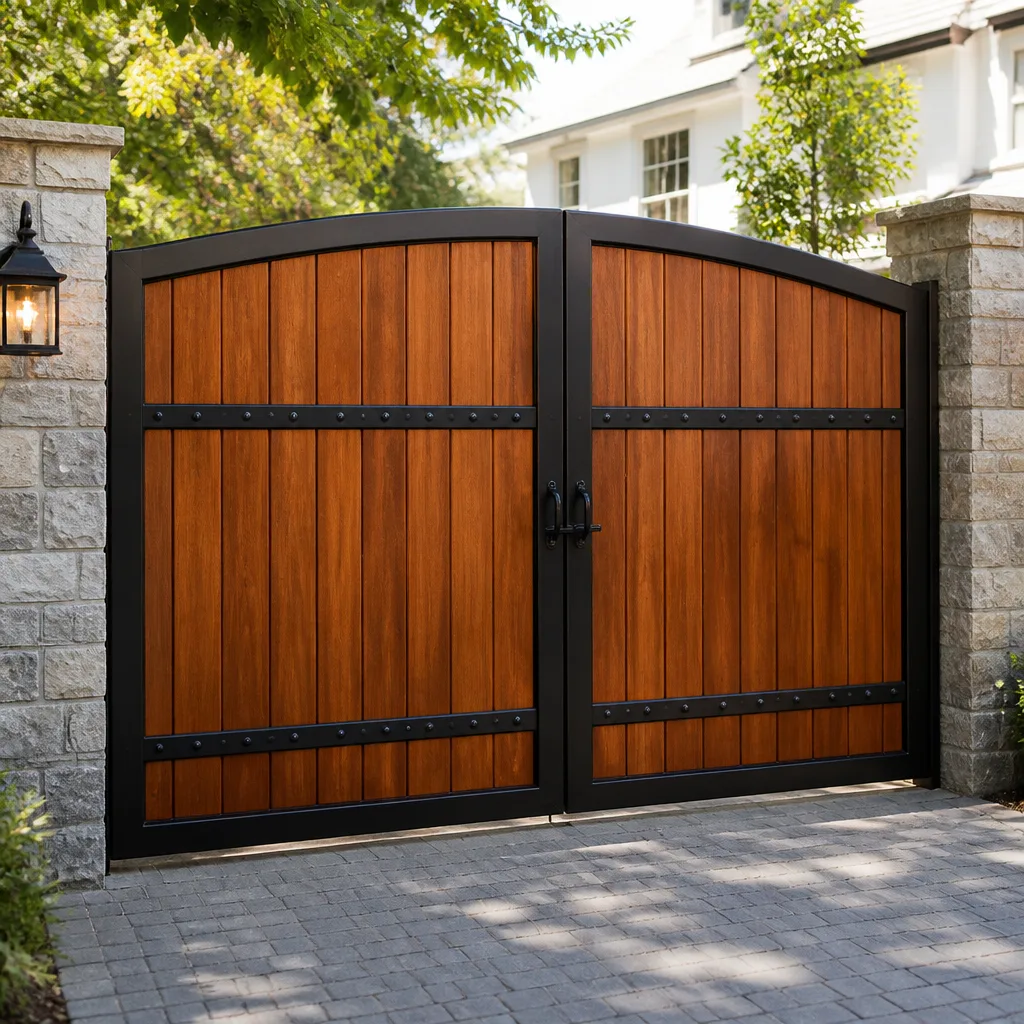 Wood & steel frame
 Farm & ranch
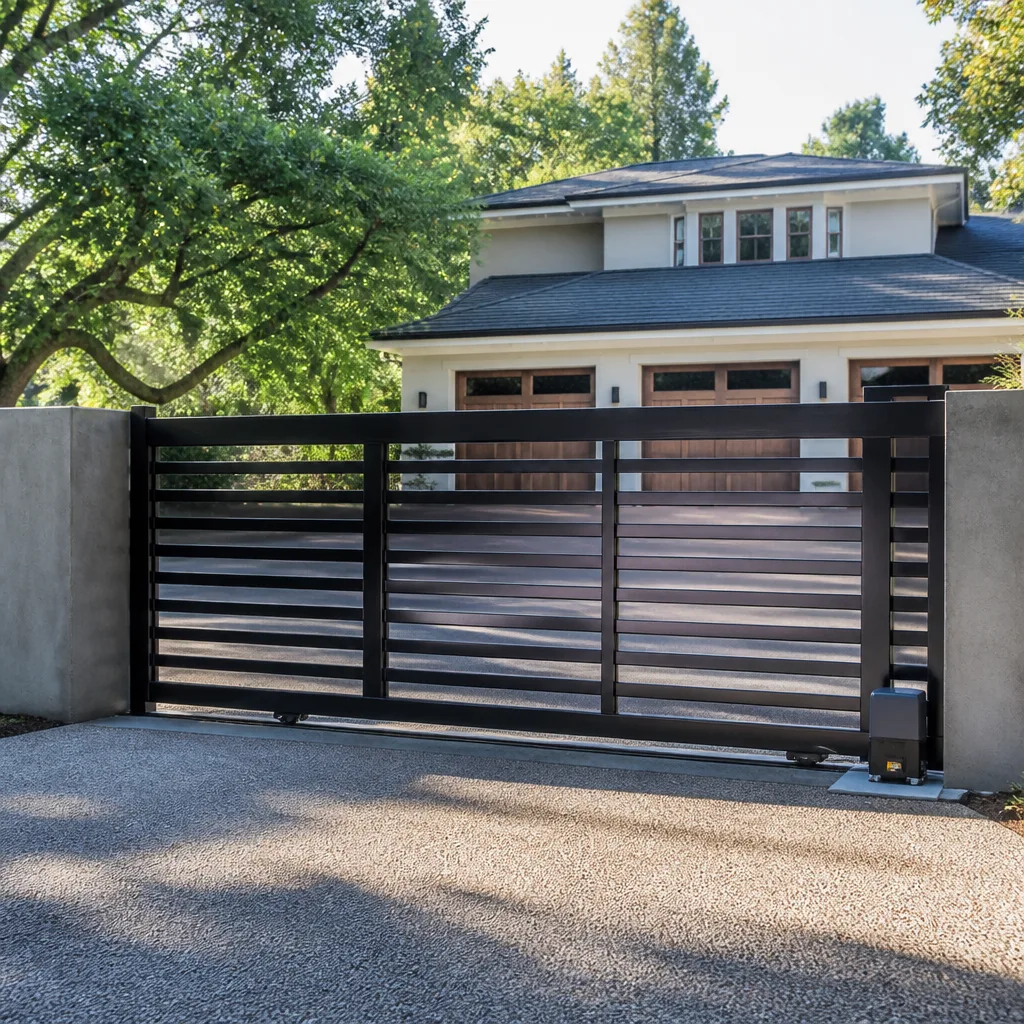 Sliding driveway gates
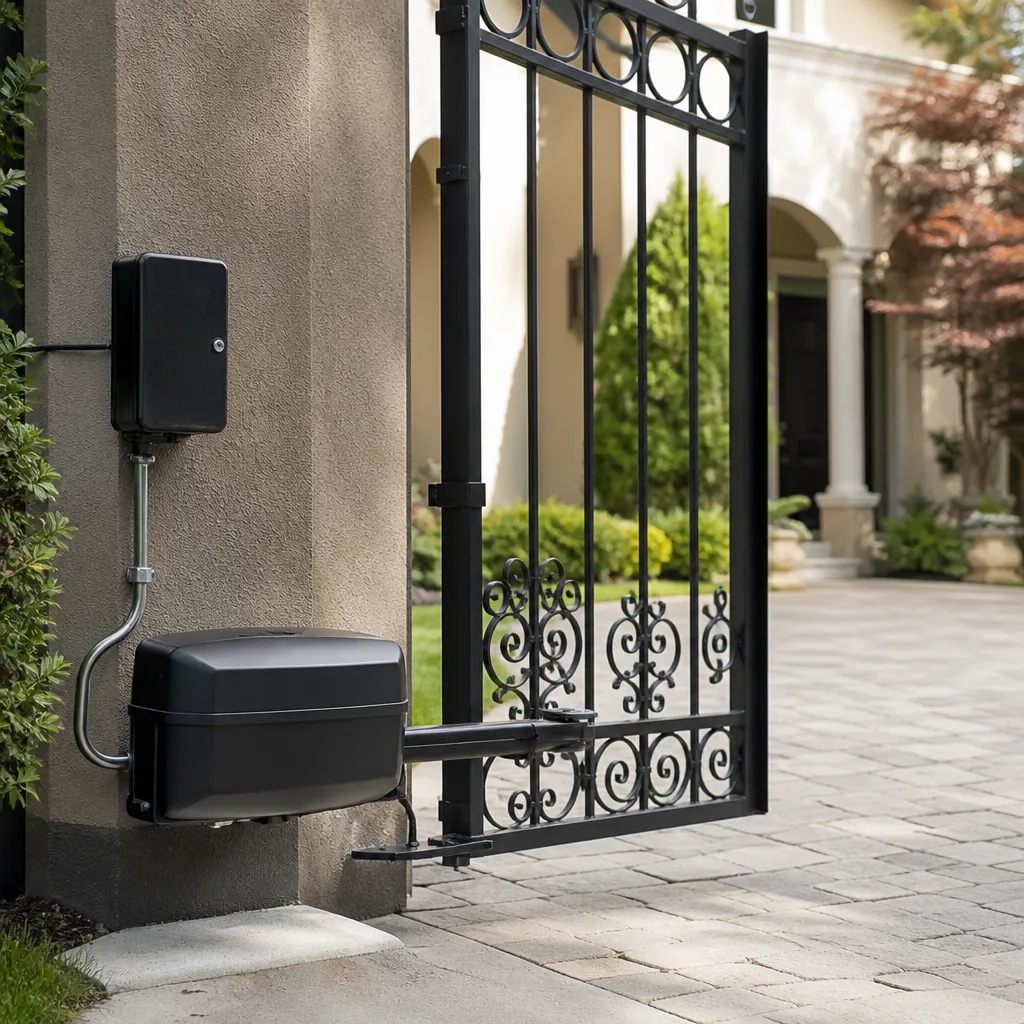 LiftMaster operators
Free on-site gate assessment - hinges, posts, and your LiftMaster or Nice gate operator checked before anything is quoted
The assessment is free and the quote is the invoice.
Get your free estimateGate Repair Emergency Preparedness Guide for Hesperia Homes
Most Hesperia homeowners have a fire evacuation plan. They have go-bags, family meeting points, and phone trees. What they don’t have is a gate that works when the power dies. During the 2020 Apple Fire, multiple Phelan and Hesperia-area residents reported delayed evacuations because their electric gates wouldn’t open during the outage. The manual release handle that could have freed them in 30 seconds had never been tested. This guide covers the gate-specific emergency preparation that takes less than 20 minutes but almost nobody does: locating and testing manual releases, sizing battery backups for Hesperia’s high desert climate, programming fail-safe settings, and building an emergency access protocol your whole family can operate. Browse our more guides & resources for year-round gate maintenance.
Quick Answer
Gate emergency preparedness in Hesperia means three things: knowing how to manually release your gate when power fails, having a battery backup system sized for a potential 48-hour outage, and programming your gate to fail-safe open when evacuation may be necessary. The complete preparation takes under 20 minutes, but testing the manual release every six months is what actually makes it work when you need it.
Styles & brands we work with
- Wrought iron
- Wood & steel frame
- Farm & ranch
- Sliding driveway gates
- LiftMaster operators
Table of Contents
- The Manual Release: What It Is and How to Test It
- Battery Backup for Hesperia’s Outage Patterns
- Fail-Safe Open vs. Fail-Secure Closed: What Hesperia Homeowners Need to Know
- Emergency Access Protocols for Family Members
- Post-Emergency Inspection Checklist
- Common Mistakes to Avoid
- When to Call a Professional
- Frequently Asked Questions
The Manual Release: What It Is and How to Test It
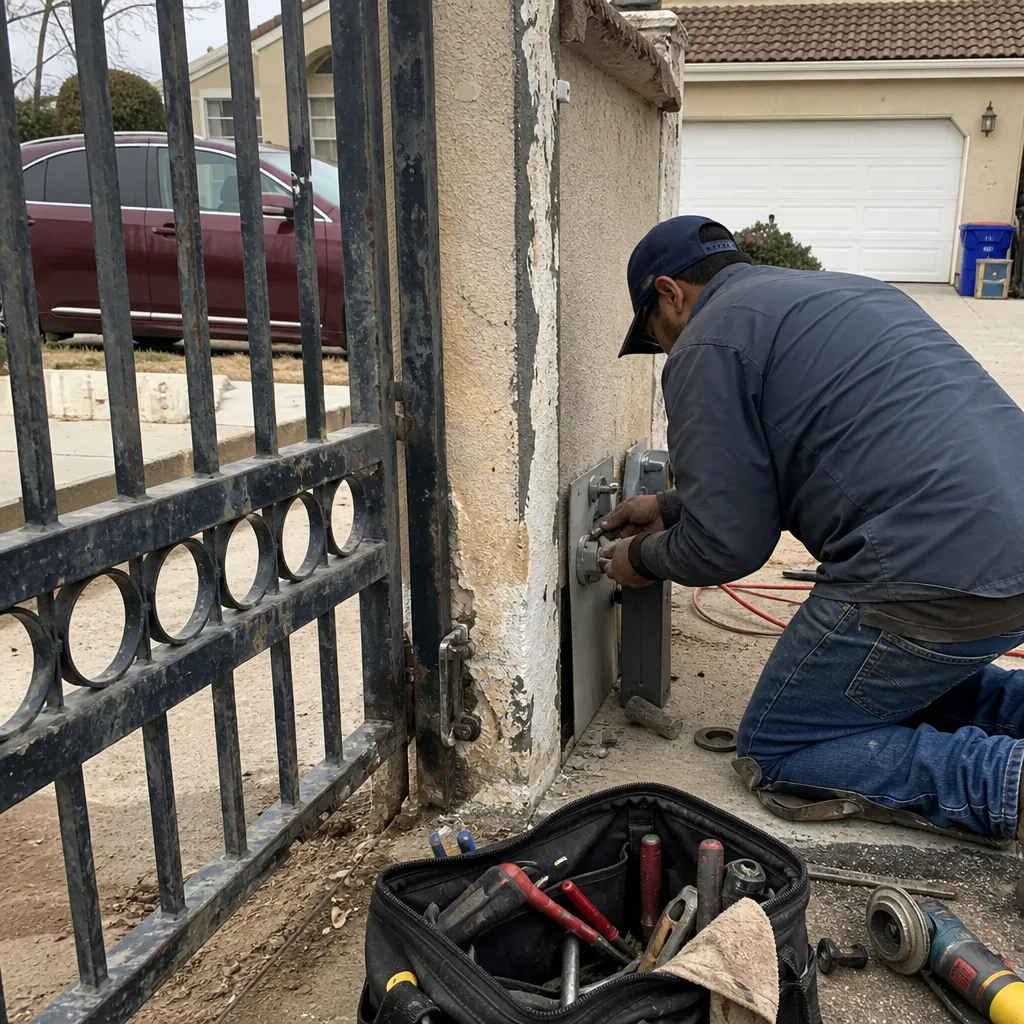
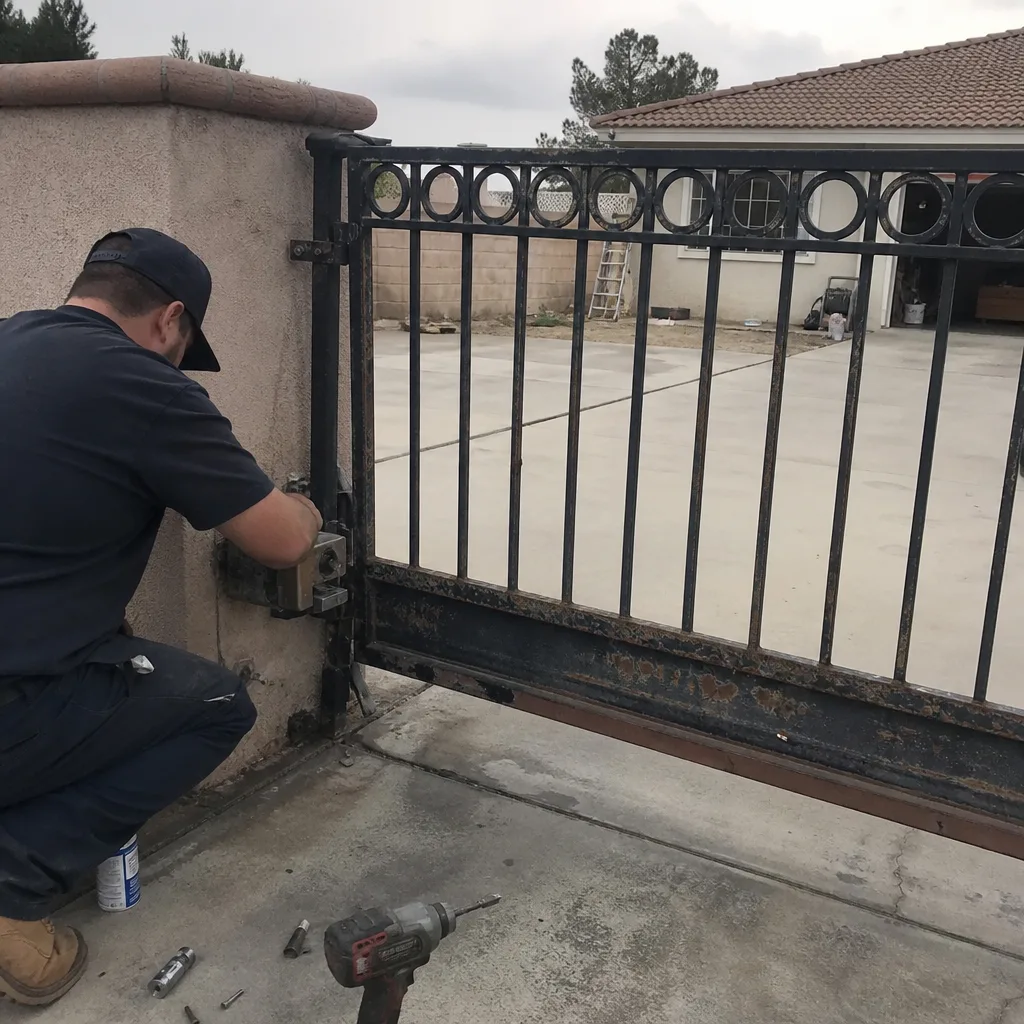
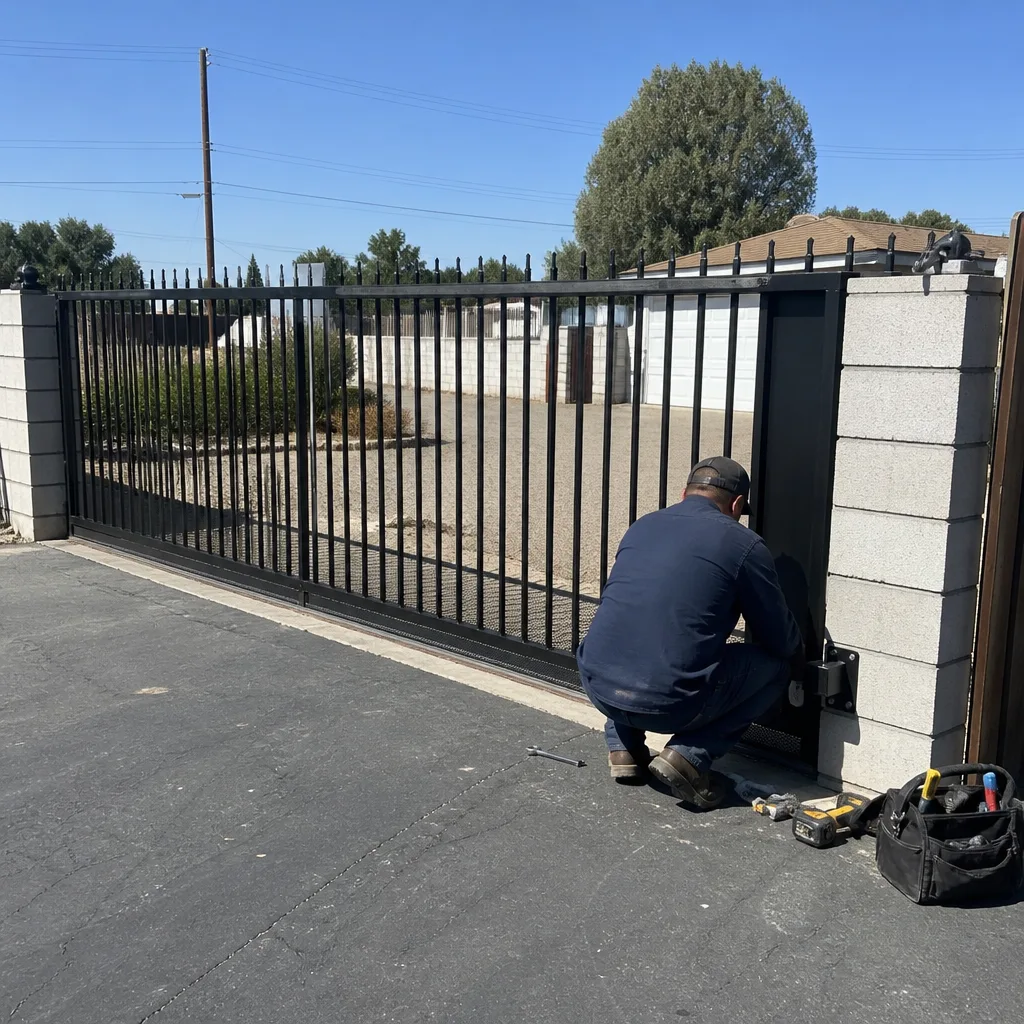
Every automated gate has a manual release mechanism, and in Hesperia we’ve seen the same problem repeat across every brand we service. These mechanisms seize up when they’re never used. The release is a mechanical component, typically a handle, key, or hex-wrench fitting located on the gate operator housing or the motor itself. When engaged, it disconnects the motor from the gate arm or slide mechanism, allowing you to push the gate open by hand.
On a Ghost Controls or Mighty Mule residential swing gate, the manual release is usually a pull handle on the arm actuator itself. On a DoorKing or Elite slide gate, you’ll typically find a keyed release or a lever on the operator cabinet. The location varies by brand and installation, which is precisely why the first step of emergency preparation is locating it and documenting it clearly.
Here’s the testing process we recommend for every Hesperia homeowner:
- Locate the release mechanism. Check the operator cabinet first, then the arm assembly. If you can’t find it, the brand name and model number will help you look up the exact location online.
- Test the release with the gate closed. Pull or turn the release handle. The gate should move freely by hand. If it resists, the mechanism needs lubrication or professional attention.
- Move the gate manually through at least half its travel. If you feel grinding, hear metal scraping, or the gate catches on something, the issue is the track or wheels, not the operator. Do not force it.
- Re-engage the release. Push the handle back to its original position or turn the key back. Some models automatically re-engage when the motor runs its next cycle.
- Run a full open/close cycle using the remote. Confirm the motor re-engaged correctly and the gate operates normally.
The reason testing matters is simple: a manual release that hasn’t been pulled in five years often doesn’t pull at all. In Hesperia’s high desert environment, dust and temperature swings accelerate corrosion and hardening on these parts. We’ve been called to homes where the release handle snapped off in the owner’s hand during an outage because it had seized internally. A two-minute test every six months prevents that scenario.
For anyone installing a new automatic gate in Hesperia, Gate Installation in Hesperia is where we document release locations clearly during the install and walk every homeowner through the manual operation before we leave. That’s standard practice, not an add-on.
Battery Backup for Hesperia’s Outage Patterns
Hesperia’s power grid gets stressed during summer heat waves and Santa Ana wind events, and outages aren’t always short. A gate opener running on standard household current stops working the second power drops, and unless you’ve tested the manual release, you’re trapped. Or worse, your gate is stuck open in a neighborhood where security matters.
Battery backup systems for gate operators run on 12V or 24V deep-cycle batteries, depending on your motor. The question we hear most often is whether a battery backup can handle a 48-hour outage in Hesperia’s climate. The honest answer depends on three factors:
- Gate type and weight: A single swing gate panel under 300 pounds uses significantly less power per cycle than a 20-foot slide gate. Heavier gates drain batteries faster.
- Number of cycles per day: Each open/close cycle consumes battery capacity. A gate that cycles 20 times daily will deplete a backup battery far faster than one that cycles four times.
- Battery capacity and age: New deep-cycle batteries with adequate amp-hour ratings will outperform old ones every time. High desert heat degrades batteries faster than coastal climates, so a battery older than three years in Hesperia is already suspect.
For a typical Hesperia residential swing gate on a Mighty Mule or Ghost Controls operator, a pair of 12V 35Ah batteries will generally maintain 10 to 15 full open/close cycles over a 48-hour period. That’s enough to evacuate and return, but not enough to abuse. For a heavier commercial-grade slide gate on a DoorKing or Elite operator, you’ll want a properly sized UPS system with significantly more capacity, and that’s a calculation best done by a technician who knows your specific motor’s draw.
A critical distinction: battery backup keeps your gate automated during an outage. It doesn’t turn a broken gate into a working one. If your motor failed before the power went out, backup batteries won’t fix it. This is why manual release testing remains the foundation of emergency readiness. The two systems work together.
We’ve also seen Hesperia homeowners add small solar maintainers to their backup battery systems, which works well in our climate given the number of clear days we get. Solar panels prevent the slow drain that happens when batteries sit unused between outages. It’s not a substitute for battery capacity, but it extends the useful life of the backup system.
Fail-Safe Open vs. Fail-Secure Closed: What Hesperia Homeowners Need to Know
Every automated gate operator has a setting that determines what the gate does when power is lost: fail-safe open or fail-secure closed. Understanding the difference is the single most important technical decision you’ll make for emergency preparedness, and most homeowners don’t know the setting exists.
A fail-safe open configuration releases the gate when power drops, allowing it to be pushed open by hand immediately. The gate is not locked, and anyone can move it. A fail-secure closed configuration keeps the gate locked in position when power drops, requiring the manual release to be engaged before the gate can move.
For Hesperia homeowners in wildfire-prone zones, we strongly recommend fail-safe open on any gate that serves as a primary exit route. The logic is straightforward: in an evacuation, you want zero mechanical intervention between your family and the street. A fail-secure gate is technically more secure during an outage, but security is useless if you can’t exit your own property when the gully’s filling with smoke.
Programming this setting varies by brand. On a LiftMaster or Ghost Controls board, you’ll typically find it in the operator’s menu under “gate behavior” or “power failure mode.” On a FAAC or BFT commercial board, it may require a jumper setting or a specific parameter in the programming interface. DoorKing and Elite operators often default to fail-secure, which is another reason to check.
There’s a nuance worth knowing: some Hesperia properties have multiple gates, and not every gate is an evacuation route. A pedestrian gate near the side yard might be better left fail-secure to prevent opportunistic entry during an outage, while the main driveway gate should fail open. Security decisions are property-specific.
One caveat from experience: a fail-safe open gate without battery backup means the gate sits open and unlocked during any outage, including routine brownouts that aren’t emergencies. If that’s a concern, the solution isn’t fail-secure. The solution is a battery backup that keeps the gate automated and locked until you decide to open it. Electric Gate Repair in Hesperia covers this exact configuration scenario, because it’s where security and evacuation readiness intersect.
Emergency Access Protocols for Family Members
The best-prepared gate system in Hesperia is worthless if the person who needs to operate it doesn’t know how. Every household member who drives, and every relative or neighbor who might assist in an emergency, needs a documented, practiced procedure for getting the gate open without power.
Here’s what we tell homeowners to prepare:
- Write down the manual release instructions on a laminated card. Include the exact location of the release, the direction to turn or pull, and what the gate should feel like when it’s disengaged. Attach the card to the inside of the operator cabinet if possible.
- Show every licensed driver in the household how to release the gate. Don’t just tell them. Have them do it with you watching. Muscle memory matters when adrenaline is high.
- Share the procedure with one trusted neighbor or nearby relative. In a Hesperia evacuation scenario, you may not be home. Someone needs to get pets or children out, and that person needs to know the gate doesn’t require remote access.
- Store a physical copy of the gate brand and model number in your emergency kit. If the gate needs a technician after an emergency, this information saves valuable diagnostic time.
- Test the protocol twice a year. Whatever schedule works for you, tie it to something memorable like the daylight saving time changes. Manual releases seize, batteries drain, and family members forget.
This is the step most Hesperia homeowners skip entirely. They test the gate remote, maybe replace the batteries in it, and call it done. The remote doesn’t help during an outage. The manual release does.
And a practical note for homes with keypad entry: during an outage, a keypad without battery backup is dead. If your gate has a keypad for pedestrian access, test whether it continues working without AC power. Many don’t. This is a separate failure point that catches people off guard every fire season.
Post-Emergency Inspection Checklist
After power is restored, or after the gate has been operated manually under stress, there’s a specific sequence of checks that determines whether your gate system will keep working or fail two weeks later. We’ve seen gates that survived a 36-hour outage and manual operation, only to strip a gear or short a control board the following month because post-event damage went unnoticed.
Here’s the checklist we recommend for every Hesperia homeowner after any significant outage or manual override event:
- Inspect the manual release mechanism. Did it re-engage fully? A partially seated release can cause grinding or premature gear wear on the next automated cycle.
- Run three complete open/close cycles. Listen for new noises, hesitation, or unexpected stops. Compare to how the gate operated before the event.
- Check battery backup condition. If backup batteries carried the load during the outage, test their output voltage. Deep discharge can damage batteries permanently, and a battery that carried the gate through an evacuation may not survive the next one.
- Look for loose or shifted gate hardware. Manual operation puts stress on hinges, brackets, and bolts that automated operation doesn’t. A 400-pound gate swung by hand through a dust storm can loosen mounting bolts you won’t notice until the gate sags.
- Verify safety sensor alignment. Photo eyes and safety edges sometimes get bumped or misaligned during manual operation. A misaligned sensor will cause the gate to reverse or refuse to close, which looks like a motor failure but is usually a five-minute fix.
- Document everything. Note the date, the outage or manual operation event, anything unusual you found, and any maintenance performed. This record becomes genuinely valuable if the gate fails later, because it gives a technician the timeline needed for accurate diagnosis.
If any of these checks reveal a problem, don’t wait for the next outage to address it – schedule Gate Repair promptly. A gate that’s making a new noise or hesitating mid-cycle is already telling you something failed. The high desert environment in Hesperia is hard on mechanical systems: fine dust gets into gears, extreme temperature swings stress solder joints on control boards, and wind-driven grit accelerates wear on chains and bearings. Small problems become gate failures on a schedule that doesn’t respect evacuation days.
For a full evaluation of your gate system after a significant event, Gate Repair in Hesperia is the service we provide. A post-emergency inspection catches the damage that a visual once-over misses, and it’s faster and cheaper than replacing a motor that was run too long with a damaged gear.
Common Mistakes to Avoid
- Never testing the manual release until you need it. Manual releases seize from disuse, especially in Hesperia’s fine dust and dry heat. A release that was never tested is functionally identical to no release at all when the power drops.
- Assuming the gate remote works during an outage. The remote receiver runs on the same AC power as the motor. No AC, no remote. This is the mistake that delayed Hesperia-area evacuations during the Apple Fire.
- Installing a battery backup and never maintaining it. Battery backups in the high desert degrade faster than coastal installations due to heat. A three-year-old battery that’s never been load-tested is not a reliable backup.
- Leaving fail-secure locked on an evacuation route gate. A security default that requires manual intervention during an emergency is a liability, not an asset. Evacuation gates should fail open.
- Keeping the manual release location a secret. If the only person who knows how to open the gate manually isn’t home when evacuation orders hit, the knowledge is useless. Every driver in the household should know the procedure.
- Ignoring new sounds or hesitation after an outage. Mechanical damage from manual operation shows up slowly. By the time the gate fails outright, the repair is typically larger than it needed to be.
- Skipping the post-event safety sensor check. Misaligned sensors after manual operation cause gates to reverse unexpectedly and refuse to close. It looks like a control board failure but is usually a simple realignment.
When to Call a Professional
Some emergency preparedness steps are DIY-friendly, and we’ve laid out exactly which ones above. But certain situations call for a gate-specific technician, and trying to diagnose these yourself can make the problem worse. If your manual release won’t engage, or if you hear grinding during manual operation, stop and call. Forcing a seized mechanism can snap the release or strip gears. If your gate’s wiring is exposed, showing disconnected or corroded connections, that’s not a test-and-see scenario. If your battery backup system isn’t charging, or you’ve discovered the backup system was never properly sized, a specialist can calculate the correct configuration for your gate weight and cycle frequency. And if your gate’s control board shows burn marks, swollen capacitors, or error codes you don’t understand, internal component failure is a job for someone who works on gate electronics daily. Before calling, check our Gate Repair Permits, Codes & Inspections in CA: What You Need to Know if your repair may require compliance review.y.
Gate Repair Hesperia offers free estimates in Hesperia. Call (877) 693-9694 and we’ll assess your gate system honestly. If it’s something you can handle yourself, we’ll tell you that. If it needs a trained technician, we’ll show you what we found and quote the repair before any work starts.
Frequently Asked Questions
Locate the manual release mechanism on your gate operator, typically a pull handle, lever, or keyed release on the motor housing or arm assembly. Pull or turn the release to disengage the motor, then push the gate open by hand. This is the procedure every Hesperia homeowner should test at least twice a year, because releases seize in the high desert climate if never used. For a documented walkthrough of your specific gate model, call (877) 693-9694 and ask.
No, your gate remote will not work without AC power unless you have a battery backup system installed. The remote receiver and motor both run on household current, and a standard installation loses both when the grid drops. Battery backup keeps the gate automated through an outage, and the manual release remains the fallback if there’s no backup system.
For a typical residential swing gate under 300 pounds, a pair of 12V 35Ah deep-cycle batteries will usually maintain 10 to 15 cycles over 48 hours. Heavier slide gates and commercial operators like BFT, FAAC, or Viking need significantly larger capacity, calculated from the specific motor’s power draw and your daily cycle count. The heat in Hesperia shortens battery life, so load-test backup batteries at least twice a year. Contact us at (877) 693-9694 for an exact sizing assessment.
Fail-safe open means the gate releases when power is lost, allowing it to be pushed open by hand immediately without engaging any release mechanism. Fail-secure closed means the gate locks in position during an outage and requires manual release activation. For Hesperia homes where the driveway gate is the primary evacuation route, we recommend fail-safe open because it removes mechanical steps from an emergency exit.
Test the manual release every six months at minimum, and ideally before each fire season. Hesperia’s fine windblown dust and summer heat accelerate seizing in mechanical release components, and a release that sits unused for two years often will not engage when needed. Tie the test to a memorable date like daylight saving time changes so it becomes a household habit.
A gate that worked before an outage but fails after power restoration likely sustained damage during manual operation or experienced a voltage surge when the grid came back. Common causes include a partially re-engaged manual release grinding gears on the first automated cycle, a control board damaged by a power surge, or misaligned safety sensors from manual swinging. Run through the post-emergency inspection checklist above, and if the gate hesitates or makes new noises, call (877) 693-9694 for a diagnostic visit.
The Bottom Line
Emergency gate preparedness in Hesperia comes down to three specific actions, and all three are cheaper than the alternative. Test your manual release and document the procedure for every driver in your household. Install and maintain a battery backup system sized for the possibility of a 48-hour outage in high desert heat. Program your evacuation route gate to fail-safe open, and know why that matters. The 2020 Apple Fire showed what happens when these steps are skipped: residents sitting in their driveways pulling a release handle that wouldn’t turn. Twenty minutes of preparation, twice a year, prevents that entirely.
Written by the team at Gate Repair Hesperia, serving Hesperia since 2013.
See the difference
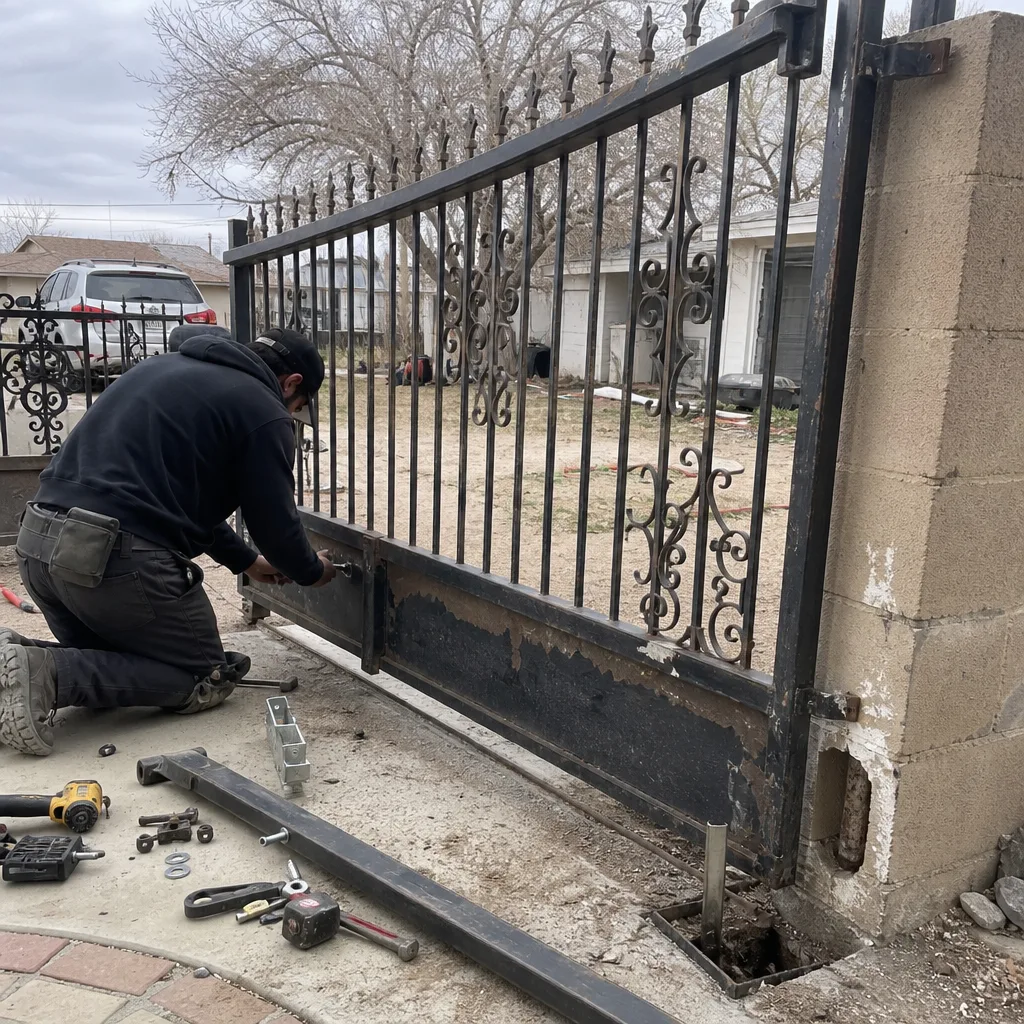 Before
 After
 Before
 After
 Before
 After