
Last updated November 2, 2026
 Wrought iron
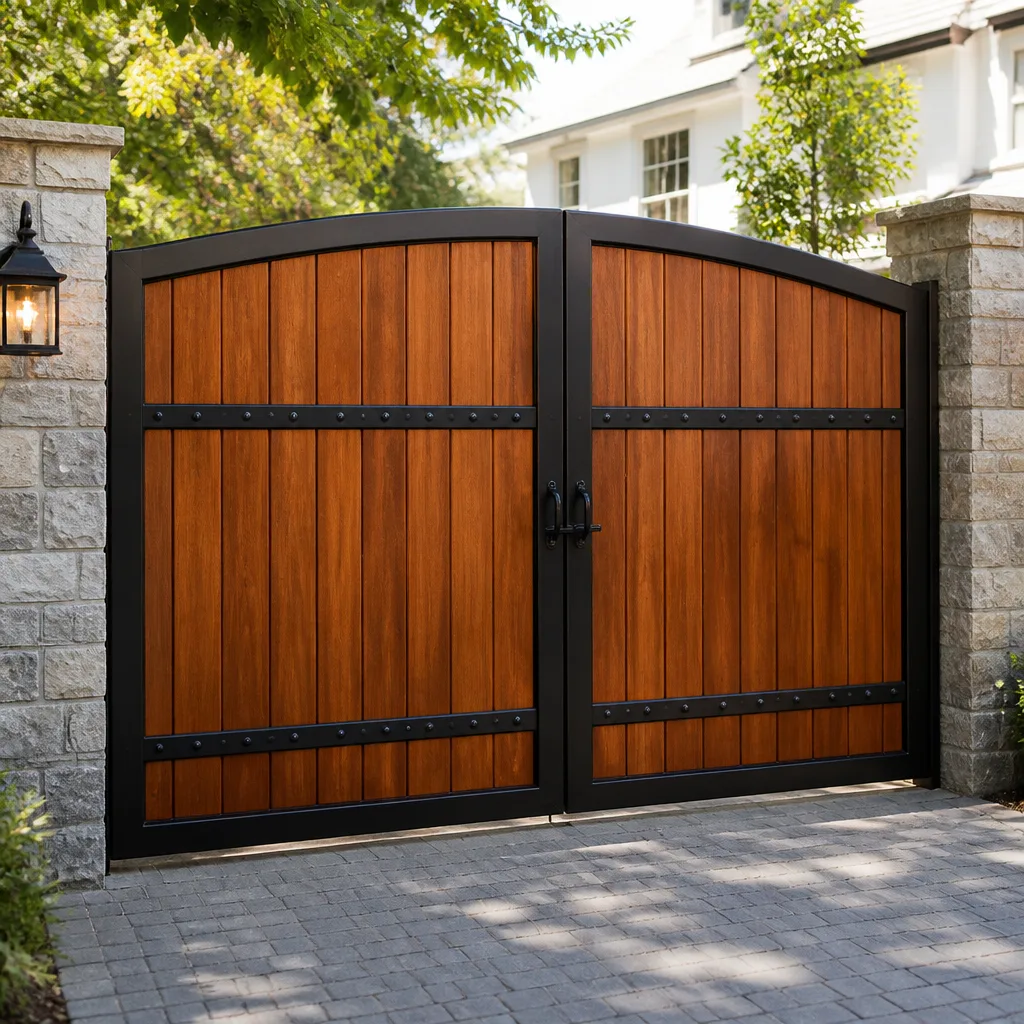 Wood & steel frame
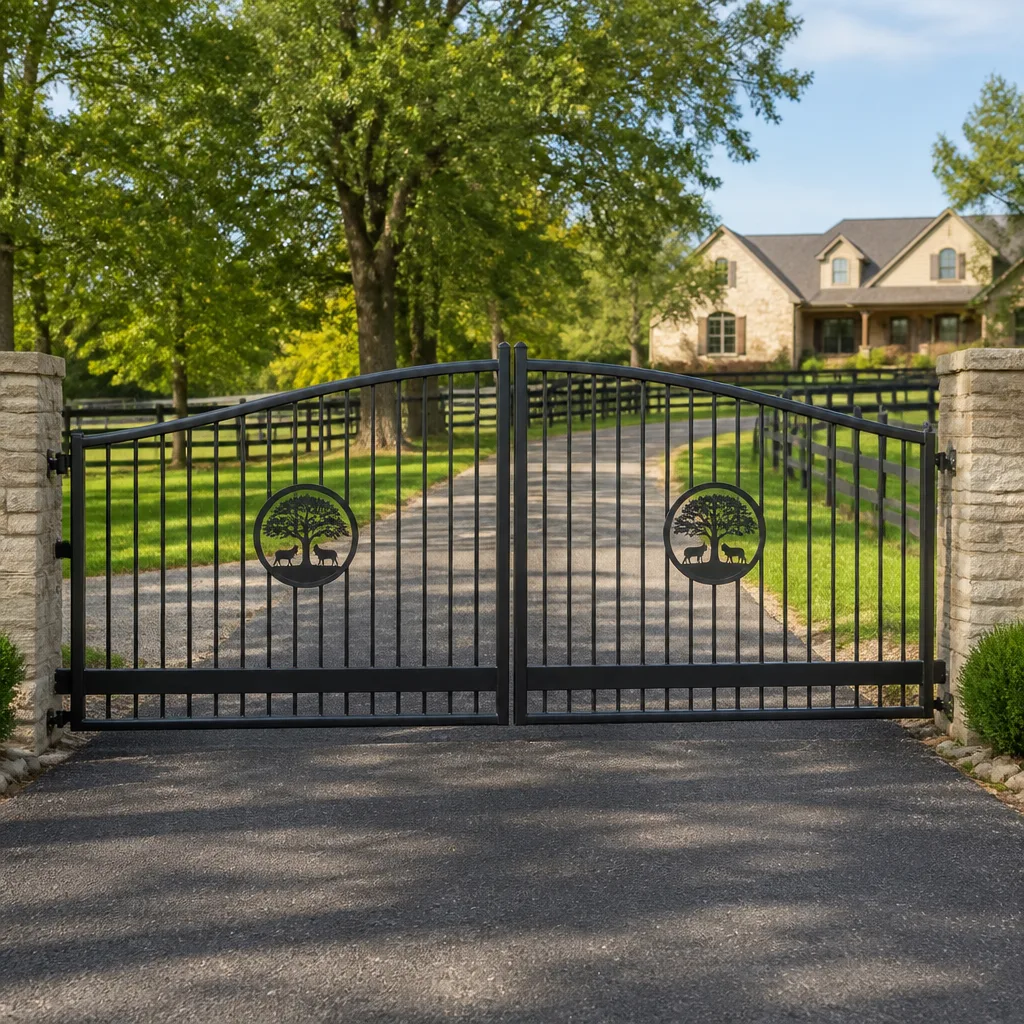 Farm & ranch
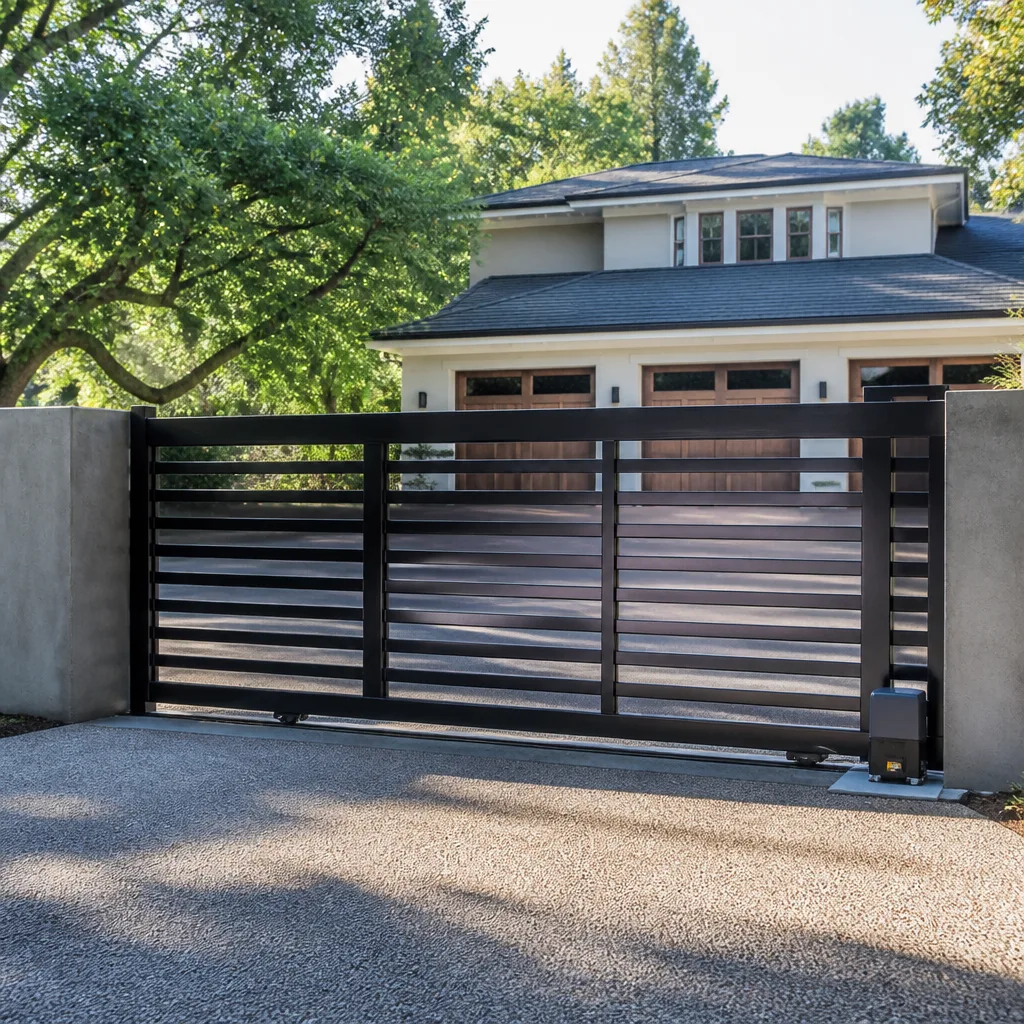 Sliding driveway gates
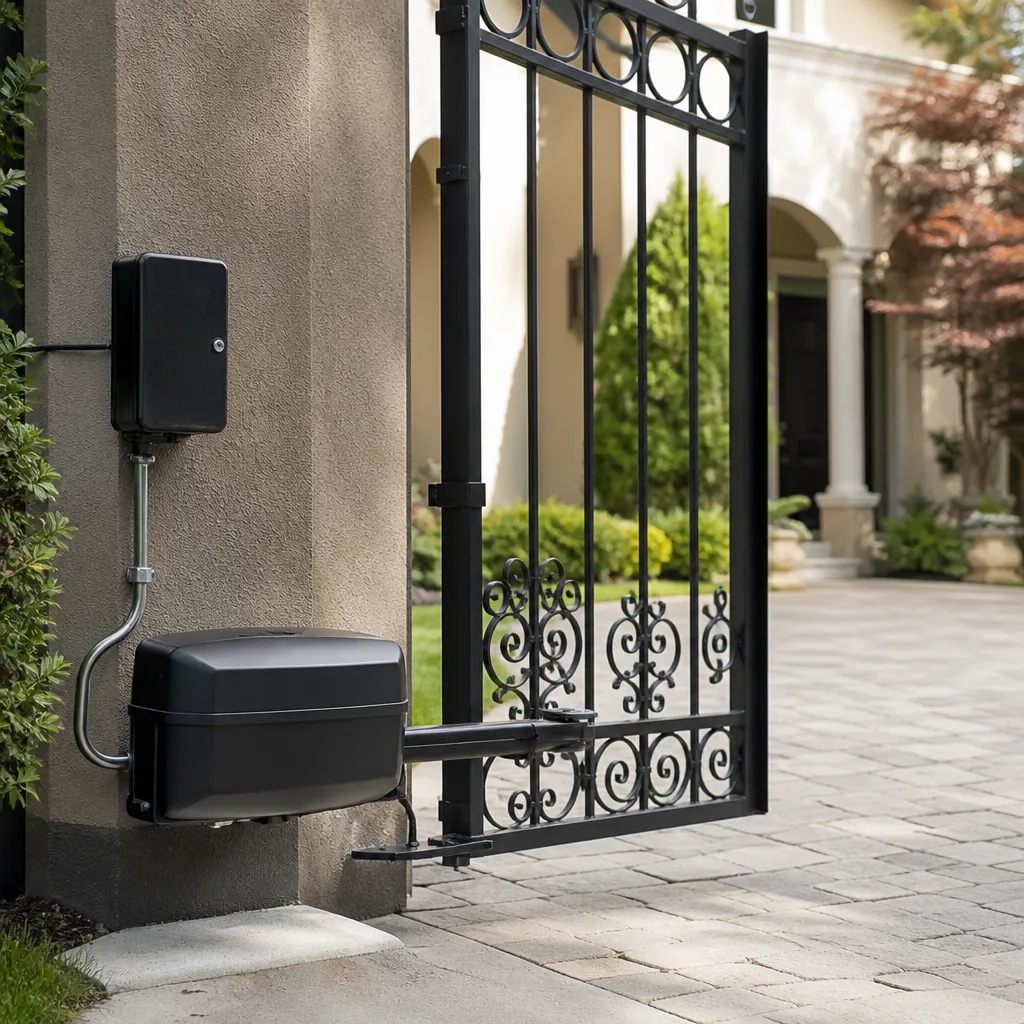 LiftMaster operators
Free on-site gate assessment - hinges, posts, and your LiftMaster or Nice gate operator checked before anything is quoted
The assessment is free and the quote is the invoice.
Get your free estimateGate Repair Permits, Codes & Inspections in CA: What You Need to Know
Most homeowners assume our Gate Repair services never need a permit, and for a stripped gear or a snapped chain, they’re usually right. But the moment a repair touches electrical wiring, relocates a motor, or changes how the gate swings or slides, California code pulls that project into permit territory. That line matters more than most people realize. An unpermitted modification to a gate’s electrical operator can void a homeowner’s insurance liability coverage if the gate later injures someone. We’ve watched this exact scenario reshape how insurers in San Bernardino County write their exclusions. This guide maps precisely where the permit line sits so you never cross it unknowingly.
Styles & brands we work with
- Wrought iron
- Wood & steel frame
- Farm & ranch
- Sliding driveway gates
- LiftMaster operators
Quick Answer
In California, mechanical gate repairs like replacing hinges, rollers, or a manual latch typically do not require a permit. However, any repair that modifies electrical wiring, replaces an operator with a different model, relocates the motor, or alters the gate’s structural posts does require a permit in San Bernardino County and most of Hesperia. Automated gate work also triggers UL 325 entrapment protection requirements that inspectors enforce during the permit inspection.
Table of Contents
- What Actually Triggers a Permit in San Bernardino County
- UL 325 Entrapment Protection: What Code Requires and What Gets Skipped
- HOA Requirements in Hesperia: When Community Rules Exceed County Code
- The Inspection Process for Automated Gate Work in San Bernardino County
- Contractor Liability vs. Homeowner Liability for Unpermitted Work
- When a Gate Repair Becomes an Electrical Project
- What Permits and Inspections Actually Cost in Hesperia
- Common Mistakes to Avoid
- When to Call a Professional
- Frequently Asked Questions
- The Bottom Line
What Actually Triggers a Permit in San Bernardino County
San Bernardino County follows the California Building Code, which classifies gate work under the same sections that govern fences, walls, and accessory structures. The county’s Land Use Services department issues permits for work that changes a gate’s footprint, its electrical load, or its structural attachment points. Here’s the clear breakdown of what triggers a permit and what doesn’t.
No Permit Required: Mechanical Repairs Only
These repairs stay on the correct side of the permit line because they don’t alter anything an inspector would classify as structural or electrical:
- Replacing worn hinges, brackets, or rollers
- Swapping a broken manual latch or lock
- Welding a cracked joint on an existing gate leaf
- Adjusting alignment or re-hanging a sagging leaf on existing posts
- Replacing a bent track on a slide gate using the same mounting points
- Repainting or refinishing the gate
In Hesperia, most of these repairs happen on older manual gates along Ranchero Road or in the Mesa area, where gates have decades of desert wind exposure. The wear is real, but the repair scope stays mechanical, which keeps it outside permit territory.
Permit Required: Operator Replacement and Electrical Modification
Here’s where the line moves, and it moves fast. The county treats any of the following as a permitting event:
- Replacing an electric gate operator with a different model or brand. Swapping a FAAC operator for a BFT unit changes the electrical draw, the mounting footprint, and the safety sensor wiring. That’s a modification, not a like-for-like repair.
- Running new electrical conduit or wire to the motor. Any new circuit, any moved junction box, any added disconnect switch.
- Relocating the operator’s mounting position. If the motor moves from one post to another, or from underground to above-ground mounting, the county sees a changed installation.
- Replacing or re-setting structural gate posts. If a post comes out of the ground, even to re-set it in the same hole, the county wants to inspect the footer depth and concrete work.
- Changing the gate’s swing direction or slide path. A gate that once swung inward and now swings outward changes the operational footprint, which affects setbacks and pedestrian safety.
We service all of these scenarios across both residential and commercial-grade systems, from Linear and Viking operators on Hesperia ranches to BFT and FAAC units at commercial lots. For Gate Repair Troubleshooting: Common Problems and How to Fix Them, see our dedicated guide. The brand doesn’t change whether a permit is needed. The scope of work does.
UL 325 Entrapment Protection: What Code Requires and What Gets Skipped
UL 325 is the national safety standard for automatic gate operators. California adopted it into state code years ago, and San Bernardino County inspectors enforce it on every permitted gate operator installation. The standard exists because powered gates are machines that move with enough force to injure or kill. Hesperia winds don’t change that risk. They add to it, because wind-blown debris can block a photoelectric sensor mid-cycle and defeat a poorly configured entrapment system.
Here’s what UL 325 requires on every automatic gate in San Bernardino County, and what inspectors actually see bypassed in the field:
Required Entrapment Protection Devices
- Two independent entrapment protection methods on every automated gate: a primary (like inherent obstruction sensing in the operator) and a secondary (like photoelectric sensors or contact edges).
- Photoelectric sensors mounted across the gate’s travel path, positioned no higher than 6 inches off the ground in many configurations, to detect a child or pet entering the path.
- Contact edges or pressure-sensitive strips on the leading edge of a slide gate and the hinge edge of a swing gate, wired to reverse the gate on contact.
- Audio and visual warning devices like a siren or strobe light that activate before and during gate movement.
- A manual disconnect that allows the gate to be opened by hand during a power failure, without tools.
- Warning signage posted on both sides of the gate, visible from a distance, indicating the gate is automatic and can operate without warning.
What Technicians Commonly Find Missing
In our experience across Hesperia and the wider High Desert, the most common UL 325 violations on existing gates are:
- Photoelectric sensors installed at knee height instead of the required low position, which misses small children and animals
- Contact edges that were removed because a gate kept reversing on wind-blown tumbleweeds, a real problem in Hesperia’s wind corridors
- Warning signage that faded or was never installed on gates built before UL 325 enforcement tightened
- Operators with disabled inherent obstruction sensing, done by a previous technician who didn’t want nuisance reversals
Here’s the part that matters for insurance: a gate with missing or disabled entrapment protection is not just non-compliant. It’s a liability event waiting for a claim. If someone gets hurt by a gate that fails UL 325 requirements, and the work that removed or disabled the protection was unpermitted, the homeowner’s insurance position gets weak fast.
HOA Requirements in Hesperia: When Community Rules Exceed County Code
Hesperia has a patchwork of HOA-governed communities, and their rules about gates routinely exceed what the county requires. The county sets a floor. HOAs set a ceiling, and they don’t mind enforcing it. Property managers in communities like the Summit Valley area or planned developments along Main Street have architectural review committees that take gate aesthetics seriously.
Here’s how HOA rules interact with San Bernardino County permitting, and where homeowners get tripped up:
Pre-Approval Happens Before the Permit Application
Most Hesperia HOAs require architectural committee approval before any gate modification happens, even for repairs the county wouldn’t permit. That means you submit plans or photos to the HOA first, get a written approval, and only then apply for a county permit if the project requires one.
Skipping this order creates a mess: the county approves the permit, the work gets done, and then the HOA demands the gate be changed back because the color, height, or swing direction violates the community’s design standards. We’ve seen this happen on gates with custom ironwork in Hesperia neighborhoods. The fix cost more than the original repair.
Common HOA Gate Rules in Hesperia Communities
- Height restrictions: HOAs often cap gate height at 6 feet, sometimes less for front-yard pedestrian gates.
- Material and finish requirements: Wrought iron, powder-coated steel, or specific color palettes may be mandated.
- Automation restrictions: Some HOAs prohibit certain operator types (like bright strobe lights) or require quieter motors for gates near neighboring homes.
- Swing direction rules: Gates that swing outward over a sidewalk or common area may be blocked entirely by HOA rules, even if the county would permit them.
- Noise limitations: Gate operators in Hesperia HOAs sometimes face decibel limits, which pushes homeowners toward belt-driven or quieter hydraulic operators rather than standard chain-drive units.
The takeaway: before any gate repair that involves automation, relocation, or structural change, check your HOA’s architectural guidelines first. The county permit is step two, not step one.
The Inspection Process for Automated Gate Work in San Bernardino County
When a gate project does require a permit in San Bernardino County, the inspection process follows a predictable sequence. Here’s what inspectors actually check on automated gate work, based on what we’ve seen at inspections across Hesperia, Oak Hills, and the surrounding county land.
The Inspection Sequence
- Plan review at permit application: The county reviews the operator model, electrical plan, gate dimensions, and site plan before issuing the permit. For commercial gate work on BFT or Viking operators, expect plan review to take longer.
- Underground inspection (if new electrical): If new conduit or wire runs underground, the inspector checks trench depth, conduit material, and burial depth before backfill happens.
- Rough inspection: For structural post work, the inspector checks footer depth, concrete pour, and post anchoring before the gate is hung.
- Final inspection: This is the big one for automated gates. The inspector tests the operator through a full cycle, verifies entrapment protection devices function, checks the manual disconnect, and confirms warning signage is in place.
- Final sign-off: Once the inspector approves the work, the permit closes. That signed permit is your documentation that the work passed county review.
What Inspectors Actually Test
On a final inspection for an automated gate in San Bernardino County, the inspector will:
- Cycle the gate open and closed multiple times from the keypad, remote, and safety edge
- Obstruct the gate mid-cycle to confirm the operator reverses on contact or obstruction sensing
- Check photoelectric sensor alignment and mounting height
- Verify the manual disconnect releases the gate without tools
- Confirm the warning signs are mounted on both sides of the gate
- Ground-fault test the electrical circuit feeding the operator
- Check that the operator is properly bonded and grounded according to the National Electrical Code
An inspection that fails is usually a quick fix: a sensor reset, a signage placement, a grounding correction. But it does mean a re-inspection, which adds time and a re-inspection fee. Getting the details right before the first inspection is cheaper than a second visit.
Contractor Liability vs. Homeowner Liability for Unpermitted Work
This is the section that answers the question most people are actually asking: who gets held responsible when unpermitted gate work goes wrong? The answer in California is layered, and it’s not always the contractor.
When the Contractor Is Liable
A licensed contractor who performs gate work that requires a permit, without pulling that permit, carries clear liability. California Business and Professions Code section 7110 makes it a violation for a contractor to perform work requiring a permit without obtaining one. The Contractors State License Board can discipline that license. And if the unpermitted work fails or causes injury, the contractor’s general liability insurance may deny the claim because the work was performed illegally.
When the Homeowner Is Liable
Here’s the part that surprises people. If a homeowner hires an unlicensed individual, or performs the work themselves, and the work requires a permit that was never pulled, the liability lands squarely on the homeowner. Homeowners insurance policies in California routinely include exclusions for injury or damage arising from unpermitted work. If an unpermitted gate operator injures a visitor, a delivery driver, or a child, and the insurance company discovers the operator was installed without a required permit, the liability coverage can be voided for that claim.
The San Bernardino County cases referenced earlier followed this pattern: unpermitted operator installations, entrapment protection absent or disabled, an injury claim filed, and the insurance carrier denying coverage based on the permit exclusion. The homeowner was left defending a personal injury lawsuit out of pocket.
What This Means for Any Gate Repair in Hesperia
When a repair stays mechanical, there’s no permit issue and no liability exposure beyond normal property ownership. When a repair crosses into electrical or structural territory, the permit isn’t optional. It’s the document that keeps your insurance intact. Any contractor who tells you to skip the permit “to save time” is asking you to accept their liability risk as your own.
When a Gate Repair Becomes an Electrical Project
Most gate repairs that people call about are mechanical: a hinge, a roller, a chain, a wheel. But automated gate systems have a significant electrical component, and that’s where Hesperia homeowners get into permit territory without realizing it. Understanding the line between a mechanical fix and an electrical modification saves you from an accidental unpermitted project.
The Electrical Components of an Automated Gate
Every electric gate system, whether it’s a residential Mighty Mule or a commercial FAAC operator, contains these electrical components:
- The operator motor that drives the gate leaf
- The control board that interprets remote signals and safety sensor inputs
- The power supply circuit from the electrical panel to the operator
- Safety sensors including photoelectric eyes and contact edges
- Access control devices like keypads, intercoms, loop detectors, and vehicle sensors
- The disconnect switch that kills power for maintenance
What Counts as “Electrical Modification”
A repair crosses into electrical modification when it does any of the following:
- Changes the operator’s power requirements. A new operator that draws more current than the old one may need a larger breaker, which means panel work, which means a permit.
- Adds new wiring or conduit. Running a new circuit from the panel to the gate, adding a junction box, or extending existing wire.
- Moves the disconnect switch or operator mounting location. Any relocation of electrical components changes the installation and triggers permit review.
- Integrates new access control hardware that requires wiring into the operator’s control board, like adding a telephone entry system to a previously keypad-only gate.
Where Hesperia’s Climate Adds Complexity
Hesperia sits in the High Desert, which means hot summers, cold winters, and serious wind. Gate operators in this climate need wiring rated for the temperature swings, conduit buried below the frost line, and enclosures that keep dust and sand out of the control board. A repair that opens an operator enclosure and finds sand-packed contacts is common in Hesperia. Cleaning those contacts is mechanical maintenance. But if the enclosure itself needs replacement because the desert sun degraded it, and the new enclosure requires re-terminating the wiring, that crosses into electrical work that may need a permit.
This is where a Hesperia electric gate repair specialist can tell you quickly whether your specific repair is mechanical or electrical in scope. The distinction isn’t always obvious from the outside.
What Permits and Inspections Actually Cost in Hesperia
Permit costs in San Bernardino County for gate work are generally modest compared to the repair itself, but the total cost picture includes more than the permit fee. Here are the real numbers for Hesperia and surrounding county land.
Typical Permit and Inspection Costs
- Building permit for gate operator replacement: County fees in San Bernardino typically run between $150 and $400, depending on project valuation. Plans review can add another $100 to $200.
- Electrical permit for new wiring or a new circuit: Usually $80 to $250, depending on whether it’s a new circuit, an extended circuit, or a panel change.
- Re-inspection fee: If the inspector fails the work and needs to return, expect a re-inspection fee of $75 to $150.
- HOA architectural review fee: Where applicable, Hesperia HOAs charge $25 to $100 for gate review.
- Contractor permit handling: Some contractors charge a flat fee to manage the permit process, typically $100 to $300 on top of county fees. Others include it in the project quote.
The numbers are ballpark ranges. Exact fees depend on the project’s valuation and the specific location within the county. The point is that permits for gate work in Hesperia are not the thousands of dollars people sometimes fear. They’re an inconvenience cost, not a project-killer.
What Unpermitted Work Costs Later
The real cost calculation flips when you look at unpermitted work. A $300 permit avoided today becomes a problem at these moments:
- Selling the home: A buyer’s inspector flags the unpermitted gate operator, the lender questions it, and the seller pays to pull a permit retroactively or credit the buyer for the fix.
- Insurance claim: The liability exclusion mentioned earlier applies, and the homeowner faces a lawsuit without coverage.
- County notice: San Bernardino County can issue a notice of violation for unpermitted work discovered during a separate inspection, requiring the work to be permitted after the fact, which includes penalties.
The permit is the cheapest part of any gate project that requires one. Skipping it is a risk with no upside.
Common Mistakes to Avoid
- Treating every operator replacement as a repair. A like-for-like swap of the exact same operator model can sometimes be done as a repair, but swapping brands or models is a modification that needs a permit. We see this constantly on Linear-to-FAAC upgrades in Hesperia.
- Assuming the installer handled the permit. If the permit wasn’t pulled before the work started, it wasn’t handled. Ask to see the permit number before the technician begins electrical work.
- Skipping the HOA review process. County approval doesn’t satisfy an HOA requirement. In Hesperia communities with active architectural committees, skipped HOA approval means a demand to redo the work.
- Disabling safety sensors to stop nuisance reversals. Hesperia’s wind-blown debris causes real nuisance reversal problems, but the fix is adjusted sensor placement and sensitivity settings, not disconnection. A gate with disabled entrapment protection is a serious liability.
- Failing to keep the permit paperwork. The signed permit is proof the work passed inspection. When selling a Hesperia home with an automated gate, the buyer’s inspector will ask for it. Digital copies are fine.
- Using an unlicensed individual for electrical gate work. If the person working on your gate’s electrical system isn’t licensed and insured, the liability for unpermitted work lands on you, not them. Hesperia has no shortage of individuals offering cut-rate gate repairs, and the savings evaporate the first time something fails.
- Ignoring UL 325 requirements on a gate that predates enforcement. An older gate that’s never had entrapment protection isn’t grandfathered in when you modify it. Any modification to an automated gate triggers current code compliance, including UL 325. That’s the rule that surprises longtime Hesperia property owners.
When to Call a Professional
Some gate repairs are genuinely DIY: a loose hinge bolt, a simple latch adjustment, a chain tension tweak on a manual gate. But the scenarios below are where a gate repair specialist in Hesperia saves you money, time, and liability exposure. Call a professional when your gate repair involves any electrical component on an automated system, when a motor or operator needs replacement with anything other than the exact same model, when structural posts need resetting or replacement, when entrapment protection devices are missing or non-functional, or when your HOA requires professional installation documentation. Automated and electric gate repair is a specialty where diagnostic accuracy determines whether the fix lasts. Gate Repair Hesperia offers free estimates in Hesperia. Call (877) 693-9694 for a free estimate on any gate repair, from the motor to the control board.
Frequently Asked Questions
Yes, if the new operator is a different model or brand than the existing one, because the electrical load, mounting footprint, and wiring change. A true like-for-like replacement of the identical operator model may qualify as a repair. If you’re upgrading from a residential Linear to a heavier-duty BFT unit in Hesperia, expect to need an electrical permit. Call (877) 693-9694 to confirm your specific situation before work begins.
UL 325 is the safety standard that sets entrapment protection requirements for all automatic gate operators in the United States. It applies to every powered gate in San Bernardino County, regardless of when the gate was built. Any modification to an automated gate triggers the requirement to bring the entire system into current UL 325 compliance.
Mechanical repairs like hinge or roller replacement are generally fine as a homeowner project. Electrical work on an automated gate, including any wiring, operator replacement, or control board work, carries permit and code requirements that point toward a licensed professional. The liability for mistakes on electrical gate work sits with the homeowner when a permit was required and not obtained.
For most residential gate operator replacements, plan review takes 1 to 3 weeks, and the inspection is scheduled within a few days of the work being ready. Commercial projects on operators like Viking or DoorKing units often take longer due to additional plan review. The entire process, from application to final sign-off, typically spans 2 to 6 weeks for a residential project.
You inherit the unpermitted condition. When you sell the property, that unpermitted gate operator becomes a disclosure issue. The fix is to pull a permit retroactively and bring the installation into current code compliance, which usually means adding entrapment protection and correcting any wiring deficiencies. In Hesperia’s real estate market, we’ve seen this hold up closings.
Yes, for permit-required work in Hesperia and throughout San Bernardino County, we manage the permit application, coordinate the inspection, and make sure the work passes on the first visit. As gate-only specialists working across residential and commercial systems from Mighty Mule to FAAC and Viking, we handle the full lifecycle from diagnosis through permitted installation. Call (877) 693-9694 for a free estimate.
The Bottom Line
Gate repair permits in California come down to a simple test: did the work change the electrical system, the operator, or the structure? If the answer is no, it’s a mechanical repair and no permit is required. If the answer is yes, a permit is mandatory in San Bernardino County, and skipping it puts your insurance coverage at risk. Hesperia adds an HOA layer in many communities that runs parallel to county requirements. UL 325 entrapment protection applies to every automated gate, every time it’s modified. When the work requires a permit, use a gate-specific contractor who handles the permitting process. For a free estimate on your Hesperia gate repair, call (877) 693-9694.
Ready to get your gate back up and running? Gate Repair Hesperia provides repair, electric gate work, and new gate installation in Hesperia. Call (877) 693-9694 for a free estimate today.
Written by the team at Gate Repair Hesperia, serving Hesperia since 2013. Explore more guides & resources on our blog.
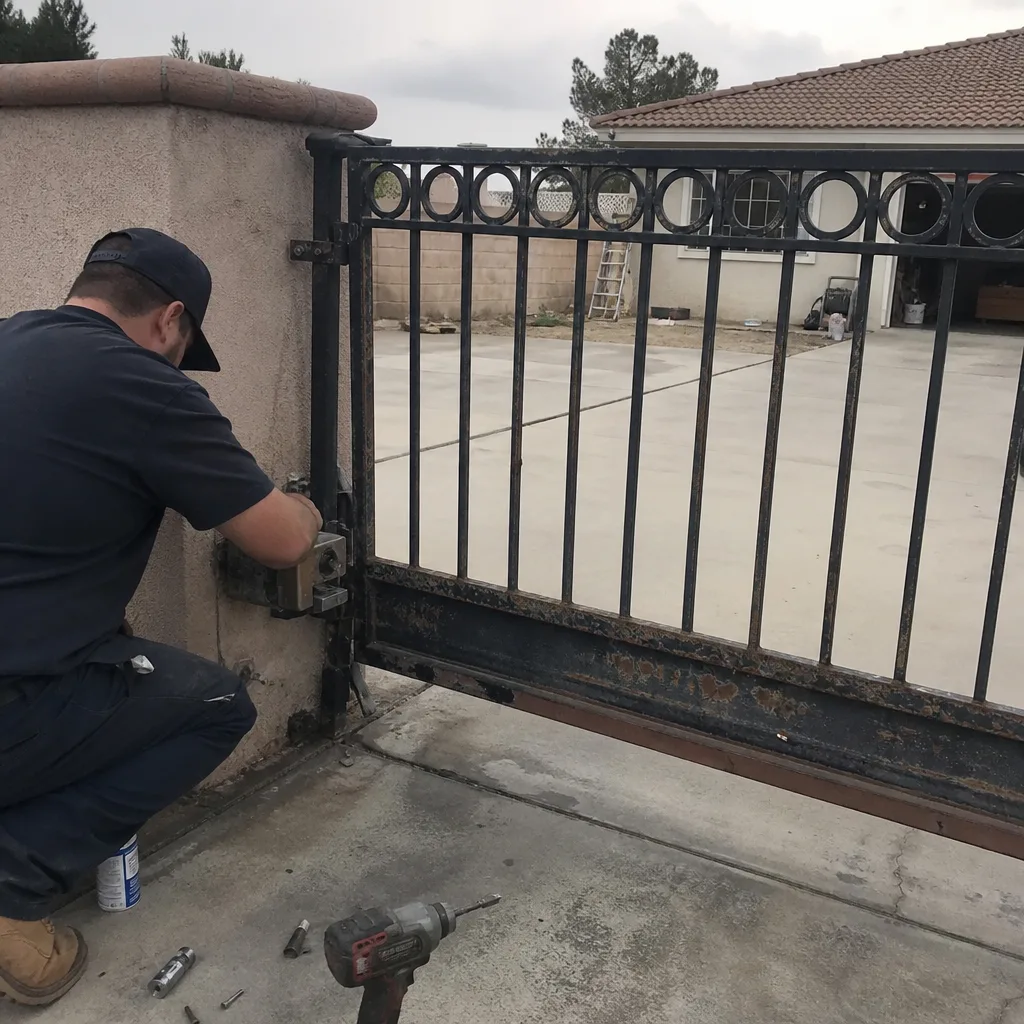
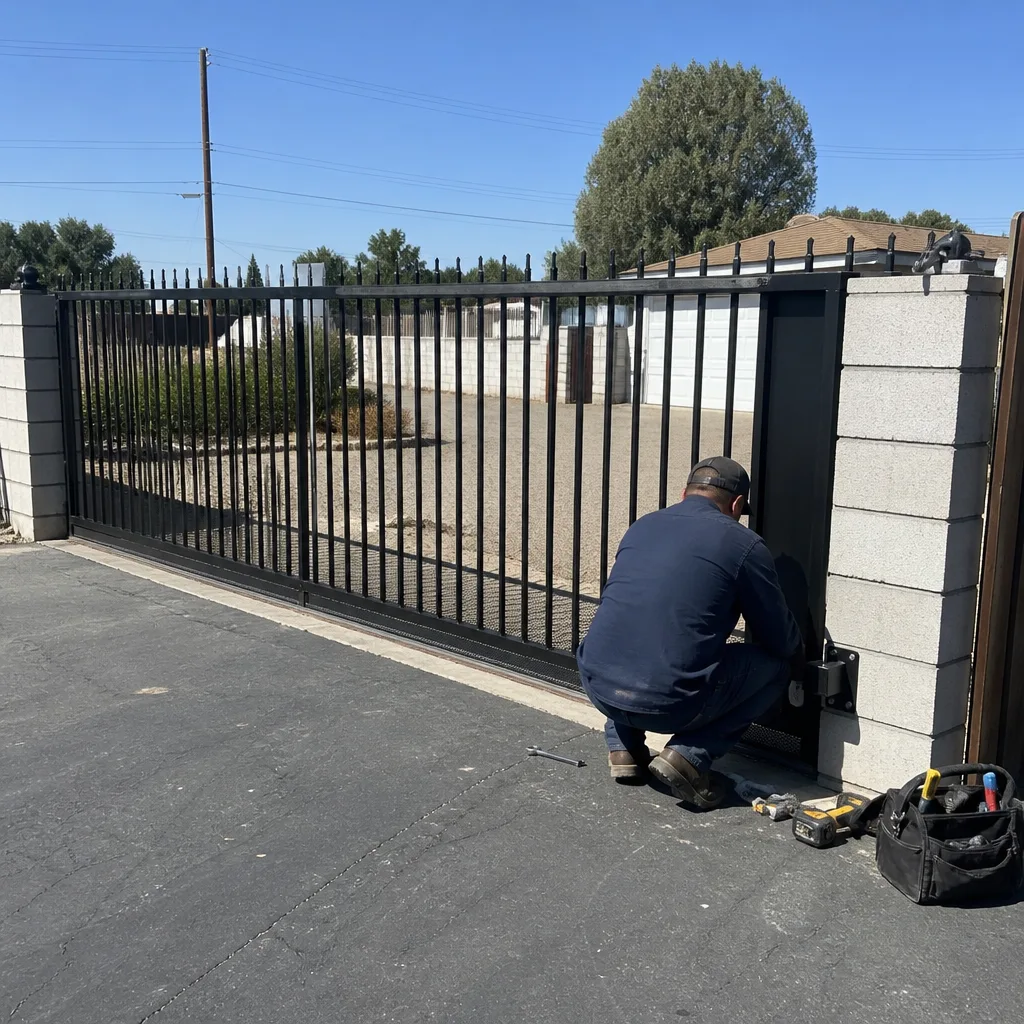
See the difference
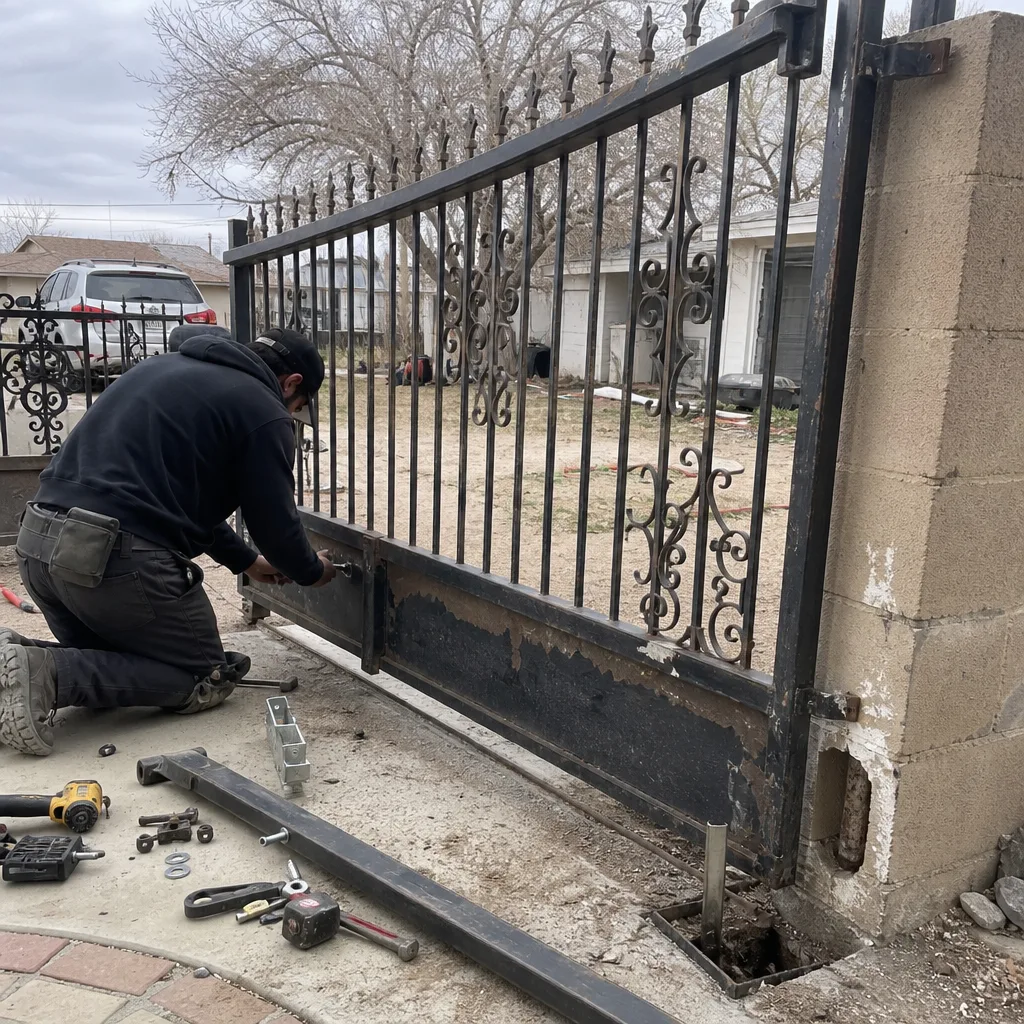 Before
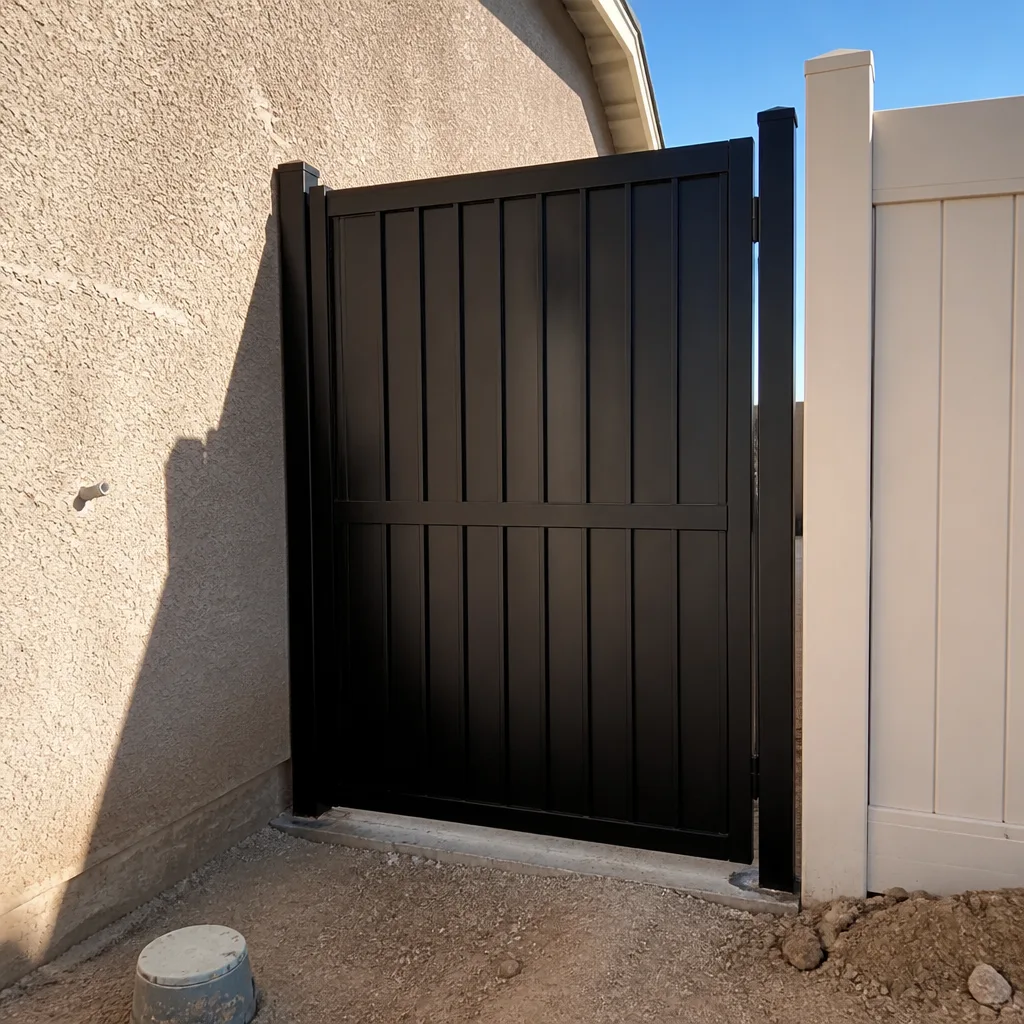 After
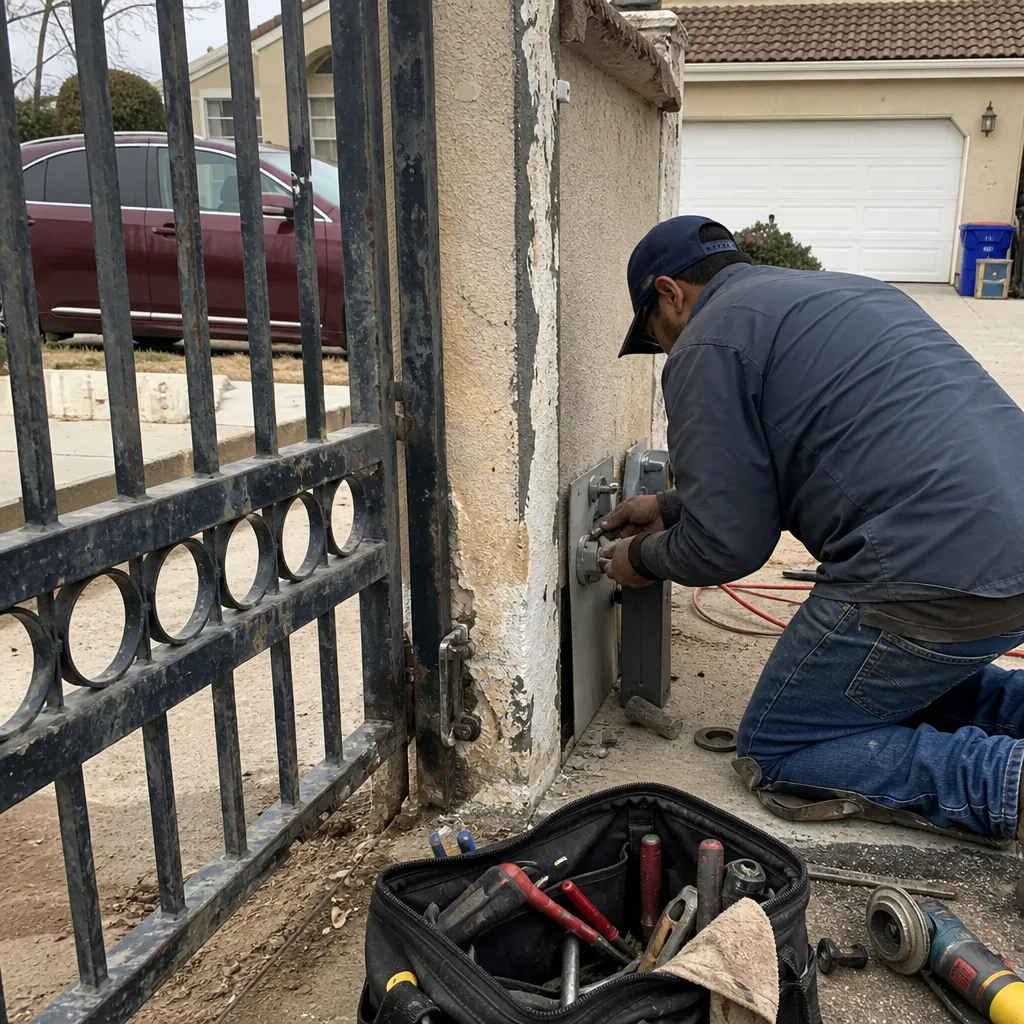 Before
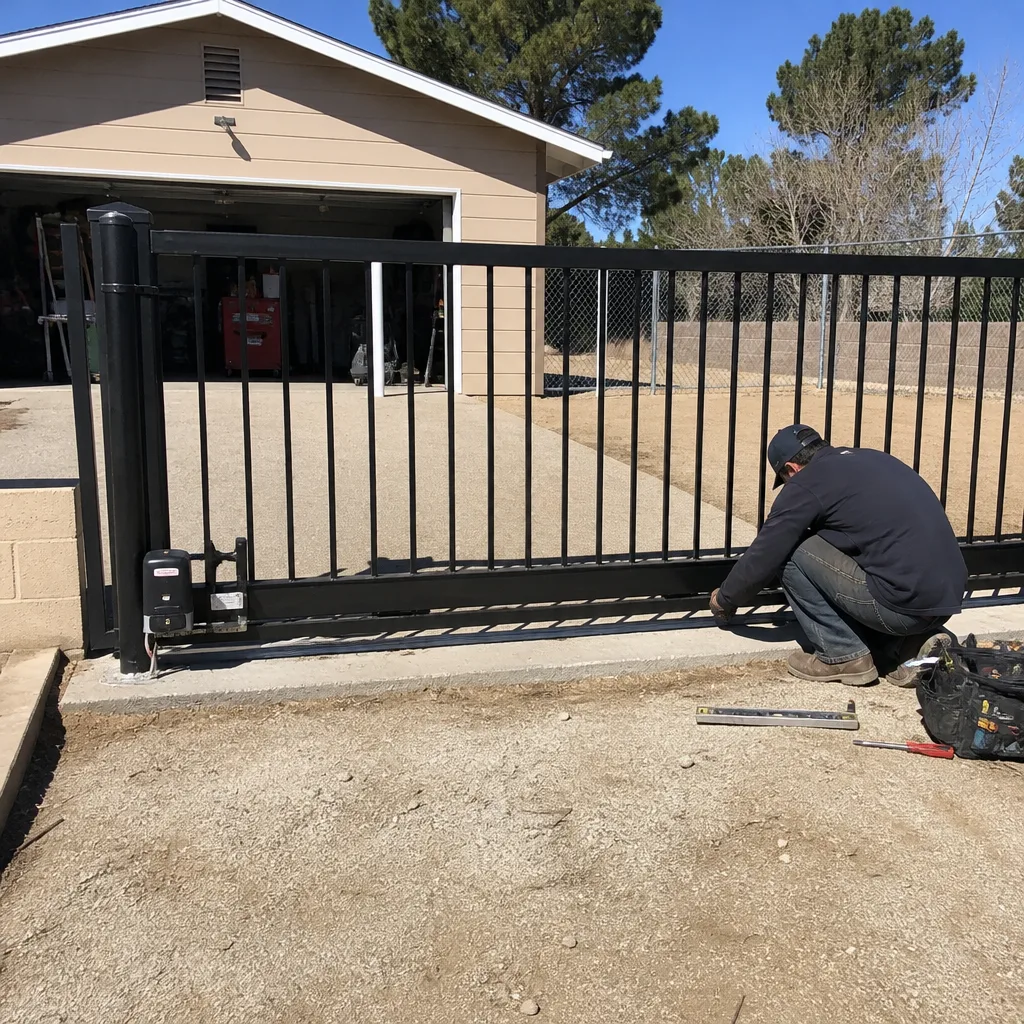 After
 Before
 After