
Last updated November 2, 2026
 Wrought iron
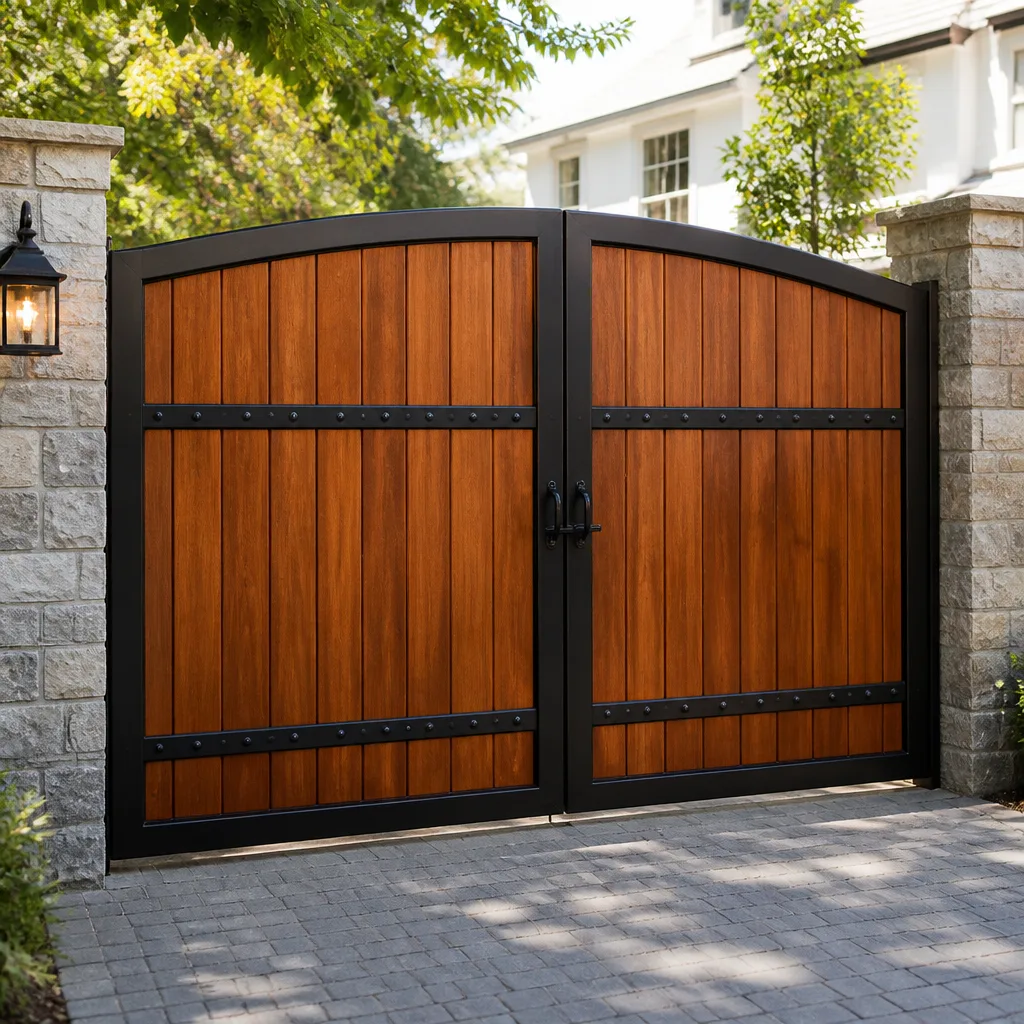 Wood & steel frame
 Farm & ranch
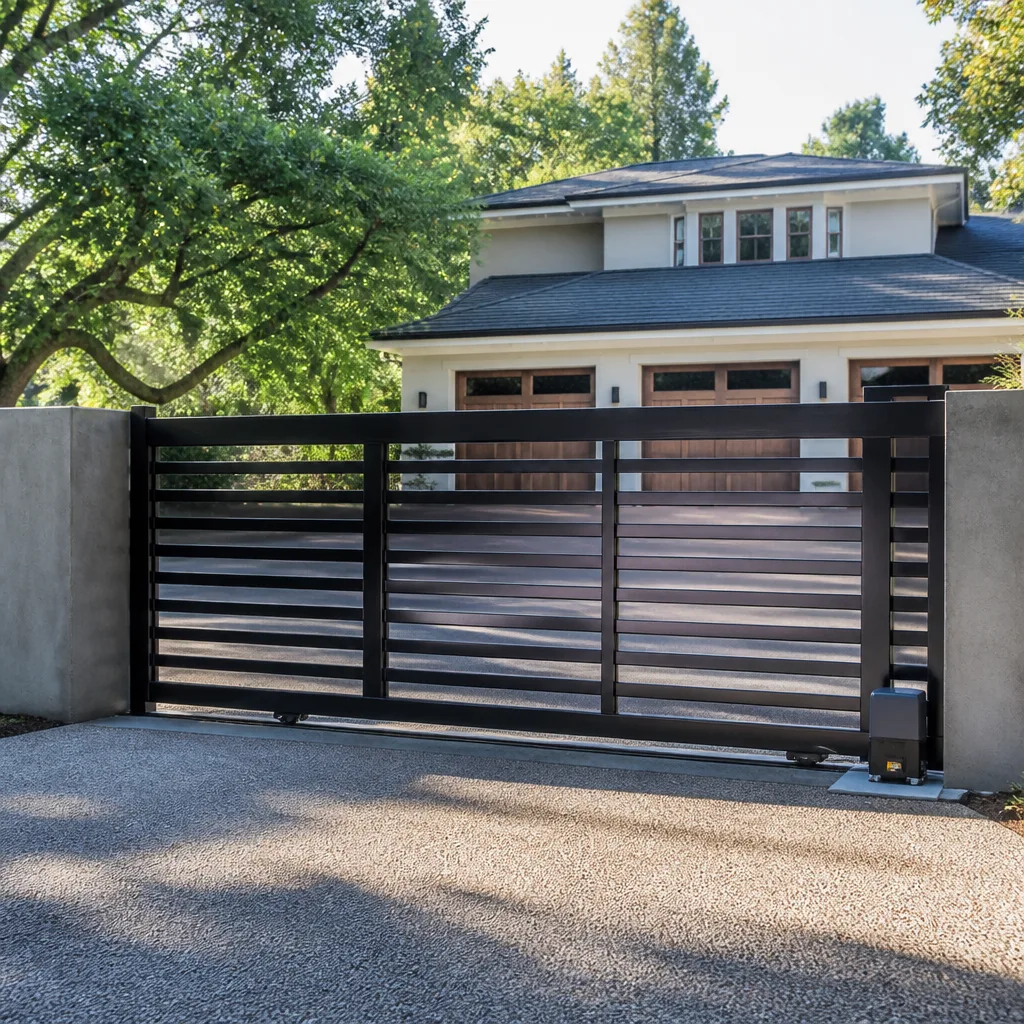 Sliding driveway gates
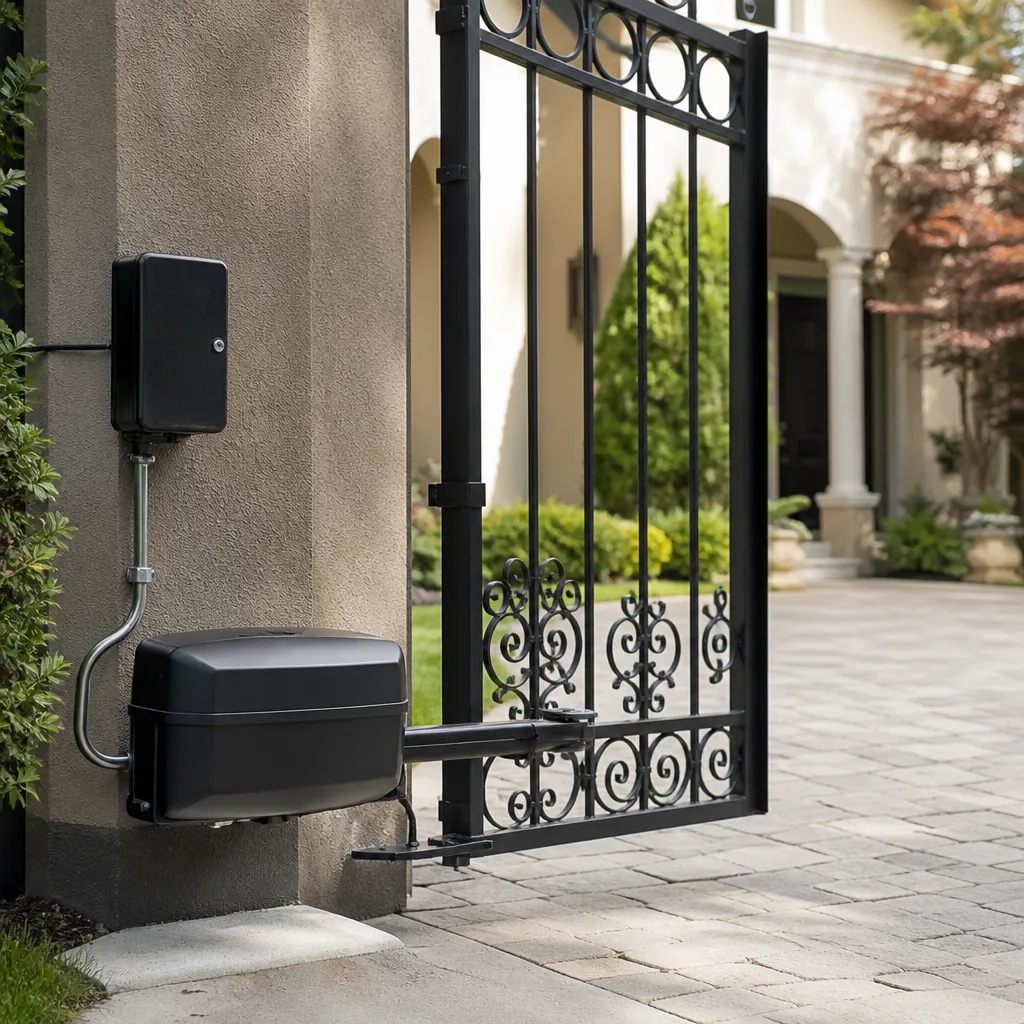 LiftMaster operators
Free on-site gate assessment - hinges, posts, and your LiftMaster or Nice gate operator checked before anything is quoted
The assessment is free and the quote is the invoice.
Get your free estimateGate Repair Maintenance Checklist for Hesperia Homeowners
Here’s something most gate manuals won’t tell you: sand infiltration in gate track rollers is the single most common cause of premature slide gate motor failure in the Victor Valley. It’s also 100% preventable with a 10-minute quarterly task most Hesperia homeowners skip because no one ever told them it was relevant to their specific situation. This guide is built around what actually causes gates to fail in Hesperia, not what causes them to fail in Phoenix or San Diego. You’ll get a task-by-task maintenance checklist organized by frequency, the specific lubrication types that hold up in 110-degree summers, clear pass/fail criteria for every inspection point, and exactly when to handle something yourself versus when to call Gate Repair services.
Styles & brands we work with
- Wrought iron
- Wood & steel frame
- Farm & ranch
- Sliding driveway gates
- LiftMaster operators
Quick Answer
A proper gate maintenance checklist for Hesperia homeowners has three layers: a weekly 5-minute visual check for track obstructions and sensor alignment, a monthly 20-minute mechanical check of rollers, hinges, and post stability, and a quarterly 30-minute electrical check of photocells, ground loops, and motor housing seals. The two tasks that prevent the most expensive Hesperia-specific failures are clearing sand from slide gate tracks and checking that gate posts haven’t shifted in the expansive clay soil common near the Mojave River basin.
Table of Contents
- Why Hesperia’s Climate Demands a Different Maintenance Order
- Weekly Visual Check: 5 Minutes That Prevent Most Failures
- Monthly Mechanical Inspection: Rollers, Hinges, and Post Stability
- Quarterly Electrical Check: Photocells, Contacts, and Motor Housing
- The Right Lubrication for Hesperia’s Heat and Dust
- Inspecting Gate Posts for Soil Movement in Hesperia
- Pass/Fail Criteria: When to DIY vs. Call a Specialist
- Common Mistakes to Avoid
- When to Call a Professional
- Frequently Asked Questions
- The Bottom Line
Why Hesperia’s Climate Demands a Different Maintenance Order
Most gate maintenance checklists are written for coastal climates with moderate temperatures and regular rainfall. Hesperia is not that. We sit at 3,186 feet in the high desert, where summer temperatures routinely push past 100 degrees and winter nights dip below freezing. The Mojave River basin brings a specific soil composition to this area that expands and contracts with moisture changes far more aggressively than most homeowners realize.
The thermal stress alone is significant. Metal expands in the summer heat and contracts in the winter cold. Over a single year, a steel gate in Hesperia goes through temperature swings of 70 to 80 degrees. That repeated expansion and contraction loosens bolts, stresses weld points, and causes control board solder joints to crack. It’s why we see electronic failures in gates here that a homeowner in Orange County might never experience. The heat also breaks down standard lubricants faster, turning them from a protective film into a gritty paste that accelerates wear on moving parts. And then there’s the wind. The afternoon winds coming through the Cajon Pass pick up fine sand and dust and drive it into every crack, seal, and bearing surface on your gate system. That’s why this checklist – along with our Gate Repair Troubleshooting: Common Problems and How to Fix Them guide – starts where most manuals end: with tasks ordered by what actually fails first in this climate.
If you have an electric gate in Hesperia, you’re dealing with all of these factors plus the added complexity of motors, control boards, and safety sensors that don’t tolerate grit or extreme heat gracefully. But here’s the thing we want you to take away from this entire guide: most expensive gate failures in Hesperia are not sudden. They’re slow, predictable, and preventable. The gate that dies in August usually started showing warning signs in March.
Weekly Visual Check: 5 Minutes That Prevent Most Failures
You don’t need any tools for this check. You don’t need to take anything apart. What you need is five minutes and the willingness to actually look at your gate the way a technician would. In our experience, homeowners who do this weekly check catch about 80% of problems before they become repair calls. Here’s what to look for, in priority order.
1. Track obstruction (slide gates). Walk the full length of the gate track. Look for sand accumulation, pebbles, plant debris, or anything that doesn’t belong in the track. In Hesperia, wind-driven sand can build up surprisingly fast, sometimes within a single windy week. A track that’s 30% obstructed makes the motor work significantly harder, which shortens its life. Pass: track is clear and clean. Fail: you can see visible sand piles or debris in the track. Action: sweep it out with a stiff brush or blower.
2. Gate movement sound. Open and close the gate once and listen. A healthy gate moves smoothly with a consistent motor hum. Any grinding, scraping, clicking, or straining sound means something is binding or wearing. In slide gates, a rhythmic scrape usually means a roller is dragging. In swing gates, a creak at the hinge usually means lubrication failure or bearing wear. Pass: smooth and quiet. Fail: any unexpected sound. Action: note the sound and location, then check the relevant component during your monthly inspection.
3. Safety sensor alignment. Look at the photocell sensors near the gate opening. They should face each other directly, and their lenses should be clean. Dust and heat haze in Hesperia both cause sensors to drift out of alignment or accumulate a film that blocks the beam. If your gate reverses for no apparent reason or refuses to close, misaligned or dirty sensors are the most common cause. Pass: sensors align and lenses are clear. Fail: visible tilt, loose mounting, or dust film on the lens. Action: wipe the lens with a dry cloth and visually confirm alignment; if the gate still misbehaves, call a professional who works on automated systems.
4. General integrity scan. Look at the gate itself for anything new: a sag, a lean, a crack in the metal, a loose bolt, a hinge that looks cocked. Look at the posts too. This takes 60 seconds and catches structural problems before they become safety hazards. Pass: nothing new since last week. Fail: anything new, even if it seems minor. Action: track it. If it’s worsening, call a gate repair specialist in Hesperia before it becomes a bigger problem.
Total time: 5 minutes. Frequency: every week, or every two weeks at minimum. This is the highest-return maintenance you can do.
Monthly Mechanical Inspection: Rollers, Hinges, and Post Stability
The monthly check is where you catch mechanical wear before it cascades into motor failure. Set aside 20 minutes and work through this list methodically. You’ll want a flashlight, a clean rag, and possibly a wrench to check for loose fasteners.
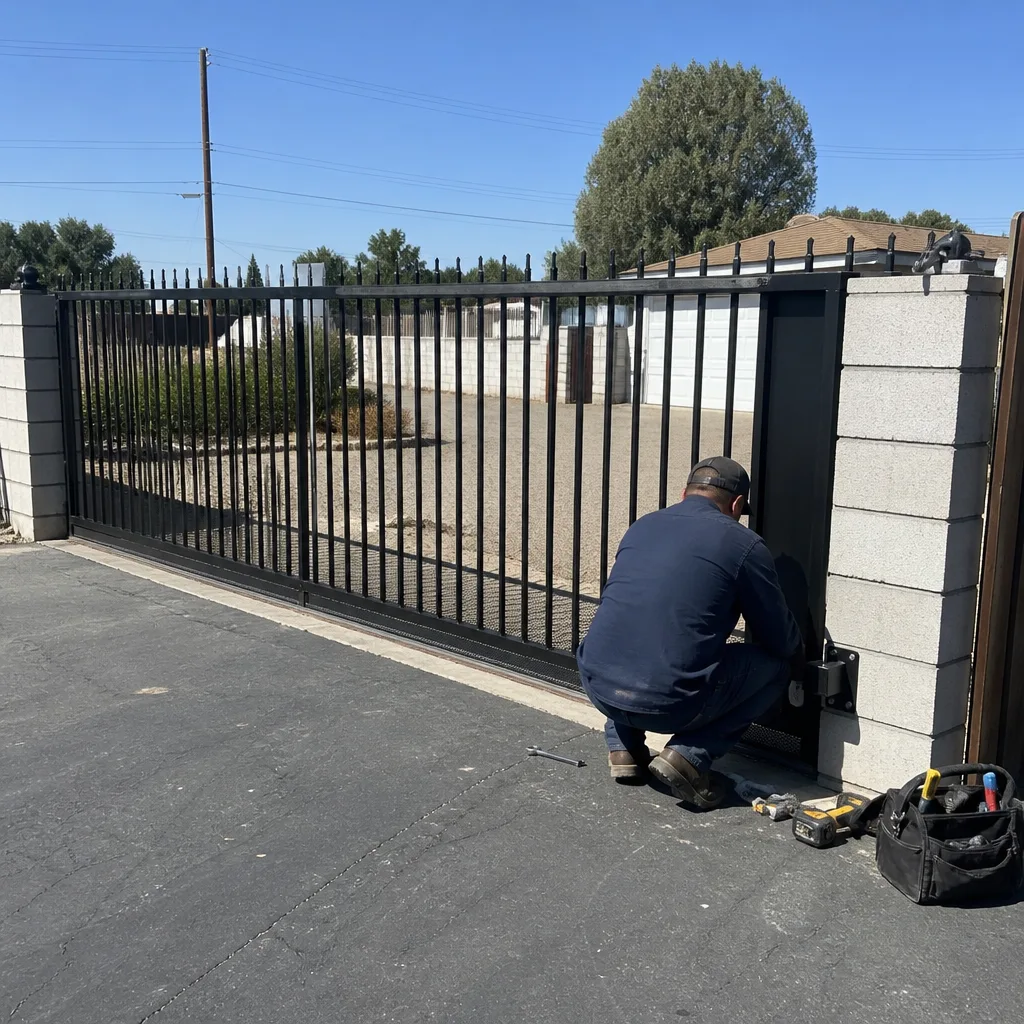
Step 1: Inspect slide gate rollers and wheels. Get down at track level and look at each roller. Worn rollers develop flat spots, wobble, or show visible metal-on-metal wear. A roller that doesn’t spin freely puts lateral load on the gate frame and forces the motor to work harder. In Hesperia’s sandy environment, grit works its way into roller bearings and grinding them down from the inside. Pass: all rollers spin freely, are round, and don’t wobble. Fail: flat spots, wobble, seized bearings, or visible grit packed into the bearing. Action: a seized or flattened roller is a repair item, not a maintenance item. Call a specialist before the damaged roller takes out your motor.
Step 2: Check swing gate hinges and pivot points. For swing gates, hinge wear shows up as a sag. Stand back and look at the top edge of the gate. It should be level. If the latch side hangs lower than the hinge side, the hinges or the post are failing. You can also grab the gate at the latch end and try to lift it. More than a quarter inch of play means hinge bearing wear. Pass: gate is level and there’s no play. Fail: sag or play at the latch end. Action: tighten all hinge bolts first. If the sag remains, the hinges or post need professional attention.
Step 3: Test manual operation. Put the gate in manual mode (most operators have a release handle or key) and move the gate by hand through its full travel. It should move with consistent resistance. You’re feeling for spots where it binds or catches. A gate that moves freely by hand but strains under motor power usually has an electrical issue instead. A gate that binds even in manual mode has a mechanical problem. Pass: smooth full travel by hand. Fail: catches, binds, or requires force at any point. Action: identify where it binds; if you can’t fix it by cleaning and adjusting, call for diagnosis.
Step 4: Inspect all visible fasteners. Hesperia’s temperature swings cause bolts and screws to work loose over time, especially on aluminum gates. Go over every visible bolt on the gate frame, hinges, brackets, and motor mount. A loose motor mount is surprisingly common and causes the entire drive system to run out of alignment. Pass: everything is snug. Fail: anything that turns with a wrench. Action: tighten to spec. If a bolt won’t stay tight because the hole is wallowed out, that’s a sign the underlying component needs replacement.
Step 5: Check post plumb and position. This one gets its own section below because it’s so Hesperia-specific and so often overlooked.
Quarterly Electrical Check: Photocells, Contacts, and Motor Housing
Every three months, the electrical system needs attention. This is where you prevent the automation failures that leave you parked in the driveway wondering why the gate won’t open. Budget 30 minutes.
1. Photocell cleaning and alignment confirmation. You already wipe the lenses during your weekly check. Quarterly, take it further. Remove any accumulated dust from the sensor housings, check that the mounting brackets are still tight, and confirm the beam is actually making contact by interrupting it with your hand while the gate is closing. The gate should stop and reverse immediately. A photocell that’s marginal can work fine for weeks and then fail on a bright, dusty afternoon when the sun angle changes. Pass: gate reverses promptly when the beam is interrupted. Fail: weak or no response. Action: clean, re-aim, retest. If it still fails, the sensor or its wiring needs professional replacement.
2. Control board visual inspection. Open the operator housing and look at the control board. Yes, we know this sounds intimidating. You’re not repairing anything. You’re looking for obvious problems: burned spots, bulging capacitors, corrosion on terminals, ants or other insect intrusions, or a fine layer of desert dust that’s accumulated inside the housing. The heat in Hesperia cooks aging electronics; a capacitor that’s starting to bulge is a failure on a countdown clock. Pass: board is clean and free of visible damage. Fail: any burn marks, bulging, corrosion, or heavy dust inside the housing. Action: blow out loose dust with compressed air and call a gate technician to evaluate any damage. Do not touch the board with your bare hands if you’re not grounded.
3. Motor housing seal check. Look at the rubber gaskets and seals where wires enter the operator housing. Hesperia’s wind drives fine dust into any gap. Once dust gets inside the motor housing, it coats the windings and acts as insulation, causing the motor to run hotter. Over time, that heat breakdown is what kills motors. Pass: seals are intact and the housing is dust-free inside. Fail: cracked seals, visible gaps, or dust film inside the housing. Action: replace the seals or reseal the entry points. This is a low-cost fix that prevents a high-cost motor replacement.
4. Battery backup test (if equipped). If your operator has a battery backup, test it quarterly. Disconnect main power (usually via a breaker or disconnect switch) and run the gate through a few cycles on battery. In Hesperia, high winds can cause scattered power outages, and a dead backup battery means no gate access during an outage. Pass: gate operates normally on battery for at least 3 cycles. Fail: gate is slow, weak, or won’t run on battery. Action: if the battery is more than 2-3 years old, replace it. Most backup batteries in this climate last 3 to 4 years at best.
The Right Lubrication for Hesperia’s Heat and Dust
This is where generic gate maintenance advice fails Hesperia homeowners the hardest. The standard recommendation to use lithium grease or WD-40 on gate hardware is actively harmful in a high-desert climate. Here’s what actually works here and why.
WD-40 is not a lubricant. It’s a water displacer and penetrant. It will briefly make a noisy hinge quiet and then evaporate, leaving the metal drier than before. In a dusty environment like Hesperia, the short-term film it leaves actually attracts and traps blown dust, creating an abrasive paste. If you’ve been using WD-40 on your gate, stop. It’s making the wear worse.
Lithium grease, which many manuals recommend, has two problems in Hesperia. First, it breaks down at sustained high temperatures, turning thin and running out of the joint. Second, it’s sticky in cool weather and acts as a dust magnet. What you want is a dry-film lubricant or a high-temperature rated synthetic grease, depending on the component.
For roller bearings and track wheels: a dry PTFE-based lubricant. It leaves a dry film that doesn’t attract dust, and it holds up to desert heat without degrading. Apply sparingly; the goal is a film, not a coating. Over-application is almost as bad as using the wrong product because excess lubricant becomes a dust collector.
For hinge pins and pivot joints: a synthetic grease rated for high temperatures, applied in small amounts. You want enough to fill the joint, not enough to ooze out and collect sand. Wipe off any excess immediately after application. We’ve inspected hinges in Hesperia where accumulated grease and sand had created a substance with the consistency of valve grinding compound. It was actively cutting the hinge pin every time the gate moved.
For slide gate chains (if your operator drives a chain): a light machine oil or chain-specific lubricant, applied sparingly. Chains in dusty environments should be lubricated lightly and often rather than heavily and rarely. Heavy oil picks up sand and turns the chain into a wearable grinding surface.
What to avoid entirely: WD-40, generic lithium grease, penetrating oils as lubricants, and any product applied heavily enough to drip. In Hesperia, less is more. A clean, lightly-lubricated joint outperforms a grease-laden one every day of the year.
If you’re not sure what product to use on your specific operator, check your manual or call us. We work on LiftMaster, FAAC, BFT, and Linear operators regularly and can tell you exactly what the manufacturer specifies for your model.
Inspecting Gate Posts for Soil Movement in Hesperia
Hesperia has a soil problem that most gate maintenance guides never mention. The clay-rich soil in the Mojave River basin expands when wet and shrinks when dry. During the rainy season, the ground swells. During the long dry season, it contracts and can pull away from the concrete footings around your gate posts. Over a few wet-dry cycles, a gate post that was perfectly plumb can shift enough to throw off gate alignment by a full inch or more.
We’ve seen this happen in neighborhoods throughout Hesperia, particularly in areas with native clay soil near the river basin. The post itself doesn’t fail. The ground around it moves, and the post moves with it. A shift of even half an inch at the post base translates to a much larger misalignment at the gate’s latch edge.
Here’s how to check for it, monthly:
- Stand back and visually align the gate post with a known vertical reference: a nearby wall, a fence line, or a plumb bob if you have one. Any visible lean is a red flag.
- Look at the soil immediately around the base of each gate post. In Hesperia’s dry season, you may see a visible gap between the soil and the concrete footing. That gap means the ground has contracted away from the footing, which repositions the load path for the entire gate system.
- Check the concrete footing itself for cracks. Expansive soil movement cracks footings over time. A cracked footing no longer anchors the post effectively.
- Test the gate operation. If the gate scrapes on the ground, the latch no longer lines up, or the gate binds at the latch end, that’s often post movement rather than a hinge problem.
What do you do if you find post movement? This is not a DIY fix. A leaning or shifted gate post requires the post to be removed, the footing excavated, and the installation redone correctly. It’s structural work. But here’s the good news: if the movement is in its early stages, you may be able to buy time by adjusting the hinges or latch to accommodate the shift. A gate installation specialist in Hesperia can tell you whether adjustment is feasible or whether the post needs to be reset.
The key point is to catch it early. A post that shifts an eighth of an inch per season becomes a failed gate system in three to four years. Monthly visual checks of the soil-footing junction catch this before it gets expensive.
Pass/Fail Criteria: When to DIY vs. Call a Specialist
Every maintenance task in this guide has a pass/fail outcome and a recommended action. Here’s the consolidated version so you can reference it quickly.
Handle it yourself:
- Cleaning sand and debris from slide gate tracks
- Wiping photocell lenses and visually confirming alignment
- Tightening loose bolts on hinges, brackets, and motor mounts
- Applying the correct dry-film lubricant to rollers and hinges
- Blowing dust out of the operator housing with compressed air
- Replacing backup batteries (if comfortable with basic electrical work)
Call a gate specialist:
- Any motor noise that wasn’t there before
- Photocells that fail testing after cleaning and re-aiming
- Control board damage: burns, bulges, corrosion, or insect damage
- Gate posts that show visible lean or soil-footing separation
- Rollers or hinges that are worn, seized, or show flat spots
- Any electrical component that requires probing with a multimeter
- Gate operation that’s intermittent or unreliable
The dividing line is pretty clear: if the fix involves cleaning, alignment, tightening, or lubricating, you can handle it. If it involves electrical diagnosis, structural work, or component replacement, you need a technician who works on gate systems specifically. For details on permits and legal requirements, see our guide to Gate Repair Permits, Codes & Inspections in CA: What You Need to Know. Gate systems are not a place for guess-and-test troubleshooting. A misdiagnosed electrical problem can damage a control board that costs several hundred dollars to replace. Given that electricity is involved and automated gates carry significant pinch and crush forces, we’ll say it plainly: don’t open the control board housing and start probing around unless you have the training to do it safely. The safety sensors, motor contacts, and high-tension moving parts on an automated gate can injure you or cause property damage if handled incorrectly.
Common Mistakes to Avoid
- Using WD-40 or generic lithium grease on gate hardware. In Hesperia’s heat and dust, these products either evaporate or turn into an abrasive paste. Use dry-film PTFE lubricant for rollers and high-temp synthetic grease for hinges. This single mistake accounts for more premature hinge wear in Hesperia than any other.
- Skipping track cleaning because “it doesn’t look that bad.” A quarter inch of sand in the track doubles motor load. Over months, that load translates to heat, and heat kills motors. The 5-minute weekly sweep is cheap insurance.
- Ignoring a change in gate sound. Your gate tells you when something is wrong. A new grind, scrape, or click is the earliest warning sign of a developing failure. Gates don’t heal themselves; they only get worse.
- Thinking post lean is “just how it’s been.” Gate posts in Hesperia move with the expansive clay soil. A post that’s out of plumb didn’t start that way. It’s shifting, and it will continue to shift until the gate binds or the post fails.
- Not testing the battery backup. Most Hesperia homeowners have a battery backup on their gate operator and have never tested it. When the power goes out during a wind event, they discover too late that the battery died two years ago.
- Assuming all gate operators use the same maintenance products. A homeowner-grade Mighty Mule operator has different maintenance needs than a commercial-grade FAAC or LiftMaster system. Follow the manufacturer’s specification for your specific model. If you’re unsure, check the manual or ask a technician who works with your brand.
- Putting off a small repair because it’s “working fine for now.” A worn roller isn’t just a worn roller. It’s a load on the motor, a source of frame stress, and a future failure that will cost three times as much to fix when it cascades. Small fixes early are always cheaper than big fixes later.
When to Call a Professional
There are maintenance tasks, and there are repair calls. The checklist above keeps you in maintenance territory. But when any of these situations appears, the maintenance window has closed and you need a diagnosis: the gate won’t open or close reliably, the motor hums but the gate doesn’t move, the gate reverses randomly, the control board shows visible damage, a post is visibly leaning, or you’ve had the same problem recur after your own fix. These are not items you can solve with a better lubricant. Gate Repair Hesperia offers free estimates in Hesperia. Call (877) 693-9694 and describe what you’re seeing. We work on LiftMaster, FAAC, BFT, Linear, and the other major gate brands, so we can usually diagnose the problem over the phone before we ever arrive.
Frequently Asked Questions
At minimum, do the 5-minute weekly visual check every week, the 20-minute monthly mechanical check every month, and the 30-minute quarterly electrical check every three months. Hesperia’s wind-driven sand and extreme temperature swings punish neglected gates faster than coastal climates do, so consistency matters more than thoroughness. A gate maintained on this schedule will typically outlast a neglected gate by three to five years. For more guides & resources on keeping your gate running smoothly, explore our blog.
Sand and dust accumulation in the track and roller bearings is the leading cause of slide gate motor failure in the Hesperia area. The motor has to work harder to overcome the increased rolling resistance, which generates heat, which breaks down the motor windings over time. The 5-minute weekly track sweep is the single most effective thing you can do to extend motor life.
This is almost always a photocell alignment problem. As the sun angle changes late in the day, direct sunlight can hit the receiver lens and blind it, or a dusty lens can scatter the beam enough to trigger a false obstruction signal. Clean the lenses and check alignment. If the problem persists after cleaning and re-aiming, the sensor itself may need replacement.
Mechanically inclined homeowners can often replace a simple roller or hinge, provided you have the right part and the right tools. The risk is not the replacement itself; it’s that a worn roller is often a symptom of a deeper problem like a bent track, a shifting post, or a misaligned gate frame. Replacing the roller without addressing the root cause means you’ll replace it again in six months. If you’re unsure, call a gate specialist for a diagnosis first.
For rollers and track wheels, use a dry PTFE-based lubricant that leaves a dry film and doesn’t attract sand. For hinge pins, use a synthetic grease rated for high temperatures, applied sparingly and wiped clean. Avoid WD-40 and generic lithium grease; in the high desert, they either evaporate quickly or collect dust and become abrasive.
Look for visible gaps between the soil and the concrete footing around each post, especially during the dry season. Check for cracks in the footing concrete. Stand back and see if the post is no longer plumb. And pay attention to the gate operation: if the latch suddenly doesn’t line up or the gate scrapes the ground, that’s often post movement rather than hardware failure. Call (877) 693-9694 for a free evaluation if you see any of these signs.
The Bottom Line
Hesperia gates fail in predictable ways: sand in the tracks, heat-stressed electronics, shifting posts in expansive clay soil, and lubrication breakdown from extreme temperatures. Each of those failures is slowed or prevented by a maintenance routine you can complete in under an hour per month. The weekly visual check catches problems early. The monthly mechanical check catches wear before it becomes failure. The quarterly electrical check prevents the automation failures that leave you locked out or stuck outside. Do this consistently, and your gate will last years longer than a neglected one. Skip it, and you’ll pay for the eventual repair. If the checklist turns up something you’d rather not handle yourself, call (877) 693-9694 for a free estimate in Hesperia.
Written by the team at Gate Repair Hesperia, serving Hesperia since 2013.
See the difference
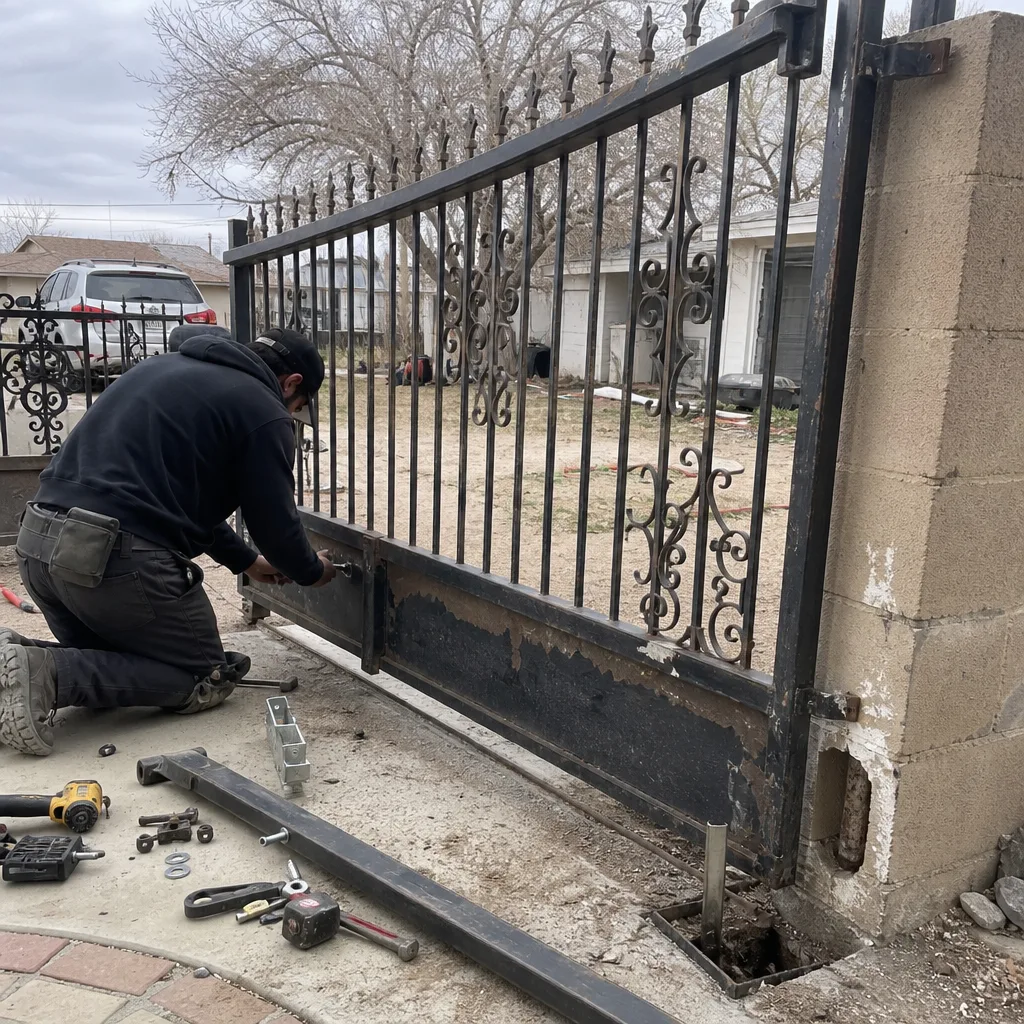 Before
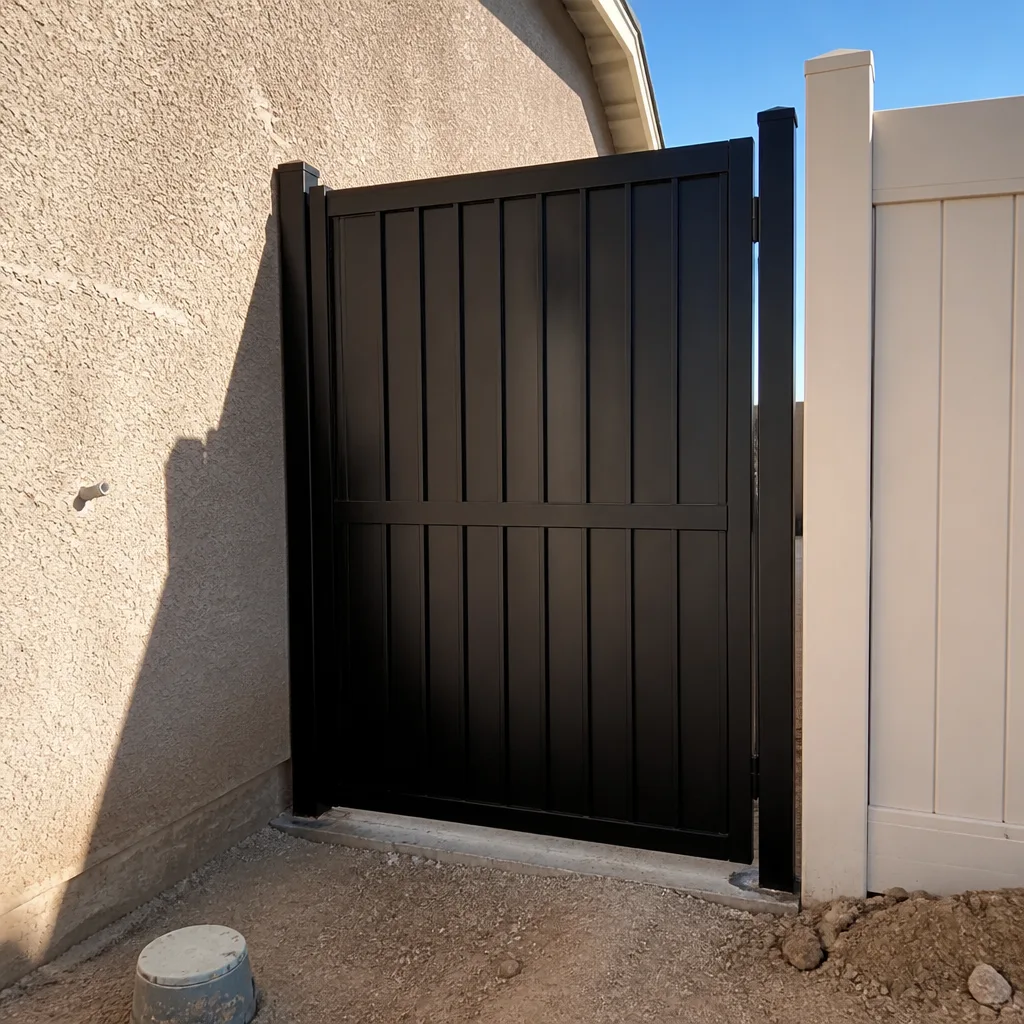 After
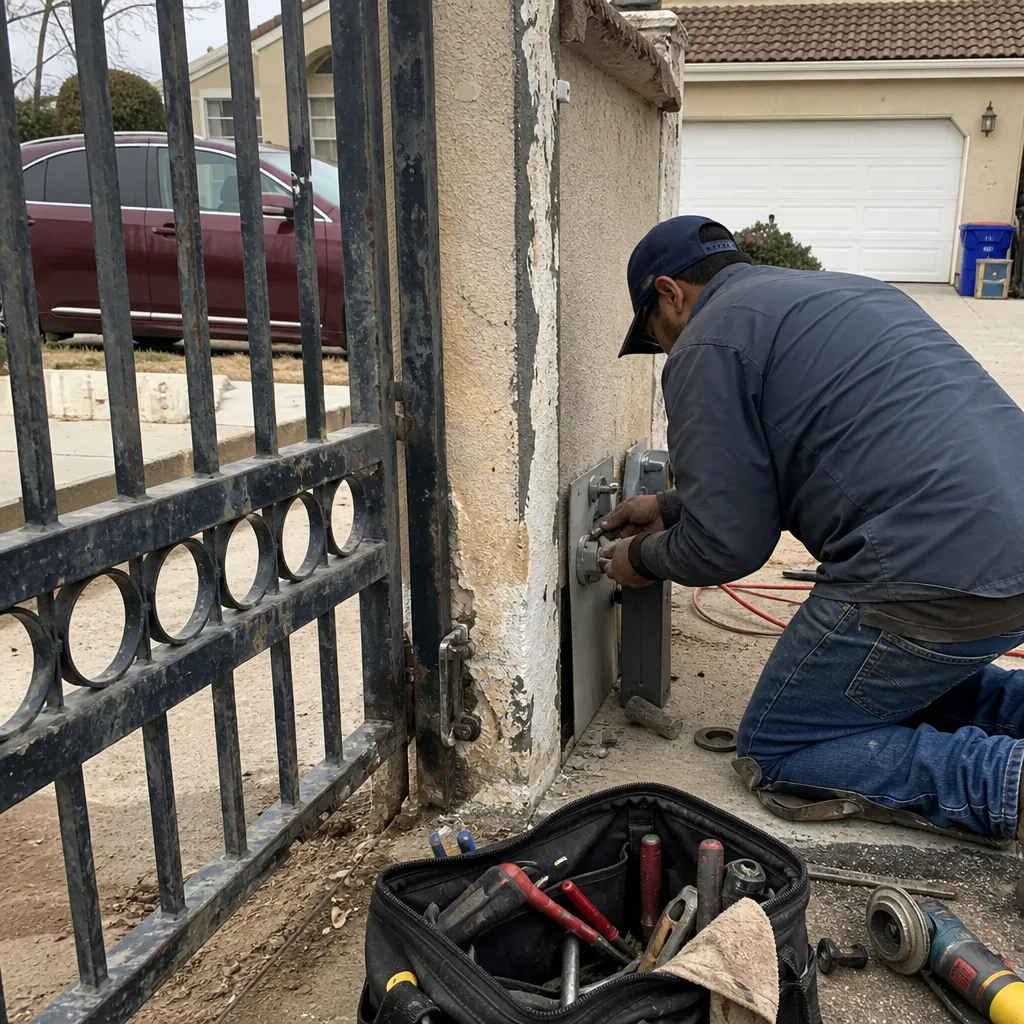 Before
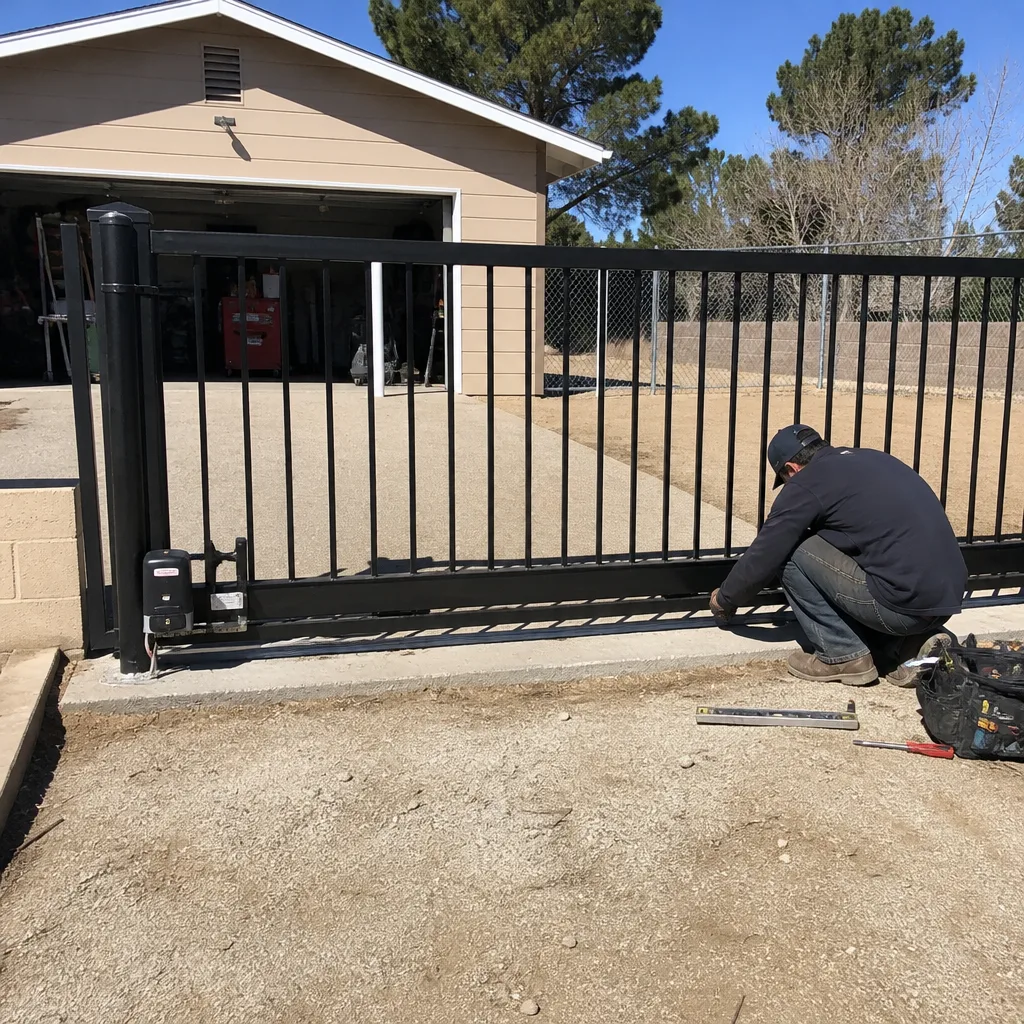 After
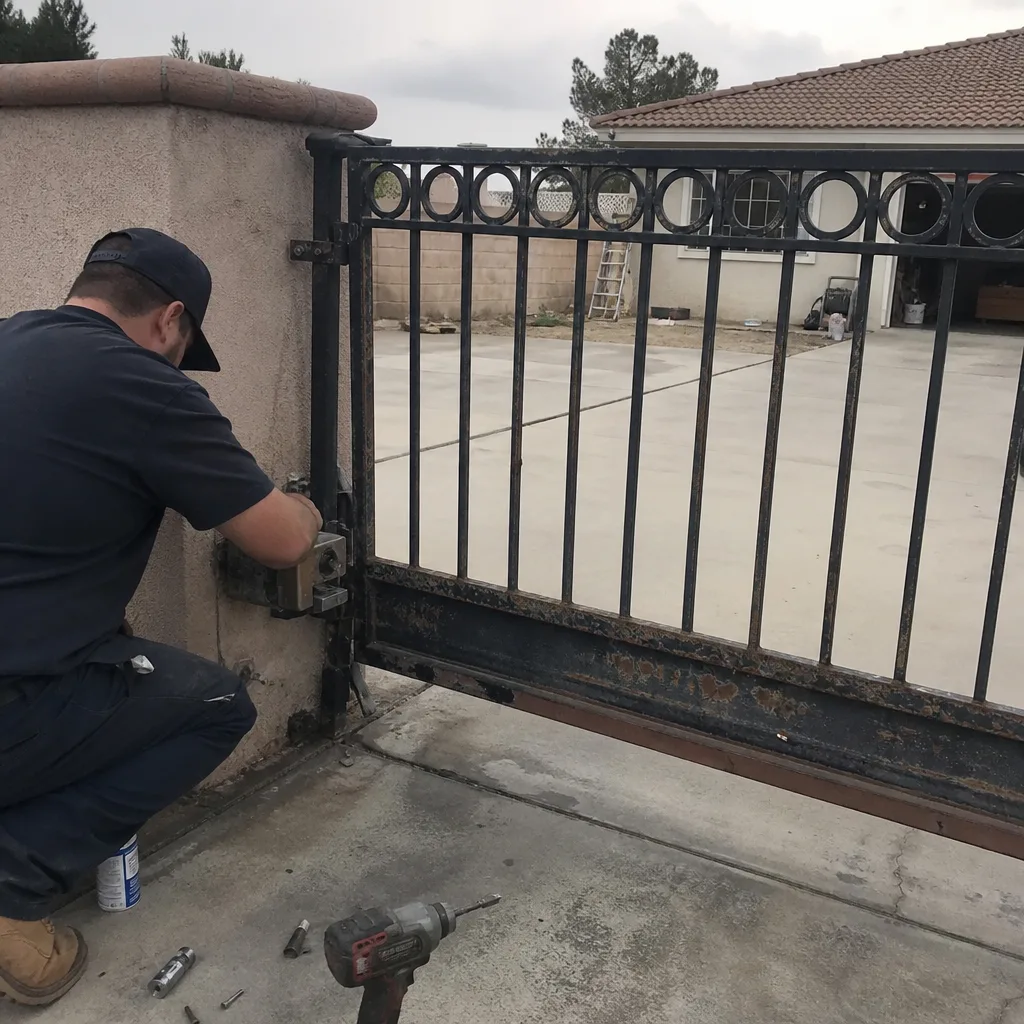 Before
 After