
Last updated November 2, 2026
 Wrought iron
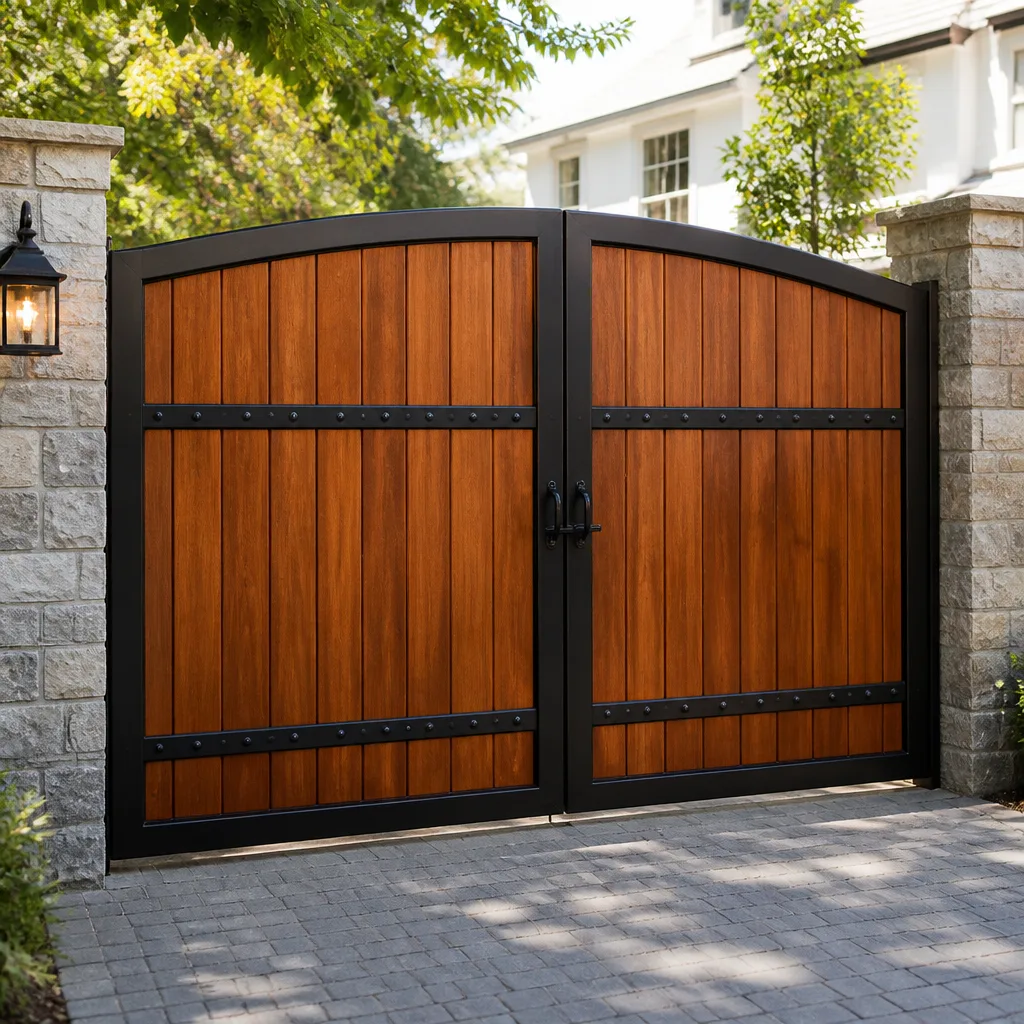 Wood & steel frame
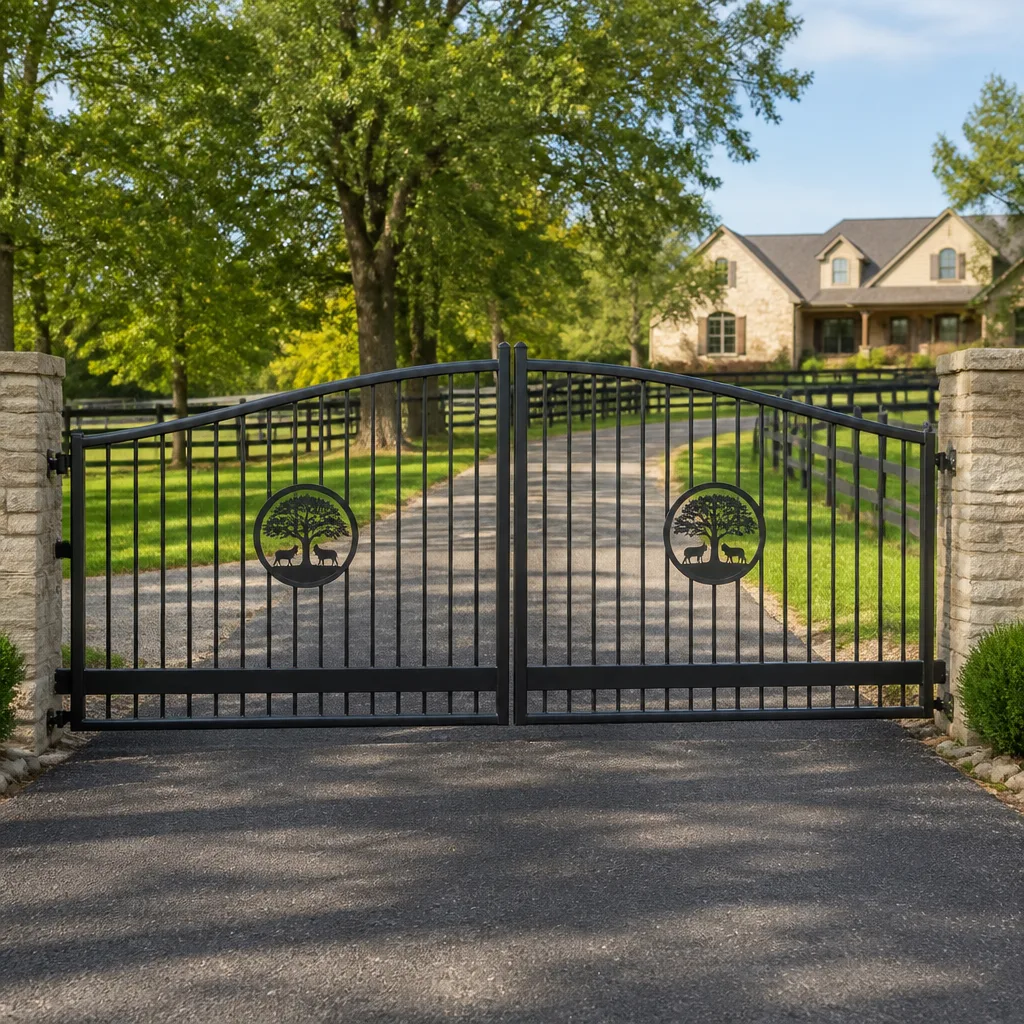 Farm & ranch
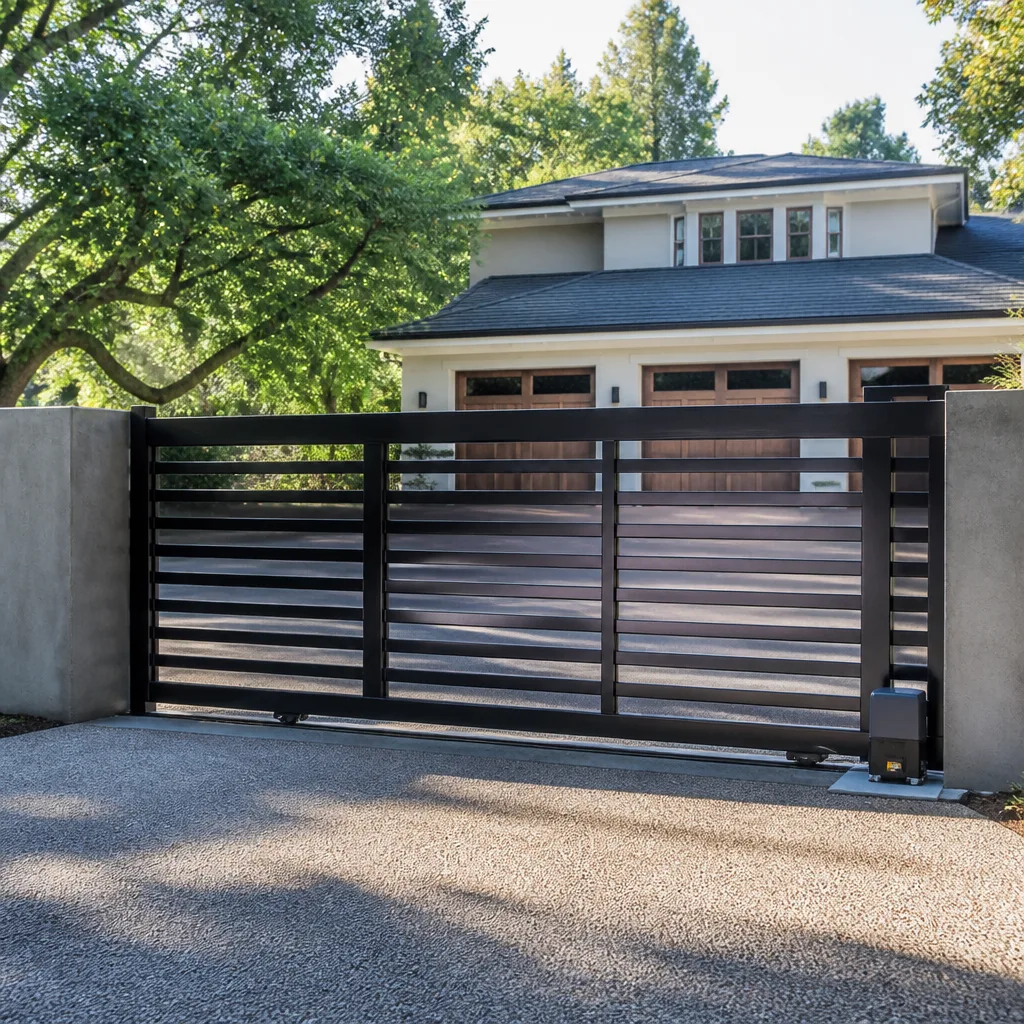 Sliding driveway gates
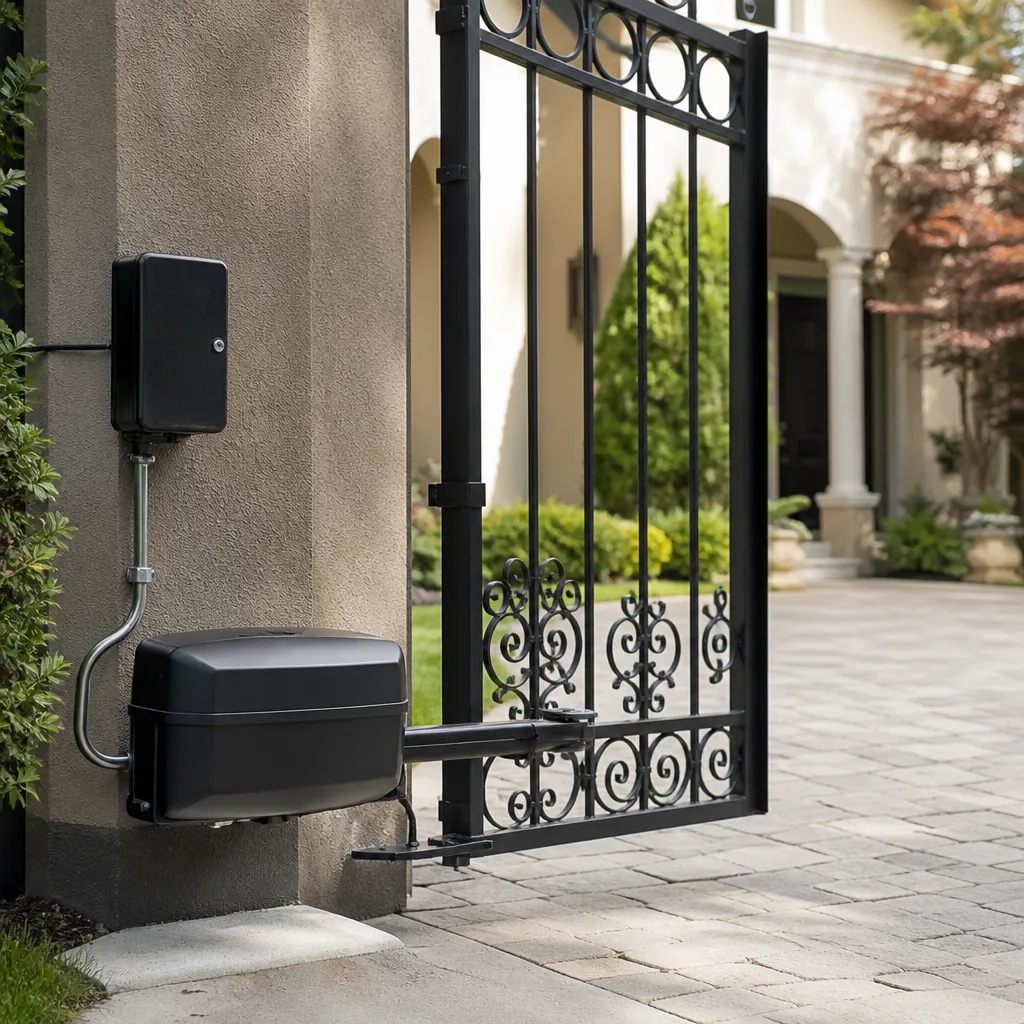 LiftMaster operators
Free on-site gate assessment - hinges, posts, and your LiftMaster or Nice gate operator checked before anything is quoted
The assessment is free and the quote is the invoice.
Get your free estimateDIY vs Professional Gate Repair: The Hesperia Homeowner’s Decision Guide
Most DIY gate repair injuries don’t happen on the first attempt. They happen on the second. A homeowner adjusts a limit switch or tinkers with the opener, it works for two weeks, then it fails mid-cycle while a car is passing through or a kid is standing nearby. The injury gets blamed on the gate, not the repair. That’s the real question behind DIY gate repair in Hesperia: not whether you’re handy enough, but whether you know which failures turn dangerous when they come back. This guide draws those lines task by task, so you know exactly what you can handle yourself and what needs Gate Repair services before someone gets hurt.
Quick Answer
Most manual gate repairs in Hesperia are safe for a competent DIYer: hinges, latches, wheel alignment, and lubrication. Most automated gate repairs are not, because they involve 120V line voltage, stored spring tension, or entrapment protection systems governed by UL 325 safety standards. If the problem is with a motor, control board, safety sensor, or any wiring between those components, call a gate specialist.
Styles & brands we work with
- Wrought iron
- Wood & steel frame
- Farm & ranch
- Sliding driveway gates
- LiftMaster operators
Table of Contents
- The Task Matrix: What’s DIY-Safe, What’s Pro-Only
- Why UL 325 Changes Everything About DIY Gate Repair
- 24V DC vs 120V AC: The Electrical Reality Check
- The Real Cost of DIY Gate Repair in Hesperia
- Safe DIY Tasks You Can Do This Weekend
- Repairs That Need a Dedicated Gate Technician
- From the Motor to the Control Board: What Actually Fails
- Hesperia-Specific Factors That Affect Gate Repair
The Task Matrix: What’s DIY-Safe, What’s Pro-Only
We break gate repair into three categories. The line between them is not skill. It’s consequence. A mistake on a sagging gate wheel is annoying. A mistake on a control board or a torsion spring can send a 600-pound gate slamming into a vehicle or a person. Here’s how the task matrix breaks down for a typical Hesperia property.
Category 1: Genuinely DIY-Safe
- Lubricating hinges, rollers, chains, and the operator track
- Replacing remote control and keypad batteries
- Cleaning photo-eye sensors with a dry cloth
- Tightening loose hinge bolts and bracket screws
- Clearing small rocks and debris from under the gate path
- Visually checking for rust, wear, or cracked welds
These tasks require no disassembly, no electrical work, and no stored-energy release. They’re maintenance, not repair. In most High Desert homes we see around Hesperia, doing these four times a year prevents about a third of the service calls we run.
Category 2: Proceed with Caution, Or Just Call Us
- Adjusting gate alignment on a sliding gate with a V-track
- Replacing a manual gate latch or drop rod
- Re-tensioning a chain-drive manual opener
- Reprogramming a remote where the instructions are clear and the opener is under 10 years old
These sit in a gray zone. If you have the tools and you’ve done it before, you’ll probably get through it. But each one can hide a secondary problem. A gate that won’t stay aligned usually has a worn wheel or a settled concrete pad underneath, and fixing the symptom won’t fix the cause.
Category 3: Pro-Only. No Exceptions.
- Any repair involving the motor, gearbox, or drive assembly
- Control board diagnosis or replacement
- Wiring repairs between the opener and safety devices
- Safety sensor or photo-eye replacement
- Entrapment protection reset, bypass, or adjustment
- Any repair on a commercial-grade operator like FAAC, BFT, or Viking
- Spring tension work on any gate, manual or automated
The gate industry has one safety standard that governs all of this, and it’s the reason Category 3 exists at all.
Why UL 325 Changes Everything About DIY Gate Repair
UL 325 is the federal safety standard for automated gate operators. It’s not a suggestion. In California, automated gates installed or modified after 2001 must comply with UL 325 entrapment protection requirements. What most Hesperia homeowners don’t know is this: the moment you modify an automated gate system, you assume legal responsibility for its compliance.
Suppose your gate reverses when it shouldn’t. You open the control board cover, find the sensitivity dial, and back it off so the gate closes fully. You’ve fixed the symptom. You’ve also disabled the primary entrapment protection. If the gate then strikes a person, a vehicle, or a pet, the injury is attributed to your modification, not the gate. Homeowner’s insurance policies typically exclude injuries caused by unpermitted modifications to automated equipment, which means you’re personally exposed.
This is not a theoretical risk. The Consumer Product Safety Commission tracks automated gate entrapment incidents, and the pattern is consistent: a homeowner or an unlicensed handyman adjusts something, the gate works temporarily, then it fails in a way that traps or strikes someone. The incident report never says “homeowner modified the operator.” It says “gate malfunction.” The distinction rarely matters in a courtroom.
Professional gate technicians work under the same standard, but with a critical difference: we carry liability insurance and we document every adjustment. If a gate we service injures someone, the claim runs through our insurance, not your personal assets. That’s what you’re buying when you hire a specialist. It’s not just labor. It’s legal risk transfer.
24V DC vs 120V AC: The Electrical Reality Check
Modern automated gates in Hesperia run on two electrical systems, and they’re very different animals. Here’s what matters for the DIY decision.
120V AC Systems
Older operators, many commercial units, and budget installations from the 1990s and early 2000s run the motor directly off 120-volt AC line current. That’s the same voltage as your wall outlets. Opening the electrical box on one of these without disconnecting the breaker is genuinely dangerous. We’ve seen corroded terminals that arc, fried transformers, and wire nuts that disintegrate on contact in High Desert heat. If your gate operator has a metal electrical box with a thick power cord running to a dedicated circuit, treat anything inside that box as pro-only.
24V DC Systems
Most residential openers made in the last 15 years, including units from Linear and most Mighty Mule models, run on 24-volt DC. The motor voltage is safer to handle, but that does not make the system safe to modify. The control board on a 24V DC system is still processing inputs from safety sensors, limit switches, and the radio receiver, and a wrong jumper or reversed polarity can fry the board in one power cycle. Replacement boards for name-brand operators run $150 to $450 before labor, and a board you fried yourself is not covered by warranty.
The rule holds across both systems: safe to inspect, safe to clean, safe to reset a breaker, but not safe to open the motor housing, rewire a sensor, or swap a board. If you have to remove more than a cover plate, you’ve crossed the line.
The Real Cost of DIY Gate Repair in Hesperia
The most expensive gate repair is the one you do twice. DIY cost analysis almost always accounts for parts and time. It rarely accounts for wrong parts, voided warranties, or damage caused by the first attempt. Let’s run the realistic numbers for a typical Hesperia automated gate failure.
Scenario: Gate Opens Halfway and Stops
The homeowner diagnoses a limit switch problem. They order a replacement limit switch online for $38. They spend a Saturday afternoon installing it. The gate still stops halfway. They order a control board for $210. That doesn’t fix it either. They call us. We diagnose a worn gear in the drive assembly in under an hour. Total homeowner spend before calling: $248 in parts, two weekends of work, and a gate that has been half-open or inoperable for two weeks. The repair itself took us about two hours.
| DIY Path | Professional Path |
|---|---|
| Replacement limit switch: $38 | Diagnostic visit: typically waived with repair |
| Replacement control board: $210 | Drive gear replacement: $180-$320 including parts |
| Two weekends of labor: $0 but real time cost | Repair time: 2-3 hours |
| Gate inoperable for 14+ days | Gate operational same visit |
| Total out-of-pocket: $248, not fixed | Total out-of-pocket: $180-$320, fixed |
There’s another cost most DIY guides don’t mention: warranty. Almost every gate opener manufacturer voids the warranty if the unit has been worked on by someone other than a licensed or factory-trained technician. A homeowner who opens a Linear or BFT operator and swaps a board has just voided whatever coverage remained on a $900 to $2,500 piece of equipment.
And then there’s the Hesperia-specific cost: security. A gate that doesn’t close is an open invitation. Hesperia’s property crime rate per capita runs above the national average, and a broken gate is a visible signal that a property is unattended or unsecured. The soft cost of a two-week DIY delay isn’t measured in dollars until something goes missing.
Safe DIY Tasks You Can Do This Weekend
We’re not anti-DIY. We’re anti-DIY-without-a-matrix. Here are the tasks any Hesperia homeowner can safely do, with the exact steps we’d recommend.
1. Lubricate Moving Parts
- Put the gate in manual release mode using the operator’s release handle.
- Wipe the chain, rail, or track with a clean rag to remove High Desert dust buildup.
- Apply a silicone-based or lithium-based lubricant to hinges, rollers, and the drive chain. Do not use WD-40 as a lubricant; it cleans but doesn’t lubricate for more than a few days.
- Cycle the gate manually twice to distribute the lubricant.
- Return the operator to automatic mode and run one full open-close cycle.
2. Replace Remote Batteries
- Open the remote case with a small Phillips screwdriver.
- Note the battery type, usually a CR2032 coin cell or A23 12-volt cell.
- Replace with the same type, matching polarity.
- Test the remote from 20 feet away, inside your vehicle if you normally use it from a car.
- If the remote still doesn’t work, the problem is the receiver, not the battery. That’s a service call, not a parts swap.
3. Clean Photo-Eye Sensors
- Locate the photo-eye sensors on both sides of the gate opening, about 12 to 18 inches off the ground.
- Wipe the sensor lenses with a dry microfiber cloth. Hesperia dust alone can block the beam.
- Check that both sensors are still aligned and not knocked loose by wind or yard equipment.
- Test the gate. If it reverses immediately when closing, sensor blockage or misalignment is still the problem.
4. Inspect for Wear
- Walk the full length of the gate with a flashlight.
- Look for cracked welds, rust at the base of hinge posts, and wheel wear on sliding gates.
- Check the ground track for debris and erosion. High Desert rain does weird things to gate pads.
- Photograph anything questionable and keep a running service log.
These four routines, done quarterly, will prevent most avoidable gate failures in Hesperia’s climate. They take about 30 minutes total. None of them involve opening an electrical enclosure, releasing stored tension, or modifying a safety system.
Repairs That Need a Dedicated Gate Technician
Here’s where we draw hard lines. If any of these symptoms describe your gate, the safe move is to call a specialist. We’re Gate Repair Hesperia home to Hesperia’s gate systems, and we service every brand in your neighborhood, from homeowner-grade units to commercial operators.
Motor and Gearbox Repairs
A motor that hums but doesn’t move, a gate that grinds when starting, or a unit that trips its breaker repeatedly usually points to a failing motor, capacitor, or gearbox. These components handle hundreds of pounds of force. Rebuilding them requires specific torque specs and proper reassembly. Not a weekend project.
Control Board Diagnosis and Replacement
Control boards fail in specific patterns: intermittent operation, unresponsive remotes, gate opening but not closing, or random reversal. Diagnosing a board requires a multimeter and a wiring diagram specific to your operator model. We carry board-level knowledge for Viking, FAAC, BFT, and Linear systems, among others. We can also tell you if the board is actually the problem, which saves you a $300 part you didn’t need.
Safety Sensor and Photo-Eye Replacement
Entrapment protection is a life-safety system. Replacing a photo-eye sensor means wiring it into the control board correctly and testing it under UL 325 protocols. If you install it wrong, the gate may still function while failing to protect against entrapment. That’s the most dangerous failure mode possible, because everything appears to work.
Wiring and Electrical Repairs
High Desert heat kills wire insulation. We find cracked, brittle, and shorted wiring in Hesperia gate installations on a weekly basis, especially on older properties along Main Street and in the older neighborhoods off Bear Valley Road. Wiring repair on an automated gate means running new conductors, often underground or through metal conduit, and landing them correctly in the control board. If you’re not comfortable with a multimeter, don’t attempt it.
Complete Gate Replacement
Sometimes the repair isn’t the right call. A gate with a rusted-through frame, a cracked weld at the hinge, or a bent track from a vehicle strike is past fixing. When that happens, Gate Installation in Hesperia handles the full replacement, including the operator, the safety devices, and the access control. You don’t need to source a welder and an electrician separately.
From the Motor to the Control Board: What Actually Fails
We run hundreds of gate service calls across Hesperia every year. The same failure patterns repeat. Here’s what actually breaks, ranked by frequency, so you know what to look for.
1. Photo-Eye Problems (Most Common)
Dust, wind-blown debris, loose mounting brackets, or sunlight glare. Hesperia’s wind is hard on photo-eyes, especially in the Mesa area and any property backing up to open desert. Usually a cleaning issue, sometimes a wiring issue.
2. Battery Failures in Backup Systems
Many Hesperia gates have backup battery systems for power outages. Those lead-acid batteries die in the heat and need replacement every 3 to 5 years. A gate that works on AC power but dies when the power goes out has a dead backup battery.
3. Limit Switch Wear
Sliding gates in particular rely on limit switches to stop the gate at full open and full close. Those switches wear out from repeated cycling. A gate that stops short or bangs into the post has a limit switch problem.
4. Capacitor Failures
Capacitors give the motor its starting boost. When they fail, the motor hums but doesn’t start. Capacitor replacement is cheap and quick, but requires opening the electrical enclosure and safely discharging the old capacitor, which holds a charge even when the power is off.
5. Control Board Failures
Surge damage from Hesperia’s summer lightning, heat degradation, or water intrusion from a poorly sealed enclosure. Board failures are expensive when misdiagnosed, because homeowners often replace the board when the real problem is something downstream like a sensor or a relay.
6. Gear and Drive Assembly Wear
The mechanical side fails less often than the electrical side, but when it fails it’s loud. Grinding, clunking, or jerky movement suggests a stripped gear, a stretched chain, or a seized bearing.
Knowing the failure pattern helps you describe the problem accurately on the phone, which gets you a faster diagnosis and a more accurate estimate. We’re the Gate Repair in Hesperia team that talks you through the initial triage often on the first call.
Hesperia-Specific Factors That Affect Gate Repair
Hesperia has a repair profile that’s different from Victorville or Apple Valley, and definitely different from coastal California. The High Desert climate doesn’t just affect your gate; it determines which parts fail and when. Here’s what we see specifically in Hesperia.
Wind-Driven Dust and Sand
Hesperia gets the Mojave’s spring wind season hard. That fine dust penetrates control board enclosures, coats photo-eye lenses, and grinds into chain drives and V-tracks. Mechanical components here wear faster than in coastal areas. More frequent lubrication and sensor cleaning is not optional in Hesperia.
Extreme Temperature Swings
Summer highs over 100 degrees and winter nights below freezing put thermal stress on every electronic and mechanical component. Capacitors are the usual victims, followed by backup batteries in solar-equipped systems. Wire insulation cracks faster here too.
Property Crime Dynamics
Hesperia’s mix of suburban neighborhoods and open desert creates security needs that are more urgent than in gated communities closer to the Cajon Pass. A broken gate isn’t an inconvenience in Hesperia; it’s a visible security gap. We treat gate failures with that urgency, which is why our Electric Gate Repair in Hesperia service prioritizes restoration of a closed and locked gate.
Long Driveways and Rural Setbacks
Many Hesperia properties sit on half-acre lots or larger with long driveway gates well back from the street. Problems there get discovered late because the gate isn’t visible from the house. We recommend a monthly visual check of any gate you can’t see from your front window, because the failure you notice at 10pm is the one you can’t fix until morning. For help building a preparedness plan, see our Gate Repair Emergency Preparedness Guide for Hesperia Homes.
Common Mistakes to Avoid
- Adjusting the entrapment sensitivity to fix a reversing gate. This is the most dangerous DIY gate mistake, full stop. It disables a life-safety system and puts you personally liable for any injury that follows. If your gate reverses oddly, call a technician.
- Replacing the control board first. Boards are expensive and rarely the root cause of simple symptom failures. Get a diagnosis before you spend $200 to $450 on a guess.
- Using the wrong lubricant. WD-40, motor oil, and cooking spray are not gate lubricants. Use silicone spray or lithium grease on moving parts. The wrong lubricant attracts dust, which in Hesperia accelerates wear rather than preventing it.
- Ignoring a grinding noise. A gate that grinds is telling you a gear or bearing is failing. The longer you wait, the more expensive the repair. A $40 bearing replacement becomes a $400 gearbox if you ignore it for three months.
- Power-washing the gate operator. Hesperia dust looks bad, but pressure washing forces water into electrical enclosures and bearing seals. Hand wash or dry-wipe instead.
- Buying generic replacement parts online. Off-brand limit switches, remotes, and photo-eyes often have different electrical specs than your original operator, and they fail faster. Use manufacturer parts or a technician who has access to them.
- Treating a manual gate repair like a learning project. Gates are heavy. A 16-foot steel gate weighs 400 to 800 pounds. If it falls off its track while you’re working on it, you will not catch it. Jack stands and proper support are non-negotiable.
See the difference
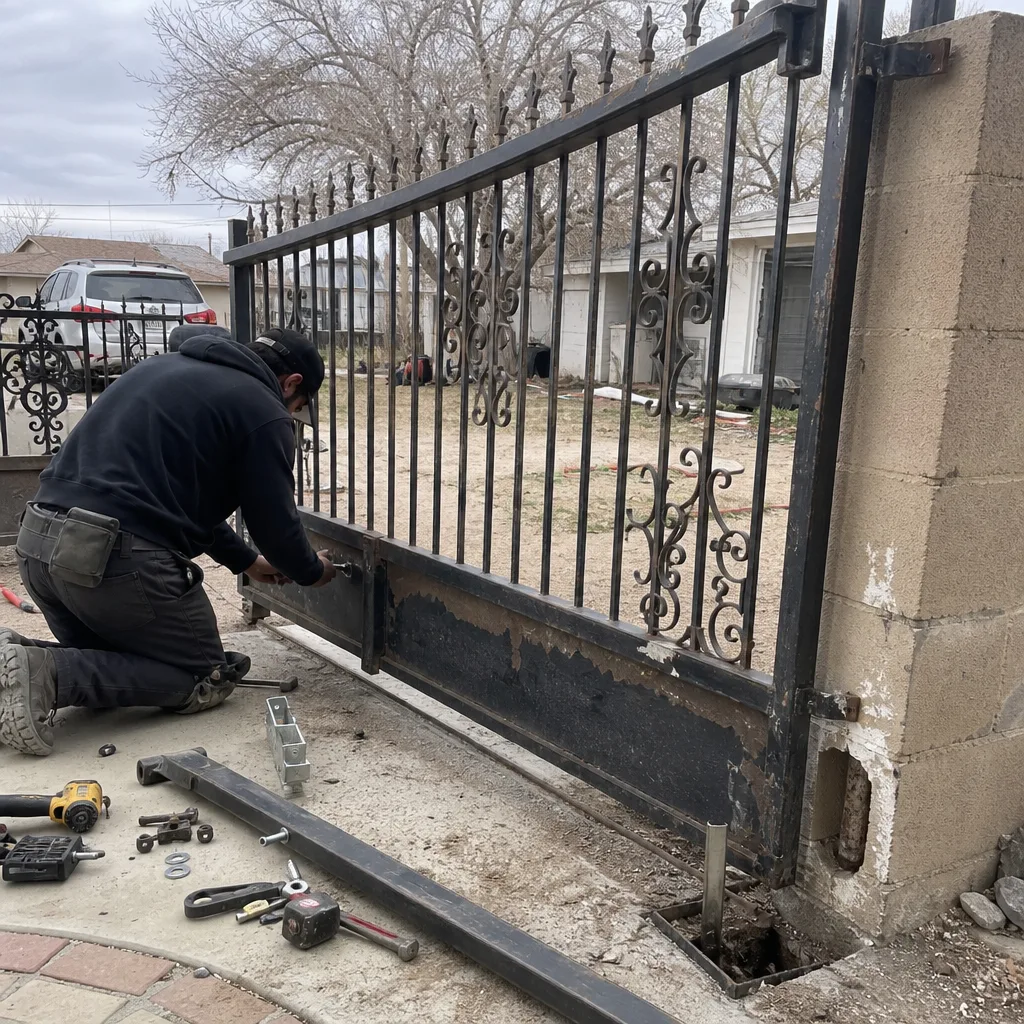 Before
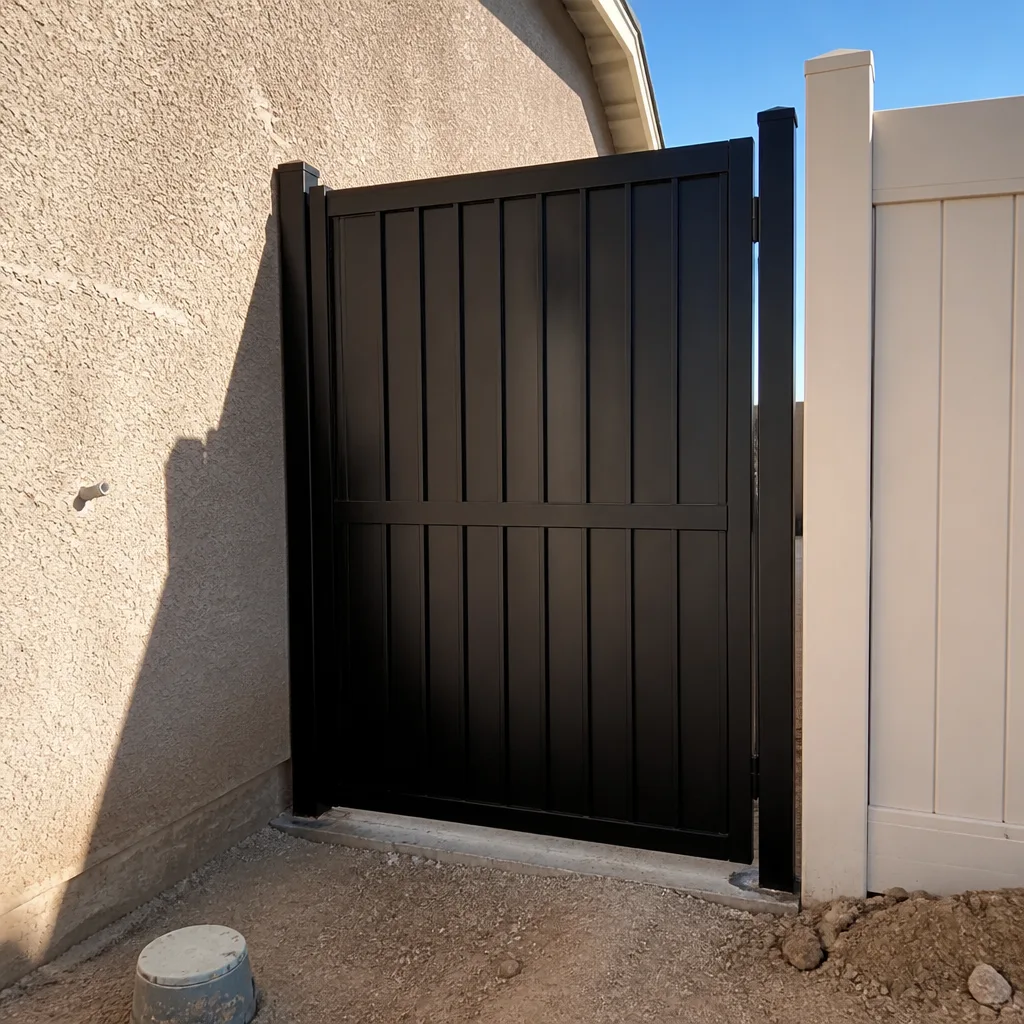 After
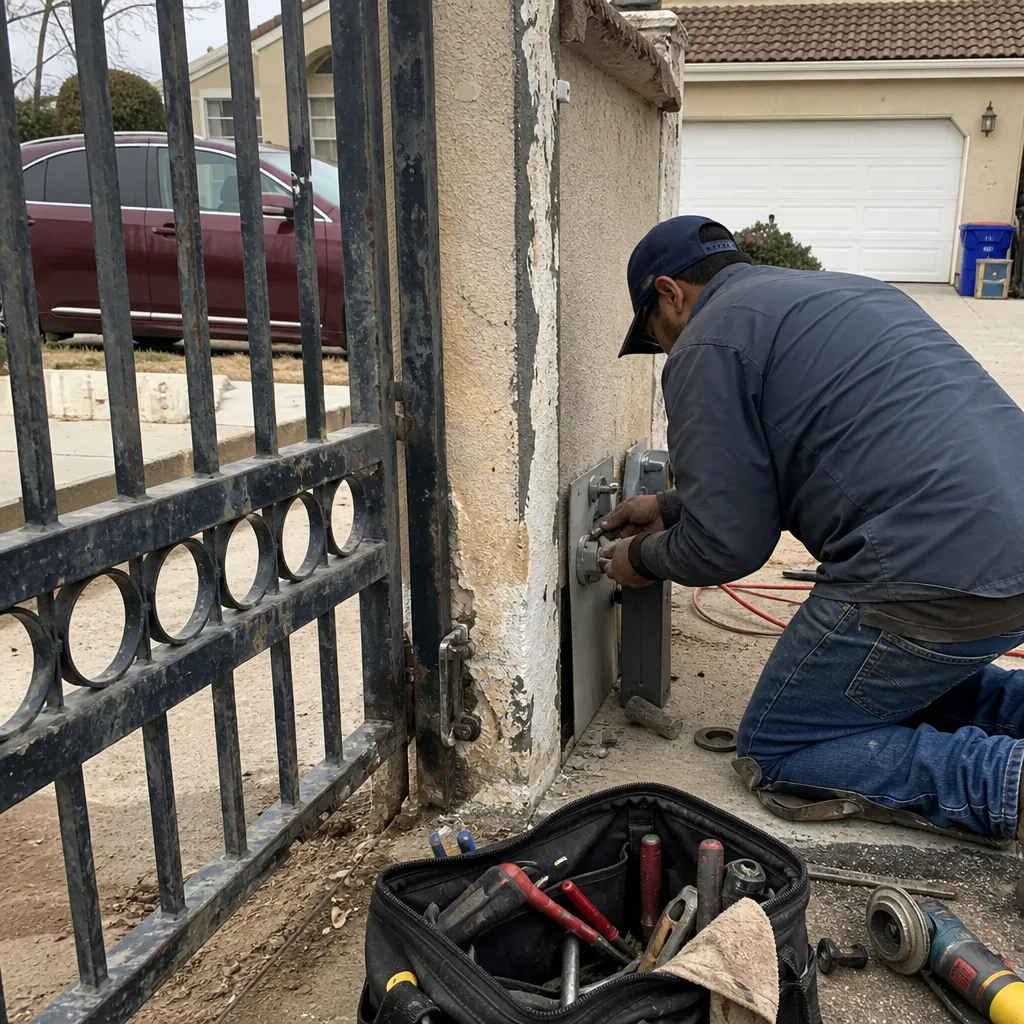 Before
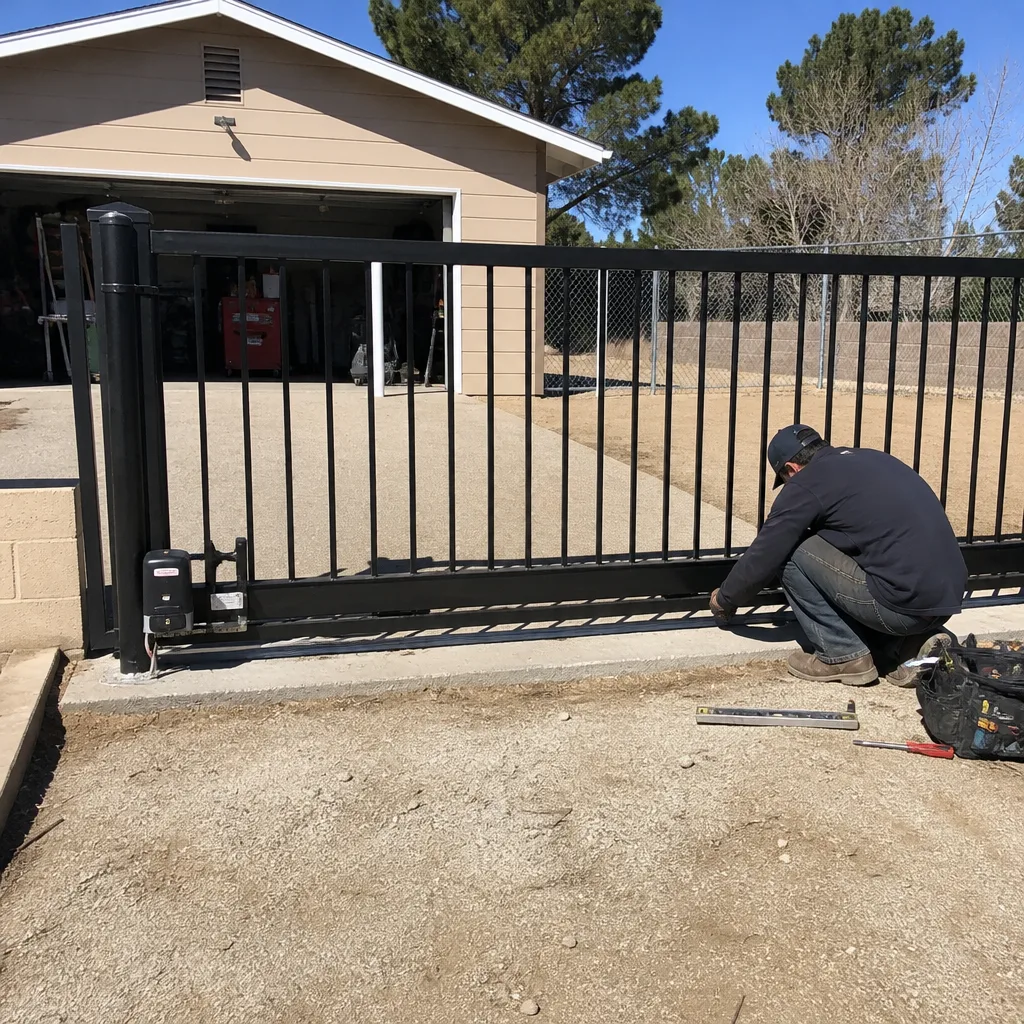 After
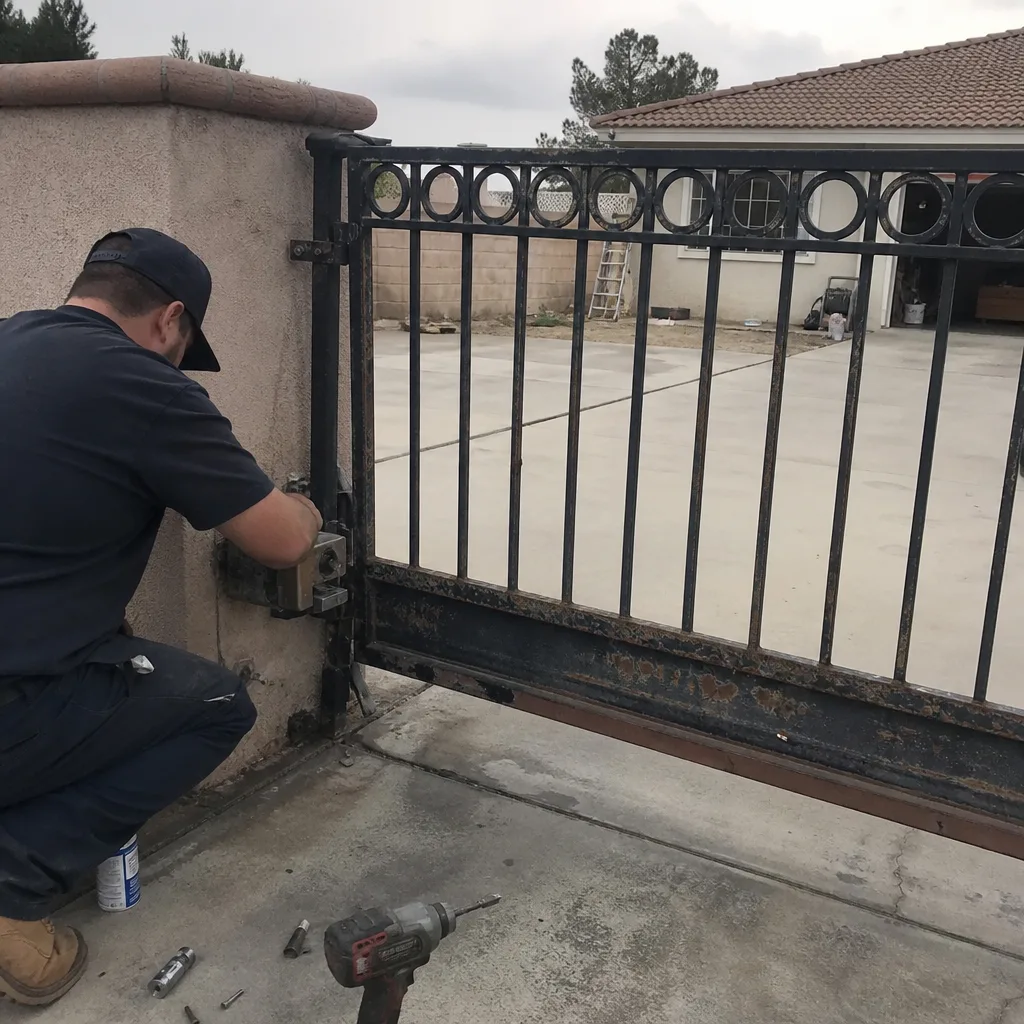 Before
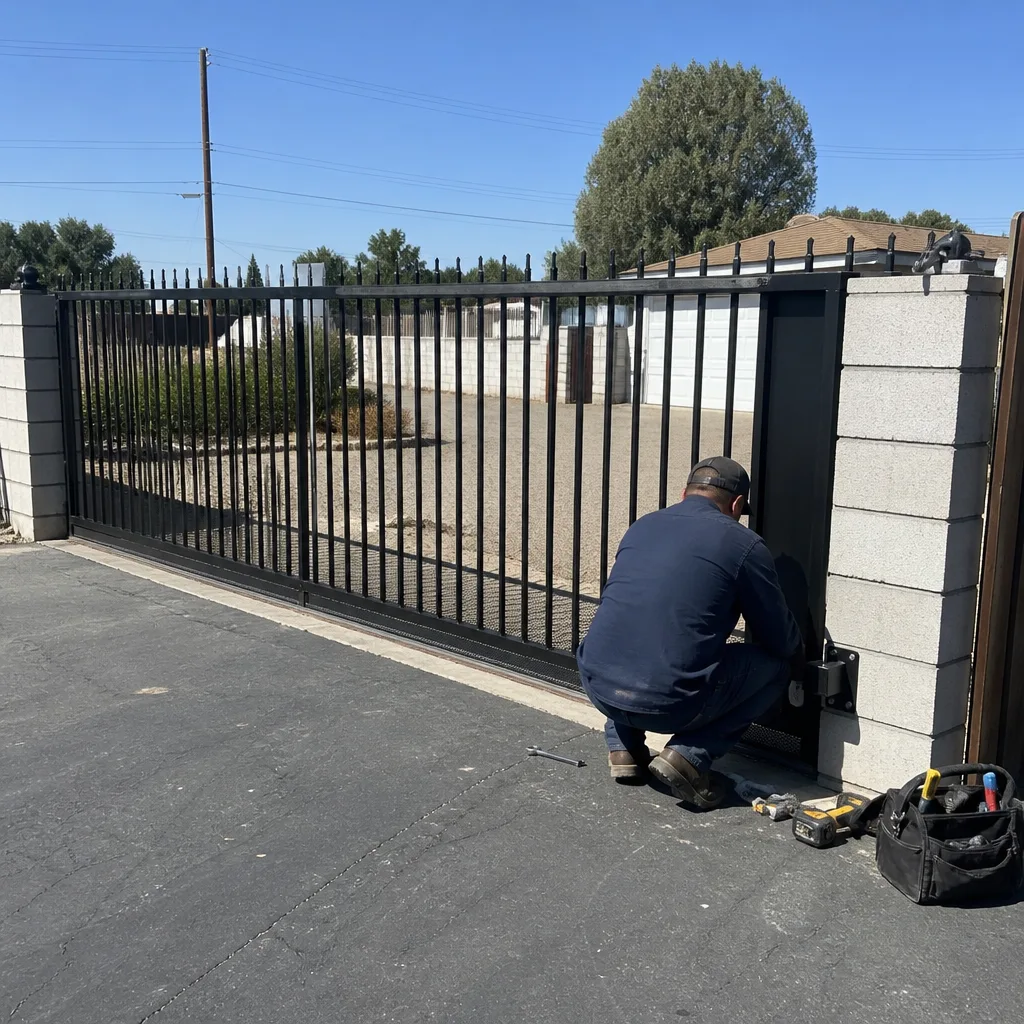 After
When to Call a Professional
Call a gate specialist when the problem is electrical, involves the motor or control board, involves stored spring tension, or affects the safety sensors. Call when the gate has trapped or struck anything, even lightly, because that’s a safety system failure. Call when you’ve already attempted a repair and the problem came back. Call for any FAAC, BFT, Viking, or commercial Linear operator, because those boards and gearboxes are not user-serviceable and the parts are expensive to misdiagnose. We handle electric and automated systems from the motor to the control board, and we service the brand you own. For more guides & resources, explore our blog. Gate Repair Hesperia offers free estimates in Hesperia. Call (877) 693-9694.
Frequently Asked Questions
You can replace remote batteries, clean photo-eye sensors, and lubricate the mechanical parts yourself. You should not open the motor housing, replace the control board, or modify any safety system, because those repairs carry electrical and entrapment liability risks that are not worth taking on a $900 to $2,500 piece of equipment.
Most residential gate repairs in Hesperia run between $150 and $450, depending on whether the problem is mechanical like a worn gear or wheel, or electrical like a limit switch, capacitor, or control board. Commercial operator repairs run higher. We quote the price before any work starts, so there are no surprises.
Photo-eye sensor failures top the list, usually from High Desert dust buildup or wind knocking the sensors out of alignment. Half the time a cleaning fixes it. The other half, we’re replacing a sensor or the wiring behind it.
Most repairs don’t require a permit. Full gate replacement may require one depending on the property and gate type, especially for automated systems with electrical runs. We can tell you what applies to your specific installation.
We schedule service calls as quickly as possible in Hesperia, and we treat a gate that won’t close as a priority because it’s a security issue, not just an inconvenience. Call (877) 693-9694 and we’ll give you an honest arrival window and a free estimate.
We service FAAC, BFT, Linear, Viking, LiftMaster, DoorKing, Elite, Ghost Controls, and Mighty Mule, covering both residential and commercial-grade systems. If your gate has an electric operator, we can likely diagnose and repair it.
The Bottom Line
The DIY vs. professional gate repair question in Hesperia comes down to task, not talent. Lubrication, battery swaps, sensor cleaning, and visual inspections are safe and worthwhile DIY work. Anything involving line voltage, control boards, motors, springs, or entrapment protection belongs with a dedicated gate technician, because the risk profile changes from inconvenience to liability the moment you touch those systems. We’re gate specialists, not general handymen, and we work on every major brand from entry-level residential to heavy commercial. When the job outgrows your toolbox, call Gate Repair Hesperia at (877) 693-9694 and we’ll get your gate back up and running.
Written by the team at Gate Repair Hesperia, serving Hesperia since 2013.