
Last updated November 3, 2026
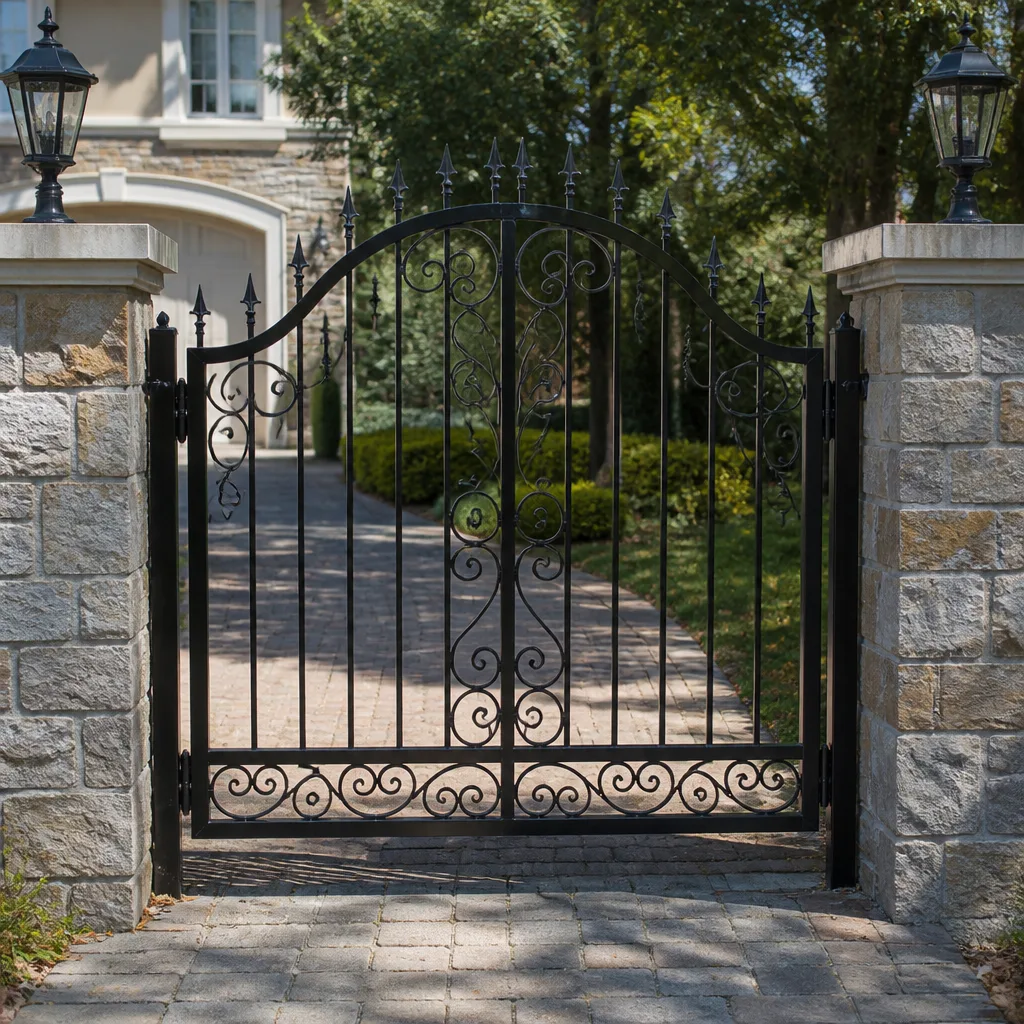 Wrought iron
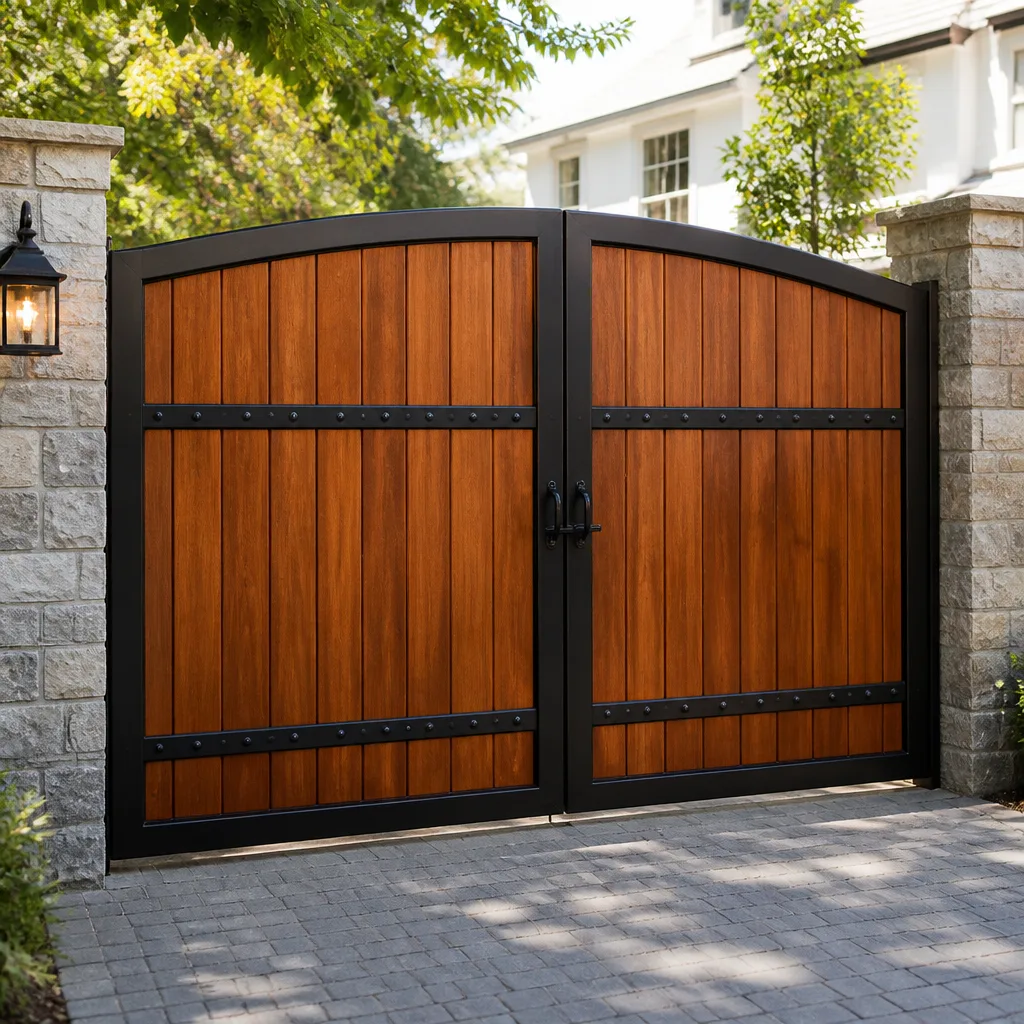 Wood & steel frame
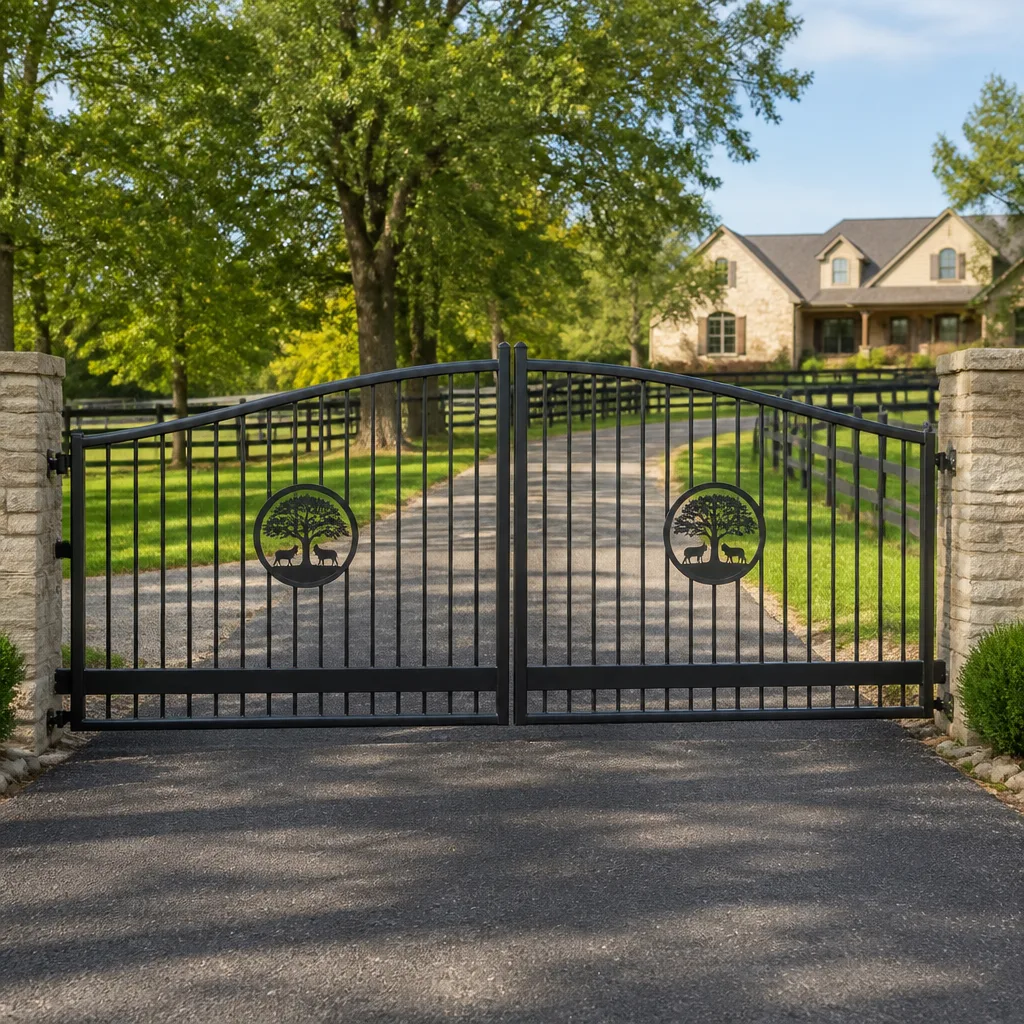 Farm & ranch
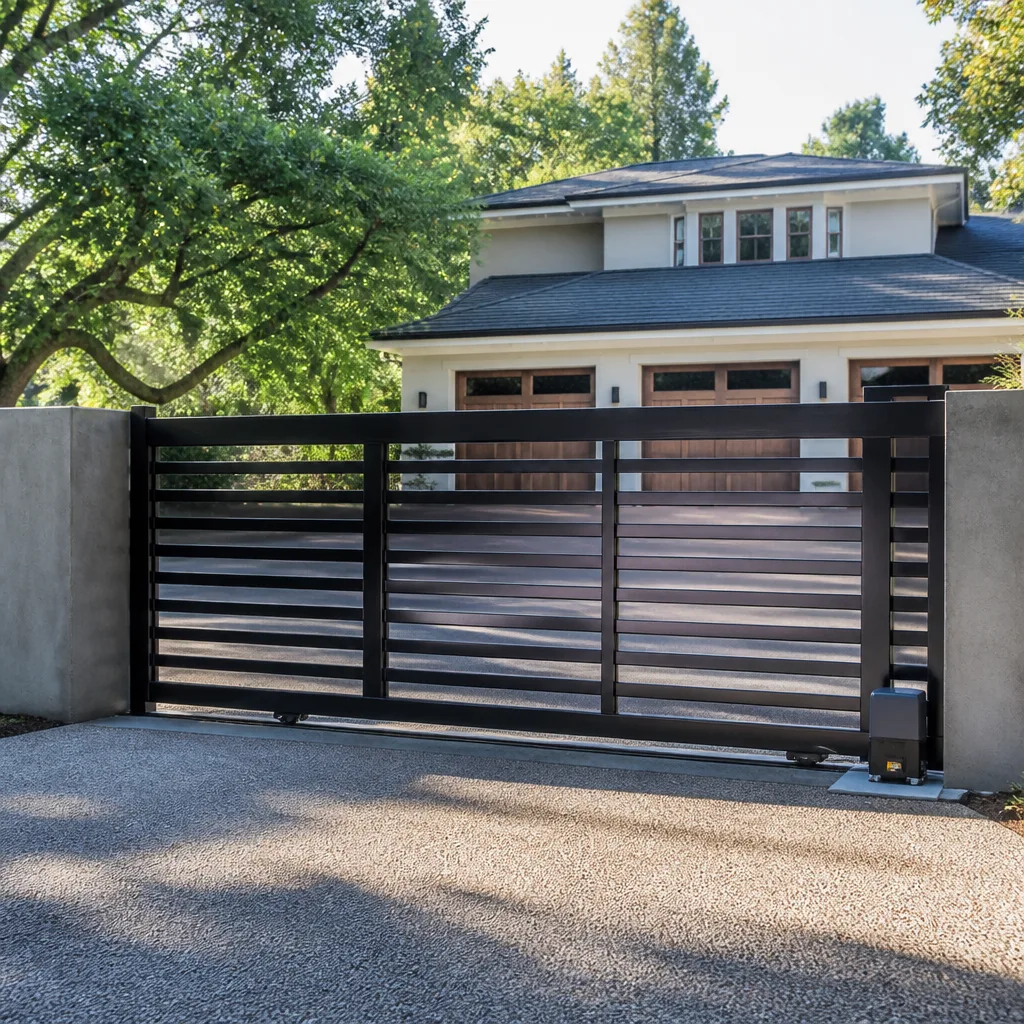 Sliding driveway gates
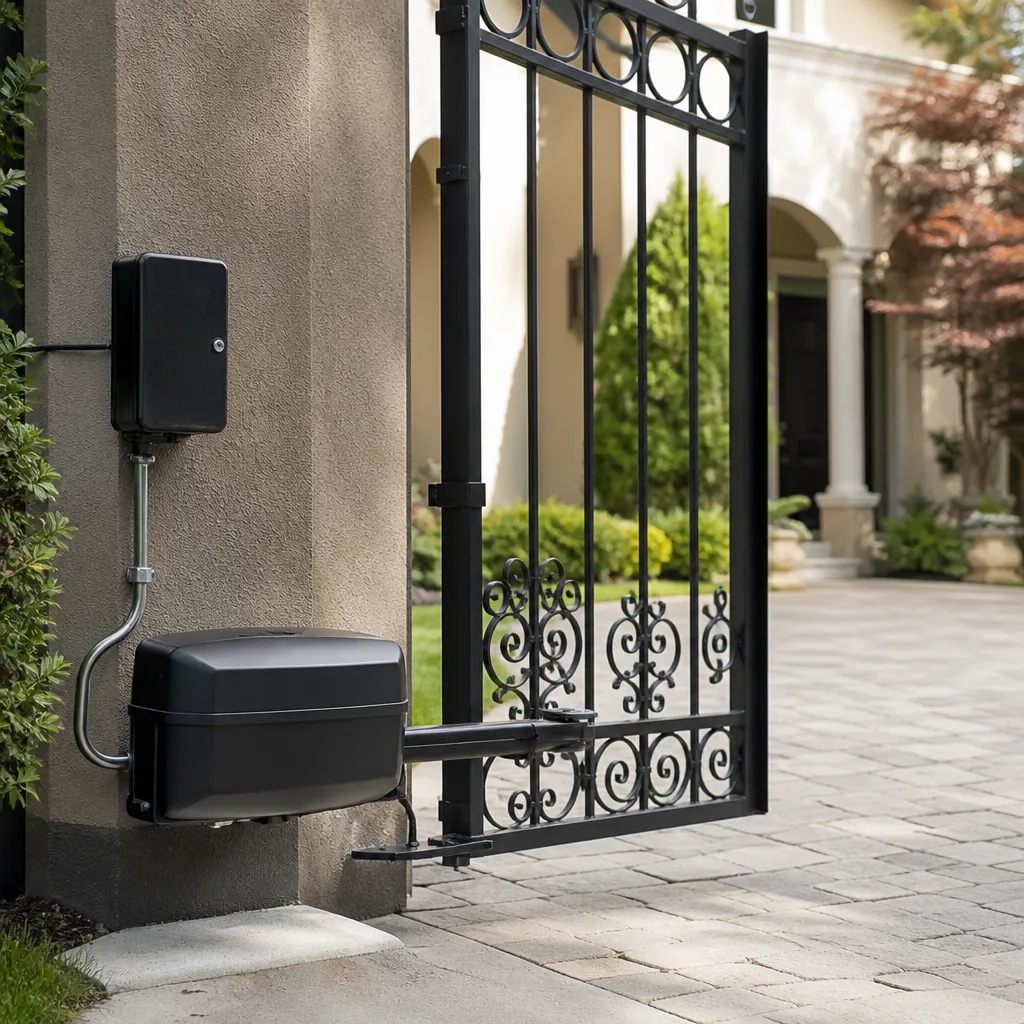 LiftMaster operators
Free on-site gate assessment - hinges, posts, and your LiftMaster or Nice gate operator checked before anything is quoted
The assessment is free and the quote is the invoice.
Get your free estimateThe Complete Gate Repair Guide for Hesperia Homeowners
Most gate repair guides are written for somewhere else. Hesperia sits at 3,200 feet with summer temperatures that routinely pass 110°F, winter nights that dip below freezing, and alkaline desert soil that corrodes ground-contact steel at twice the rate of coastal California. If you’re reading generic advice written for a mild-climate homeowner, you’re likely to make a repair that fails again within the year. This guide is built around what actually breaks in the Victor Valley, why it breaks here, and what a repair that lasts actually looks like in Hesperia’s high-desert conditions. For a deeper dive, see The Complete Guide to Gate Repair in Hesperia.
Quick Answer
Gate repair in Hesperia, CA typically costs between $150 and $850 depending on whether the issue is mechanical (hinges, wheels, post alignment), electrical (motor, control board, sensors), or structural (post replacement, weld failure). Most electric gate failures in Hesperia trace back to one of three causes: UV-degraded wiring or sensors, corrosion from alkaline soil contact, or motor strain from misaligned tracks. A gate-specific technician can diagnose most problems in under an hour, and the majority of repairs are completed the same visit.
Styles & brands we work with
- Wrought iron
- Wood & steel frame
- Farm & ranch
- Sliding driveway gates
- LiftMaster operators
Table of Contents
- Why Gates Fail Differently in Hesperia Than Anywhere Else
- What Actually Happens When a Gate Stops Working
- Gate Types and How Hesperia’s Climate Treats Them
- Repairs You Can Safely Handle Yourself
- Repairs That Require a Gate Technician
- A Seasonal Maintenance Calendar Timed to Hesperia’s Weather
- Electric Gate Repair Basics: Motors, Boards, and Sensors
- Common Mistakes to Avoid
- When to Call a Professional
Why Gates Fail Differently in Hesperia Than Anywhere Else
Hesperia’s high-desert environment punishes gate systems in ways that coastal and valley homeowners never experience. The combination of extreme UV exposure, daily temperature swings of 30 to 40 degrees, and soil chemistry that eats through standard steel creates a failure profile unique to the Victor Valley.
The three environmental stressors we see most often on gate systems in Hesperia are:
- UV radiation degradation. Hesperia averages over 280 sunny days per year with intense high-elevation UV. Powder coatings and paint finishes rated for 15 years in temperate climates typically show visible breakdown after 5 to 7 years here. Wiring insulation on exposed sections becomes brittle and cracks, which lets moisture in during the rare rain events and creates short circuits.
- Thermal cycling stress. A gate post set in concrete expands and contracts with every day-night temperature swing. In Hesperia, a 40-degree swing is common from summer afternoon to pre-dawn. Over five years, that’s roughly 1,800 expansion cycles. Posts shift, welds crack, and gate alignment drifts as a result.
- Alkaline soil corrosion. Hesperia soil has a pH that drifts between 7.5 and 8.5 in many areas, which accelerates galvanic corrosion on buried steel. We regularly see gate posts that look fine above ground but have lost 30 to 40 percent of their wall thickness just below the soil line. Standard galvanized posts fail faster here than manufacturer specs suggest.
What does this mean for repairs? The fix that works in San Diego or Orange County often isn’t the fix that holds up in Hesperia. A hinge replacement is only as good as the post it’s anchored to. A new motor is only as reliable as the wiring feeding it. If the underlying environmental damage isn’t addressed, you’re paying for the same repair twice.
The good news is that these failure patterns are predictable. Once you know what the climate does to a gate system, you can choose materials and repair methods that actually last here. Our gate repair service in Hesperia is built around these local failure patterns rather than generic textbook fixes.
What Actually Happens When a Gate Stops Working
Most homeowners describe the problem the same way: “It just stopped working.” But underneath that simple description are several distinct failure categories, each with its own diagnostic path and repair cost. Understanding what category your problem falls into helps you describe it accurately on the phone and avoid paying for guesswork.
Category 1: The Gate Won’t Open or Close at All
This is the most urgent failure and the one where an accurate diagnosis saves the most money. The cause is almost always electrical: no power to the motor, a dead control board, a failed capacitor, or a blown fuse on the operator circuit. In Hesperia specifically, we also see thermal cutouts on motors that have been running in direct sun when ambient temperatures exceed 105°F. The motor’s internal protection trips, and the gate appears dead even though nothing is actually broken.
Category 2: The Gate Moves but Stops Partway
A gate that starts its travel and then stops or reverses is usually fighting an obstruction or a sensor fault. The safety edges or photo eyes are designed to stop travel when something is in the path. When those sensors degrade in high-desert UV, they generate false signals. The gate thinks it’s hitting something and backs off. This is one of the most common electric gate problems in Hesperia because direct sun on the sensor lenses creates false triggers even on properly installed systems.
Category 3: The Gate Opens but Won’t Close (or Vice Versa)
This is typically a limit switch problem or a control board programming issue. On residential systems like Mighty Mule and Ghost Controls, limit settings sometimes drift after a power interruption. On commercial-grade operators like FAAC and BFT, the issue is more often a physical limit switch that has worn out or shifted position.
Category 4: The Gate Moves Slowly or Grinds
This is a mechanical issue: worn rollers, a failing bearing in a wheel, a bent track, or a motor that’s losing output. Wind is a major factor in Hesperia, and gates that face the prevailing afternoon winds put constant lateral load on their wheel assemblies. We see bearing failures on Hesperia gates years earlier than on sheltered installations in other regions.
Category 5: The Gate Won’t Stay Latched or Seated
This points to post movement or soil settlement. The gate may have worked perfectly for years, but the post has shifted enough that the latch no longer aligns. In Hesperia, the freeze-thaw cycle in winter plus the shrink-swell behavior of the alkaline soil can move a post a quarter-inch in a single season. That’s enough to prevent the latch from engaging.
Each of these categories has a different repair path, different cost, and different urgency. Calling a gate repair specialist in Hesperia with an accurate description of which category your problem falls into gets you a faster, more accurate quote.
Gate Types and How Hesperia’s Climate Treats Them
Not all gate materials age the same way in Hesperia. The high-desert environment is harder on some materials than others, and the material choice you made or inherited at installation affects what repairs you’ll face and when.
Wrought Iron and Steel Gates
Wrought iron or tubular steel is the most common gate material in Hesperia, and it’s also the most affected by the local soil chemistry. The weak point is always below ground. The post that looks solid at the surface is often paper-thin at the soil line after five to eight years. Above ground, the painted or powder-coated finish takes a beating from UV. Rust appears first at welds, bolt holes, and anywhere the finish has been scratched or chipped. A wrought iron gate in Hesperia needs finish attention every three to four years to stay ahead of surface corrosion.
Aluminum Gates
Aluminum gates avoid the rust problem entirely, which makes them a solid choice for Hesperia. The trade-off is that aluminum is softer than steel and more likely to bend under the high winds the Victor Valley gets in spring and fall. A wind-damaged aluminum gate is more often a replacement than a repair because bent frame sections change the geometry of the entire gate. Aluminum also expands and contracts more than steel with temperature swings, so hardware anchored to it loosens faster.
Vinyl Gates
Vinyl holds up surprisingly well against UV and soil corrosion, which is why it’s popular in Hesperia’s newer developments. The failure point is the internal structure. Vinyl gates hide a steel or aluminum frame inside the vinyl shell, and in Hesperia’s heat that internal frame expands and contracts. Over time, the vinyl shell separates from the frame, which creates sagging that can’t be fixed by tightening hardware. When a vinyl gate starts to drag or stick, the repair is often more involved than it looks.
Wood Gates
Wood gates in Hesperia fight a different battle than they do elsewhere. The humidity is low, so rot is rarely the issue. The problem is extreme dryness. Wood loses moisture content in the high desert, which causes warping, cracking, and splitting. A wood gate that fit perfectly when installed will often twist enough within two years that the latch stops lining up. Daily temperature swings make it worse: the side facing the afternoon sun dries faster than the shaded side, and the differential shrinkage pulls the gate out of square.
The best-performing material for Hesperia’s specific conditions is an aluminum frame with corrosion-resistant hardware, but the right choice depends on the gate’s size, its exposure to wind, and whether it’s manually operated or part of an automated system. When a gate is beyond repair, our gate installation work in Hesperia includes a material recommendation based on your specific lot conditions and wind exposure.
Repairs You Can Safely Handle Yourself
Some gate repairs are genuinely doable for a homeowner with basic tools and a willingness to work carefully. The key is knowing where the line is between maintenance and repair work that involves tensioned components, electrical circuits, or structural integrity.
Here’s what’s safe to handle on your own:
- Lubricating hinges and rollers. A dry hinge on a manual gate creates friction that makes the gate hard to move and wears out the hardware faster. Use a dry lubricant with PTFE, not WD-40. WD-40 attracts dust, and Hesperia has plenty of it. Lubricate hinges every three months during summer when heat thins out standard grease.
- Tightening visible hardware. Walk the gate and check every bolt, nut, and screw you can see. The thermal cycling in Hesperia loosens hardware predictably. A socket set and 20 minutes every few months catches most loose hardware before it causes a bigger problem.
- Cleaning photo eye sensors. On automated gates, the photo eye sensors get dusty quickly in Hesperia’s dry air. Wipe the lenses with a dry cloth once a month during dusty periods. This clears up a surprising number of false stop signals.
- Clearing track debris. Slide gates run on a track, and the desert contributes sand, gravel, and wind-blown debris. Check the track every couple of weeks during the windy spring season and clear anything that’s collected.
- Touching up paint chips on steel gates. A small rust spot becomes a big rust problem faster in Hesperia’s soil chemistry than it does anywhere else. When you see bare steel or a paint chip, sand the spot lightly, apply a rust-inhibiting primer, and touch up the finish. This is the single highest-value maintenance task a Hesperia homeowner can do.
None of these tasks require special training, and all of them extend the life of your gate. What they don’t do is fix a gate that has already failed structurally or electrically. That’s where the next section draws the line.
Repairs That Require a Gate Technician
Some gate problems are genuinely dangerous for a homeowner to attempt. The safety equipment built into an automated gate exists because the forces involved are substantial. A gate motor can generate hundreds of pounds of force, and a sliding gate can crush or pin a person. The safety caveat here is real: never attempt to repair a gate motor, control board, safety sensor, or tensioned counterbalance without specific training.
Here’s what requires a professional:
- Motor or operator replacement. An electric gate motor is not a swap-and-go repair. The motor must be matched to the gate’s weight, cycle frequency, and wind load. A motor that’s undersized for a Hesperia gate exposed to afternoon winds will burn out early. Gates with motors from LiftMaster, FAAC, BFT, and Mighty Mule each have specific torque curves and duty cycle ratings, and the operator has to match the gate, not the other way around.
- Control board diagnosis and replacement. When a control board fails, the symptoms can look like a dozen other problems: no response, intermittent operation, partial travel. Testing a board requires a multimeter, correct voltage reference values, and knowledge of how the board communicates with limit switches, safety sensors, and the motor. A wrong diagnosis means buying a $300 board when the real problem was a $40 sensor.
- Post replacement or resetting. A gate post set in concrete that has shifted or rotted below the soil line is a structural job. The gate must be removed, the old post extracted, the hole prepared correctly for Hesperia’s soil conditions, and a new post set with proper corrosion protection. If the post isn’t set correctly for the local soil, the same failure recurs.
- Safety sensor and edge replacement. The photo eyes and safety edges on an automated gate are life-safety components. They need to be installed at the correct height, aligned precisely, and wired with the correct resistance values. A homeowner-installed sensor that doesn’t function correctly can turn a gate that seems to work fine into a serious hazard.
- Welding repairs. A cracked weld on a steel gate frame or a hinge plate that has separated from the post calls for welding, and the repair must be done in a way that accounts for the existing stresses on the metal. Structural welding also needs to happen away from the gate’s powder coating or finish, which means the repair area needs proper prep and post-weld finishing.
- Any repair on a commercial or multi-family gate. If the gate serves a community, HOA, or commercial property in Hesperia, it falls under different code and safety expectations than a single-family residential gate. Commercial operators like Viking, DoorKing, FAAC, and BFT have specific service requirements, and repair work should be handled by a technician who works on those systems routinely.
Our approach at electric gate repair in Hesperia is to diagnose first and repair second. We’re gate-only specialists, which means every technician in our operation works exclusively on gate systems. The diagnosis is built on what’s actually wrong, not on a rotating list of parts that usually fix things.
A Seasonal Maintenance Calendar Timed to Hesperia’s Weather
Generic maintenance advice splits the year into spring and fall. Hesperia’s climate doesn’t work like that. The actual stress points on a gate system correlate with the desert’s real weather patterns: intense summer heat, late-summer monsoon moisture, fall and spring wind, and winter freeze cycles. Here’s a maintenance calendar timed to what actually happens in the Victor Valley.
February: Pre-Wind Season Service
High winds typically arrive in March and April. In February, inspect post anchors, gate wheels, and track connections for looseness. A gate that’s already loose will suffer real damage during sustained wind events. This is the month to replace worn wheels and tighten everything that wind will stress.
April: Post-Wind Inspection
After the spring wind season peaks, check for shifting. A gate that started February straight may have moved by April. Compare the gate’s current position against the posts and look for fresh rubbing marks, scraped powder coating, or wheels that no longer sit centered in the track. Catching this movement early prevents the cascade of failures that an out-of-alignment gate triggers.
June: Pre-Heat Wiring and Motor Service
Before the summer’s extended 100°F-plus stretches, inspect wiring insulation for UV cracking. The wire jacket on exposed conduit or flex connections degrades quickly in Hesperia’s sun. This is also the right time to check motor thermal protection and confirm the operator has adequate ventilation. Things to inspect include the motor’s cooling fins and surrounding clearance, but leave the internal checks to a gate technician.
August: Monsoon Moisture Check
Late-summer monsoons bring the most moisture Hesperia sees all year. When rain hits the alkaline soil, it activates the corrosion process on any exposed or buried steel. Inspect the base of each post, hinge mounting points, and electrical connections at ground level. Wipe down any connections that show white or green mineral buildup, and touch up paint chips that would otherwise rust.
October: Pre-Freeze Service
Winter nights in Hesperia regularly drop below freezing. The freeze-thaw cycle puts pressure on every concrete-set post. In October, inspect post bases for hairline cracks in the surrounding concrete and re-secure the gate’s latching hardware. Any water that has infiltrated a post base will expand as it freezes and accelerate cracking.
December: Sensor and Track Cleaning
The winter months bring dust with less wind activity to blow it away. Photo eye lenses and track surfaces accumulate fine desert dust that affects both sensing and mechanical travel. A monthly wipe-down through the winter keeps the gate operating cleanly without needing any mechanical work.
These six maintenance touchpoints, spaced through the actual seasons Hesperia experiences, prevent the majority of repair calls we see. In our experience, the homeowners who follow this calendar call us for repairs roughly half as often as those who don’t.
Electric Gate Repair Basics: Motors, Boards, and Sensors
Automated gates in Hesperia face a specific set of electrical challenges. The high heat stresses motor windings. The UV exposes wire insulation to degradation. The dust infiltrates control board enclosures. Understanding the basic components and how they fail helps you describe problems accurately and understand what a repair should involve.
Gate Motors in Hesperia’s Heat
Gate motors are rated for specific duty cycles: how often they can cycle per hour and how much weight they can move. Those ratings assume moderate ambient temperatures. In Hesperia, a motor running in a metal enclosure in direct summer sun is operating in an environment well above its rated temperature. Motors that would last 10 years in a coastal climate often fail in 5 to 7 years here. The brands we service most often, including LiftMaster, FAAC, and BFT, all build motors that can handle heat, but only when they’re matched correctly to the gate’s weight and cycle frequency.
Control Boards and the Desert Environment
A control board is a printed circuit board that manages the gate’s movement, limits, and safety features. Desert dust is extremely fine and often slightly conductive due to the mineral content. When dust accumulates inside a control board enclosure, it can create short circuits or resistive paths that cause intermittent failures. The boards we see fail most often in Hesperia are ones in enclosures that haven’t been sealed properly or that have degraded gaskets. A board that fails intermittently, works when tapped, or behaves differently in hot weather versus cool weather is usually a board on its way out.
Safety Sensors and UV Degradation
Photo eye sensors and safety edges are the components most affected by Hesperia’s UV exposure. The plastic housings become brittle after several years of direct sun, and the internal lenses cloud over. When a sensor housing cracks, dust gets inside and degrades performance. When a lens clouds, the sensor’s range drops. Both issues generate false stop signals, which is why a gate that stops and reverses for no visible reason is often a sensor problem rather than a motor problem. Working on these components on brands like Mighty Mule, DoorKing, and Viking requires following the manufacturer’s exact specifications for sensor placement and wiring.
Electric gate diagnosis is not guesswork. The components each fail in predictable ways, and the Hesperia environment accelerates some of those failure patterns. The most important thing a homeowner can do is avoid random part replacement, which wastes money and often masks the real issue. A trained gate technician with a multimeter and manufacturer-specific knowledge can usually pinpoint the fault in under an hour.
Common Mistakes to Avoid
- Replacing the motor before checking the power source. A dead gate motor often has a tripped GFCI outlet, a blown fuse, or a failed capacitor. In Hesperia, summer thermal cutouts also simulate dead motors. Replacing a $400 motor when the real issue is a $20 capacitor is a common and expensive mistake.
- Using the wrong finish on a steel gate. Standard paint and primer don’t hold up well in Hesperia’s UV, and they do nothing to address soil-line corrosion. A touch-up that doesn’t use a corrosion-inhibiting primer will show rust within a year.
- Adjusting limit switches without marking the original position. Limit switches control where the gate stops in each direction. If you adjust them without marking the starting point, you lose the reference and often create a new problem: a gate that travels too far or stops short. Small adjustments only.
- Ignoring wind load on an automated gate. A solid-surface gate in a windy Hesperia lot puts more strain on the motor and hinges than a slatted gate. If the gate is solid and faces the prevailing wind, the motor needs to be sized for that load. A motor chosen without accounting for wind will fail early.
- Greasing instead of lubricating. Heavy grease attracts high-desert dust and turns into an abrasive paste on hinges and tracks. Dry lubricants with PTFE are the correct choice for Hesperia’s dry, dusty environment.
- Delaying small hinge repairs. A worn hinge may let the gate sag only a quarter-inch at first. That quarter-inch creates stress on the motor’s drive system and changes the alignment of the latch. What starts as a $50 hinge replacement becomes a $500 motor failure if left unaddressed for a year.
When to Call a Professional
Call a gate professional when the problem involves a motor, control board, safety sensor, or any structural component like a post or weld. Those systems carry real risk and the repairs need to meet code and manufacturer specs. If the gate is automated and the problem doesn’t disappear with fresh batteries in a remote or a cleaned photo eye lens, stop troubleshooting and make the call.
Gate Repair Hesperia offers free estimates in Hesperia. Call (877) 693-9694 and describe the problem in the terms from this guide: whether the gate won’t move at all, stops partway, opens but won’t close, or moves slowly. That description gets you a more accurate quote and a faster diagnosis when we arrive.
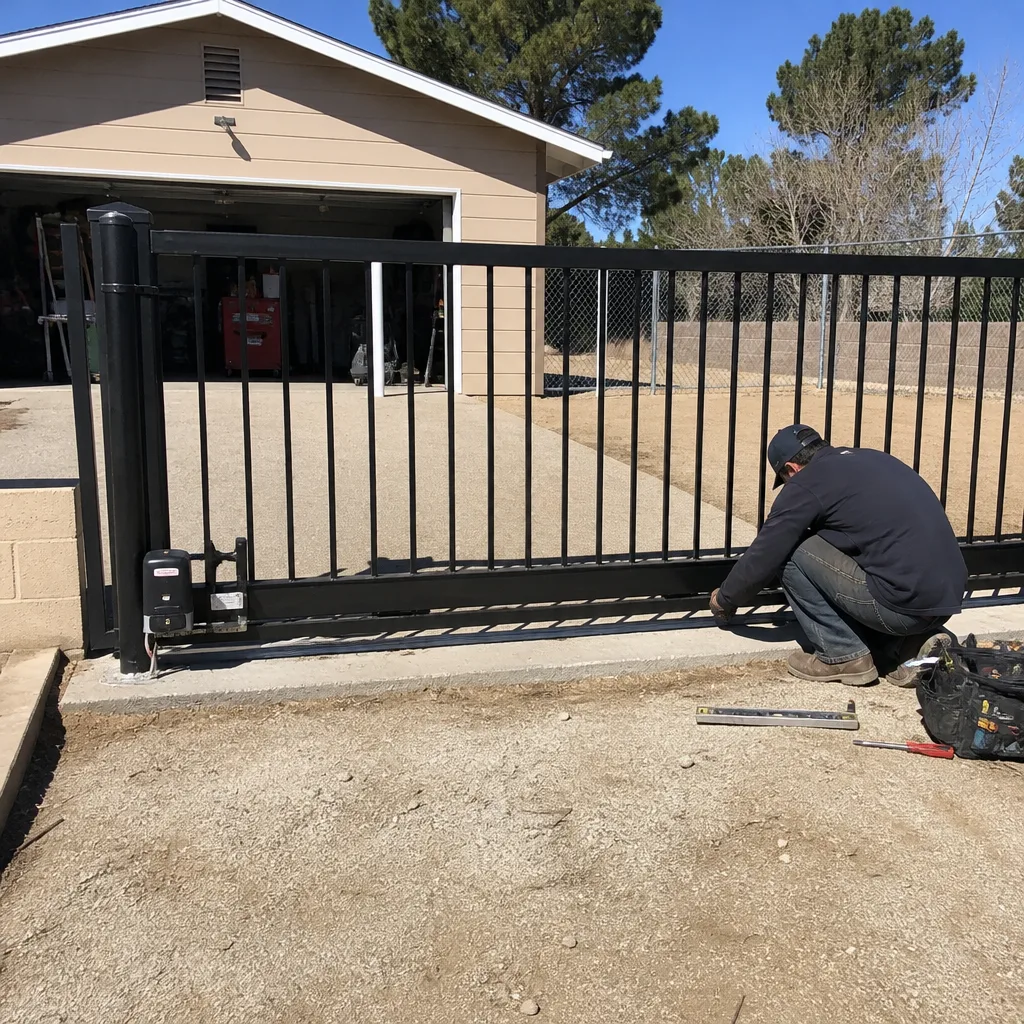
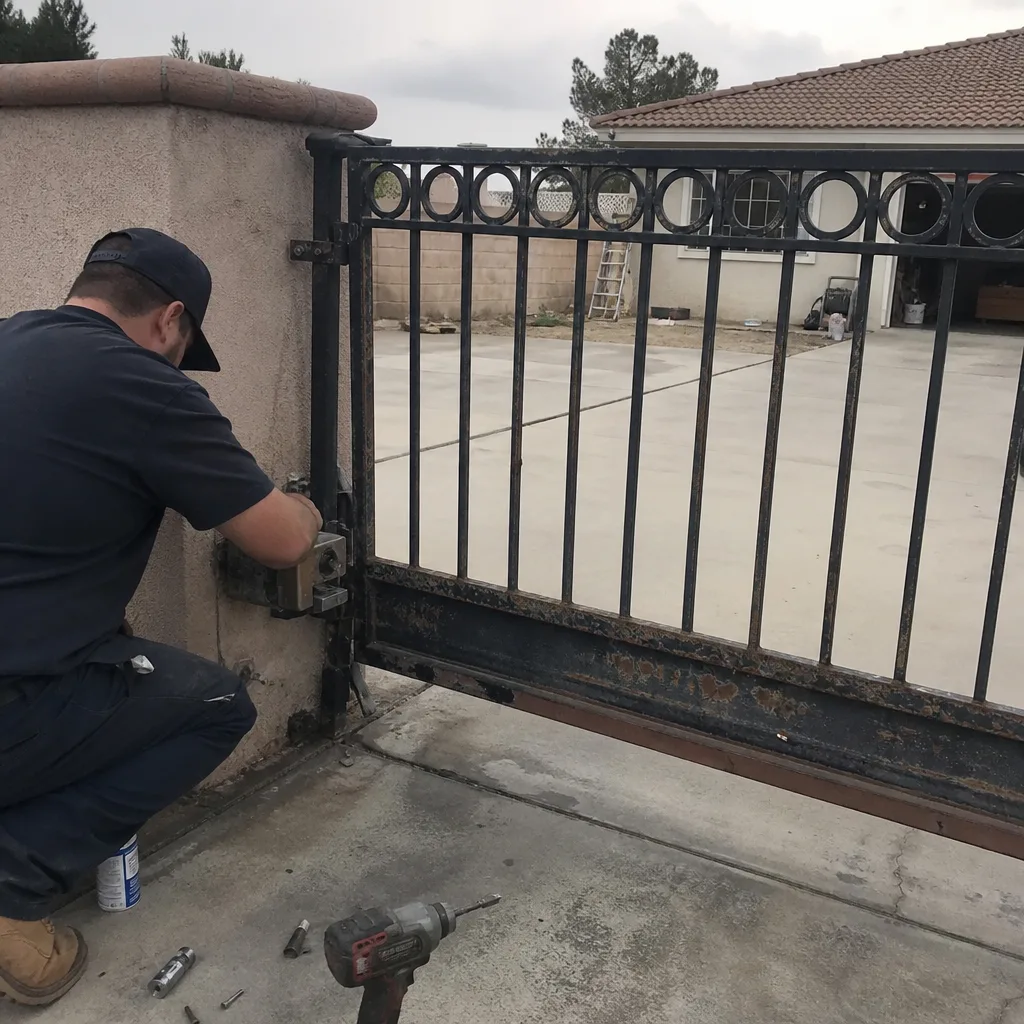
See the difference
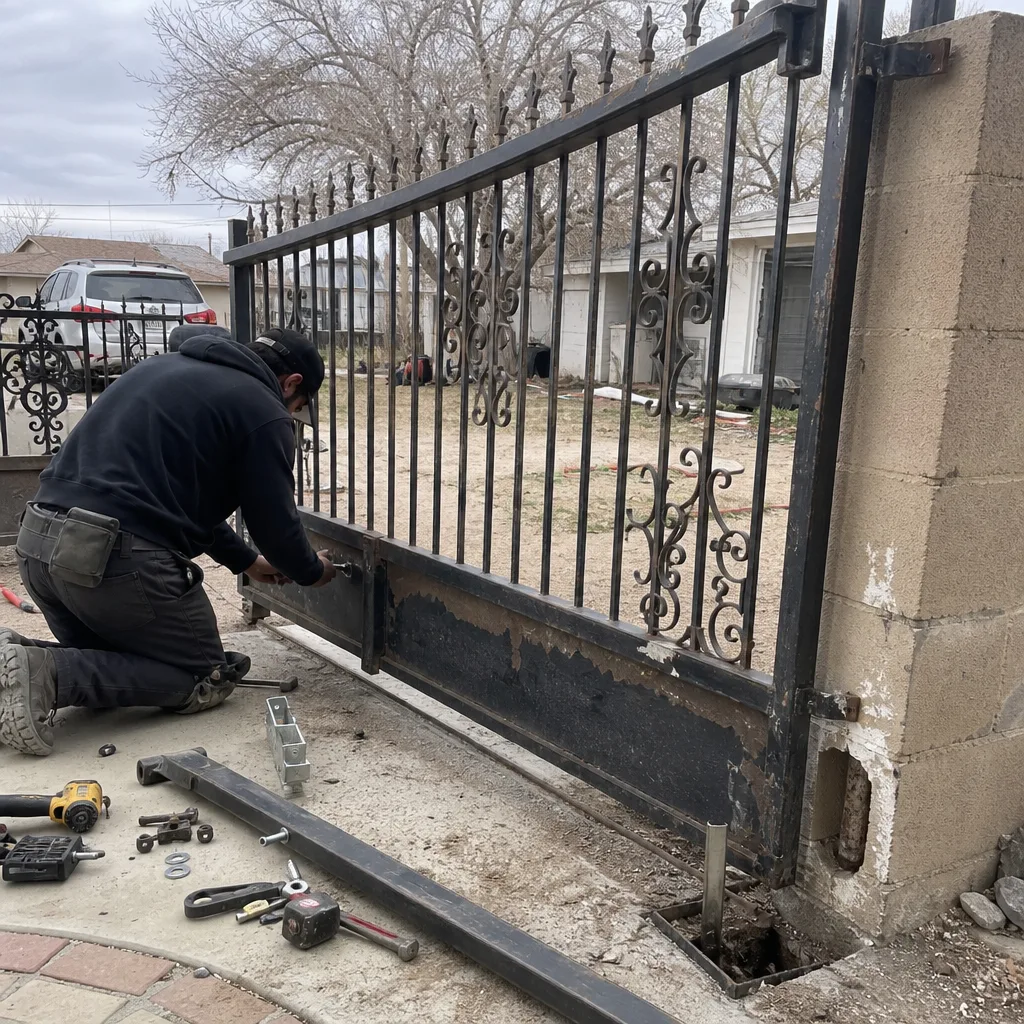 Before
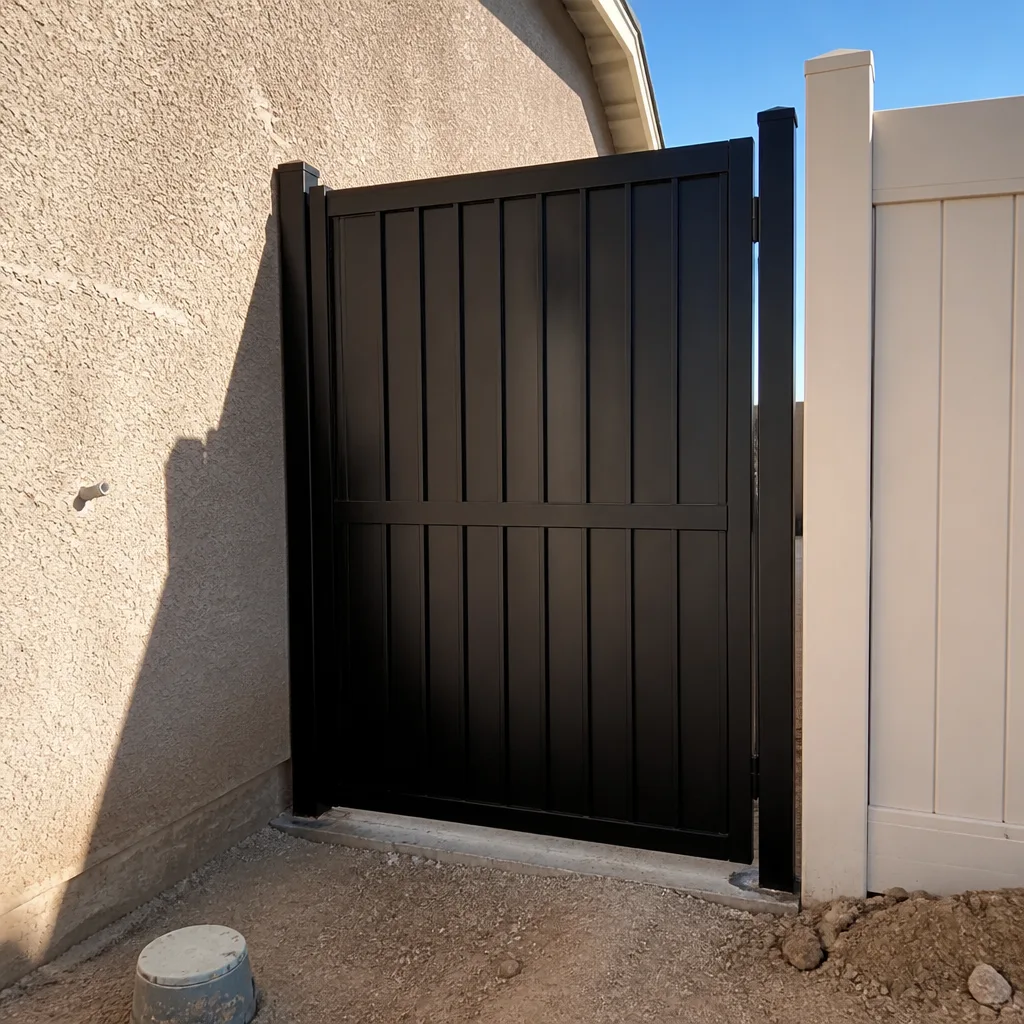 After
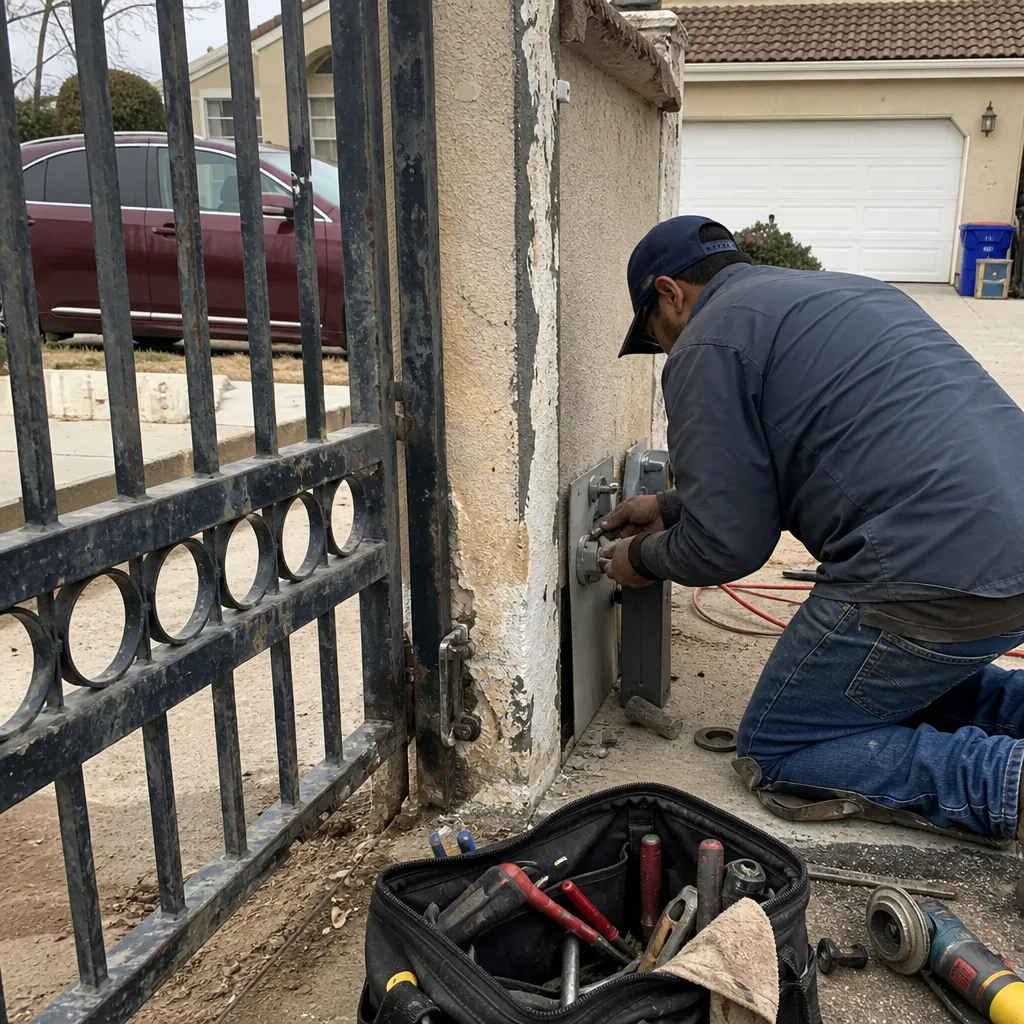 Before
 After
 Before
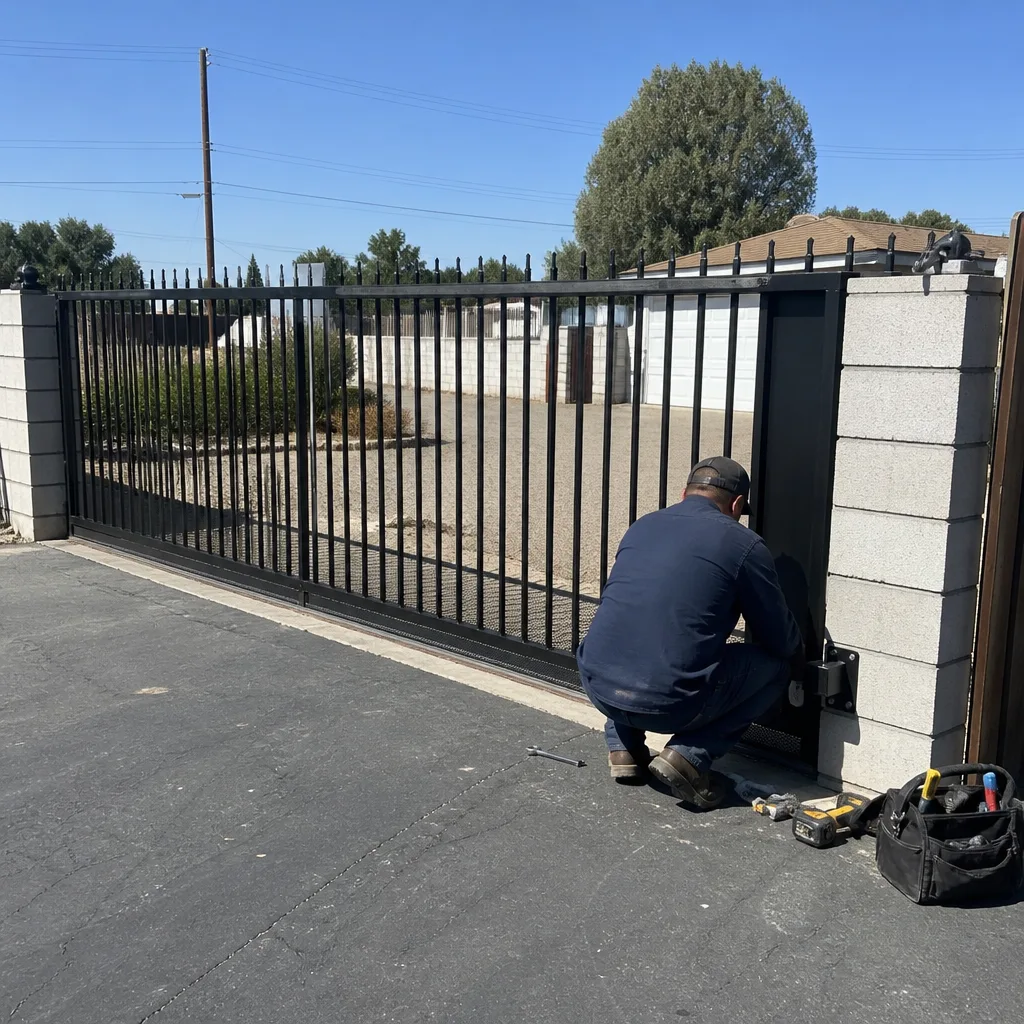 After
Frequently Asked Questions
Gate repair in Hesperia typically ranges from $150 for minor mechanical fixes like hinge replacement or hardware tightening to $850 or more for motor replacement or control board work on automated systems. The price is quoted and agreed before any work starts, so you know the cost upfront. Call (877) 693-9694 for an exact quote on your specific gate problem, estimates are free.
Most gate repair calls in Hesperia are scheduled within a day or two, with emergency response available for security-critical failures like a gate that won’t close at all. The fastest way to get scheduled is to call (877) 693-9694 and describe the problem clearly, using the categories from this guide.
Yes. Gate Repair Hesperia services LiftMaster, FAAC, BFT, Linear, Viking, Ghost Controls, DoorKing, Elite, and Mighty Mule systems across both residential and commercial product lines. We service your brand, whether it’s a homeowner-grade Mighty Mule or a commercial-grade FAAC operator.
A full electric gate repair includes diagnosis of the motor, control board, and safety sensors, replacement of failed components with manufacturer-compatible parts, and adjustment of limits and force settings to match the gate’s actual weight and travel. For additional help, explore more guides & resources on our blog. The scope is confirmed in writing before work begins.
A properly matched and maintained gate motor in Hesperia typically lasts five to eight years, while the same motor in a coastal climate might last ten or more. The high ambient temperatures and wind load factors in the Victor Valley shorten motor life, which is one reason the correct sizing at installation matters so much.
Yes. Gate Repair Hesperia handles the full lifecycle of a gate system: diagnosis, repair, parts replacement, and brand-new installation. If a gate is beyond repair, you don’t need to find a second company to handle the replacement. Call (877) 693-9694 to discuss your situation.
The Bottom Line
Hesperia’s gates fail in predictable ways driven by UV exposure, temperature swings, and alkaline soil corrosion. The repairs that work in other parts of California need to be adapted for the high desert, or they won’t last. The most valuable thing a Hesperia homeowner can do is understand which problems are safe to handle and which ones require a gate-specific technician. For everything from a simple hinge replacement to a full electric gate diagnosis, the right call is a specialist who works on your system’s brand and understands why gates fail here. Call (877) 693-9694 for a free estimate, and get your gate back up and running.
Written by the team at Gate Repair Hesperia, serving Hesperia since 2013.