
Last updated November 2, 2026
 Wrought iron
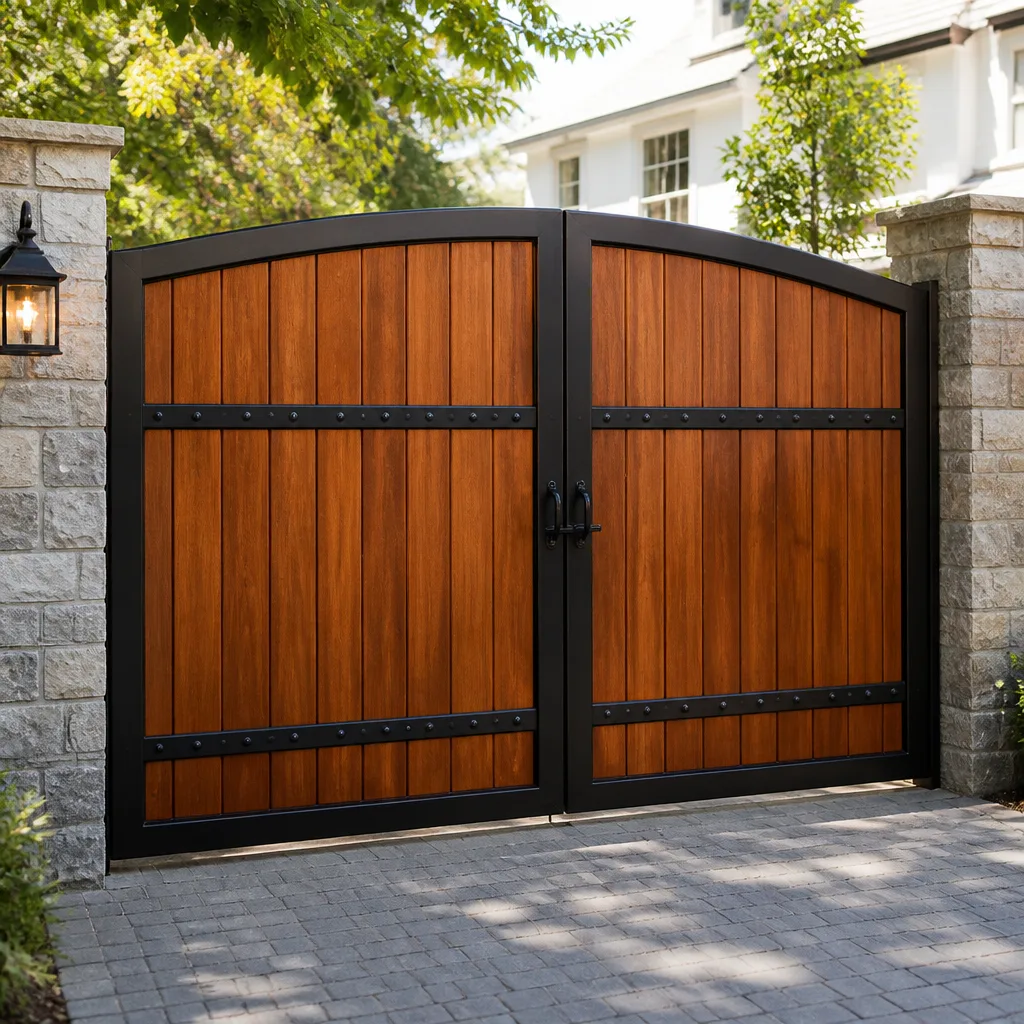 Wood & steel frame
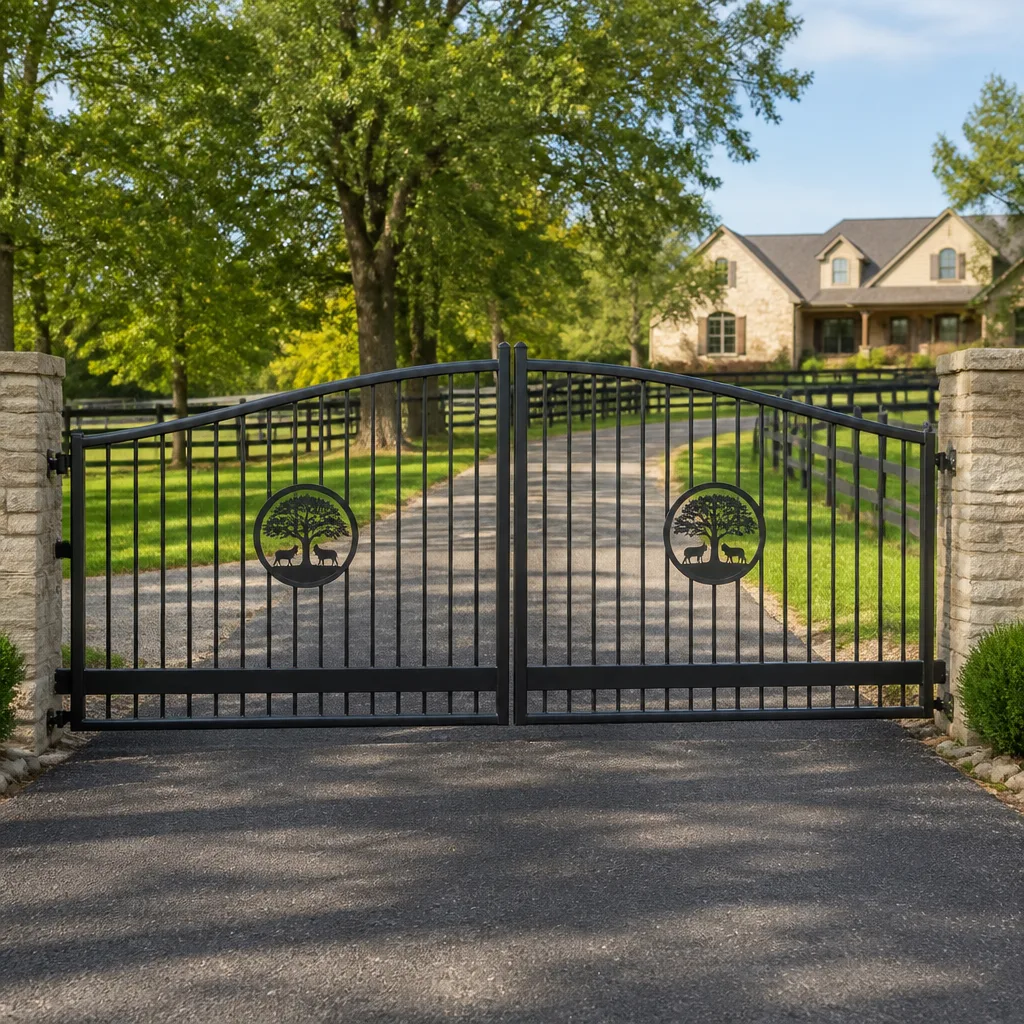 Farm & ranch
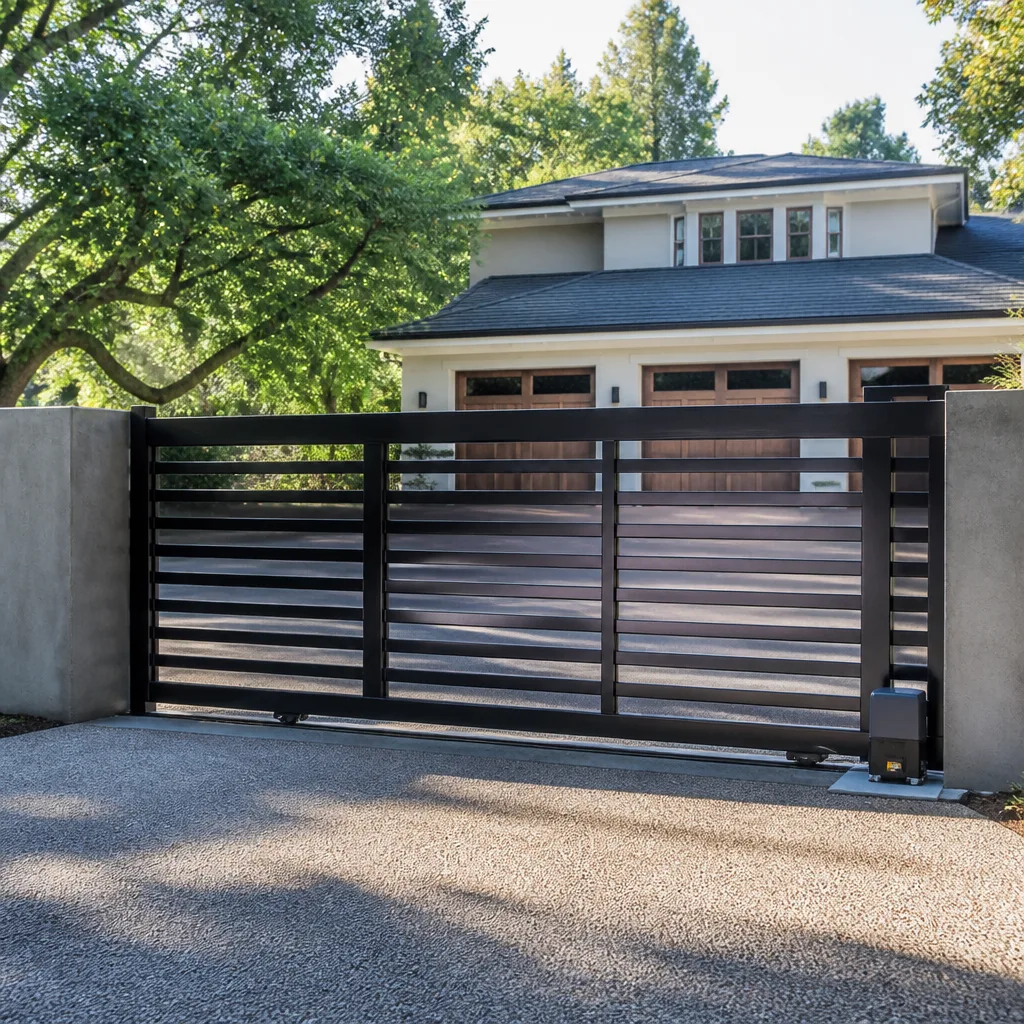 Sliding driveway gates
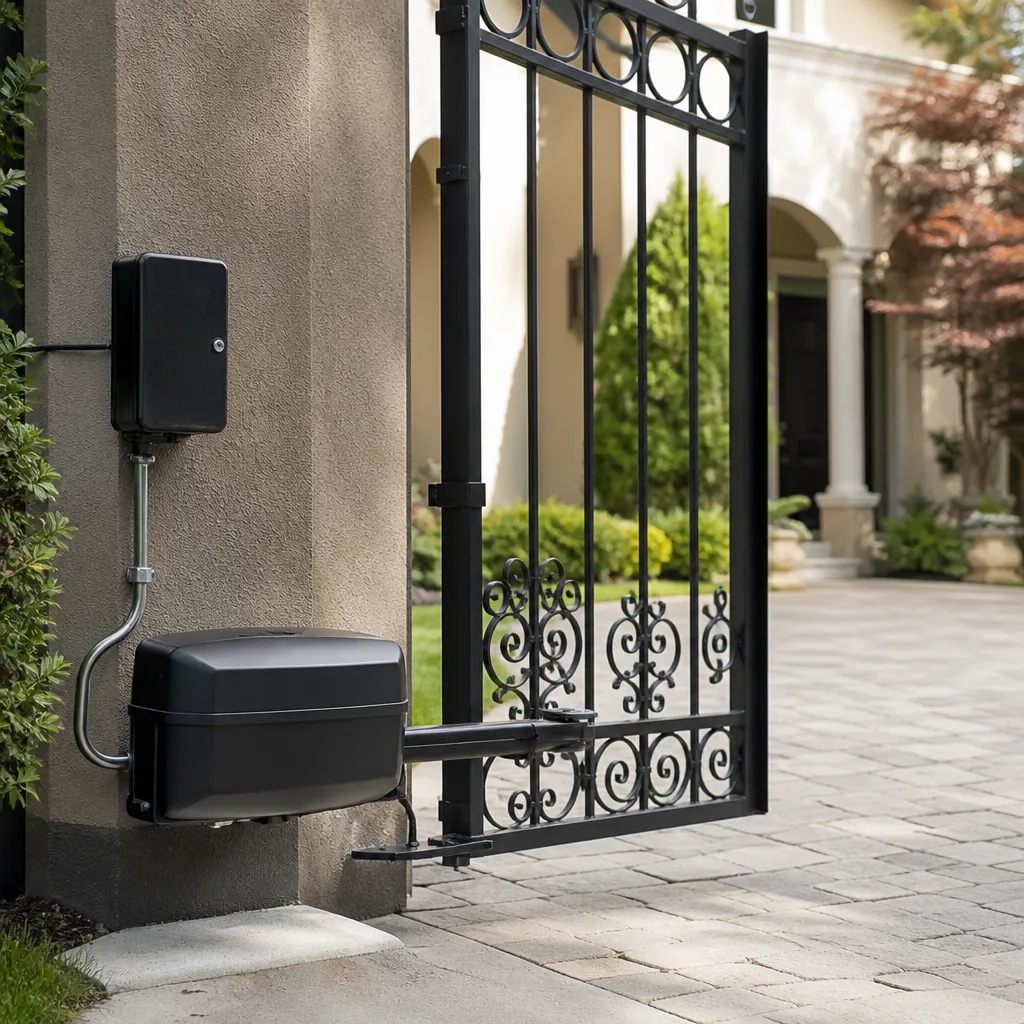 LiftMaster operators
Free on-site gate assessment - hinges, posts, and your LiftMaster or Nice gate operator checked before anything is quoted
The assessment is free and the quote is the invoice.
Get your free estimateGate Repair Warning Signs: A Hesperia Homeowner’s Reference Guide
A gate that hesitates for two seconds before opening isn’t “a little slow.” It’s drawing excess current to overcome mechanical resistance, which means the motor is working harder than designed and accumulating heat damage with every cycle. That two-second pause is your gate telling you something specific about its health, and in Hesperia’s dust and heat, the message tends to arrive earlier and louder than it does in coastal climates. This guide and our Seasonal Gate Repair Care for Hesperia: Year-Round Homeowner’s Guide teach you to read those signals before a $150 adjustment becomes a $2,000 emergency repair. By the time you finish, you’ll know which noises are harmless, which movements signal structural trouble, and which electrical symptoms mean stop using the gate immediately.
Styles & brands we work with
- Wrought iron
- Wood & steel frame
- Farm & ranch
- Sliding driveway gates
- LiftMaster operators
Quick Answer
The most common gate repair warning signs in Hesperia are grinding or clicking noises during operation, a gate that hesitates or reverses mid-cycle, sagging or drifting off-level, keypad or remote intermittent failures, and control board indicators that flash error codes. Any grinding, sparking, or sudden reversal warrants stopping gate use immediately and calling a gate specialist. Subtle changes like slower operation, minor sagging, or occasional remote failure should be scheduled for service within 30 days before they cascade into motor or gearbox failure.
Table of Contents
- Sound-Based Diagnostics: What Your Gate Is Saying
- Movement-Based Diagnostics: Structural vs. Electrical Signals
- Electrical Warning Signs You Can Spot Without Opening the Panel
- Urgent vs. Watchable: A Prioritization Guide
- How Hesperia’s Climate Changes the Warning Signs
- Brand-Specific Warning Signs: DoorKing, Mighty Mule, LiftMaster, Elite
- Safe DIY Checks vs. Leave-It-Alone Situations
- Common Mistakes to Avoid
- When to Call a Professional
- Frequently Asked Questions
- The Bottom Line
Sound-Based Diagnostics: What Your Gate Is Saying
Most Hesperia homeowners hear their gate dozens of times a week but never actually listen to it. That’s a mistake, because automated gate systems communicate almost entirely through sound. A healthy gate produces a consistent, low mechanical hum with no sharp edges to the noise. When that sound changes, a specific component is failing. Here’s what each noise pattern typically indicates.
Grinding or metal-on-metal scraping almost always points to the gearbox or drive chain. In Hesperia, wind-blown sand and grit work their way into gear housings, accelerating tooth wear. By the time you hear grinding, the gear faces are already damaged, and the motor is fighting increasing resistance on every cycle. We’ve opened gearboxes in Hesperia where the lubricant had become a gritty paste, essentially sandpapering the gears from the inside.
Clicking during operation is different from grinding. A sharp, repetitive click usually comes from a failing limit switch or a worn chain link catching on a sprocket tooth. On chain-driven slide gates, a single stiff link produces an audible tick on every revolution. It’s annoying, but it’s also diagnostic: the chain is telling you it needs attention before it snaps under load.
A low humming with no movement is the sound of a motor getting power but failing to turn the gate. This is typically a capacitor failure on residential operators or a jammed gearbox on commercial units. The humming is the motor’s windings energizing against a load they can’t move. Left in this state, the motor overheats rapidly. This is a stop-using-it-now sound.
Screeching or squealing on swing gates usually comes from dry hinge bearings or a misaligned drive arm. Hesperia’s low humidity doesn’t cause rust the way coastal air does, but it does dry out factory lubrication faster. A swing gate that shrieks every time it opens is announcing that its pivot points are running metal-on-metal.
The takeaway: every sound a gate makes is data. If you live in Hesperia and your gate has started making a noise it didn’t make six months ago, that noise has a mechanical or electrical cause. This is where Gate Repair in Hesperia starts every diagnostic, because sound is the fastest route to an accurate diagnosis without guessing.
Movement-Based Diagnostics: Structural vs. Electrical Signals
How a gate moves tells you more than any sound. Movement irregularities split into two categories: structural problems, where the physical gate or track is compromised, and electrical problems, where the motor or controls are misbehaving. Knowing which one you’re dealing with changes who you call and how urgent it is.
Intermittent reversals – where a gate starts opening or closing and then reverses direction – are almost always electrical. The safety sensor is detecting something, or the control board thinks it is. On automatic gates, photo-eye misalignment or a failing loop detector causes this. But dirty sensors are equally common in Hesperia, where dust coats sensor lenses after a single windy week. A gate that reverses intermittently is reporting a false obstruction signal, and that’s a control-level issue, not a structural one.
Sagging is the classic structural warning sign. A swing gate that drags on the ground or a slide gate that scrapes its track is telling you the gate frame has lost rigidity or the support wheels have worn. In Hesperia’s sandy soil, gate posts shift with seasonal moisture changes – minimal rain, but the ground does move, especially for posts set in expansive clay pockets common in the High Desert. A gate that sags doesn’t heal itself. It gets heavier to move every week, and that added weight shortens motor life dramatically.
Drift – where a gate slowly closes or opens on its own after stopping – points to hydraulic system bleed on hydraulic operators or worn brake components on electromechanical units. It’s rare on residential Mighty Mule or Ghost Controls systems but documented on commercial DoorKing and Elite hydraulic operators. Drift is dangerous: a gate that drifts closed on a vehicle or person isn’t respecting its safety limits.
Slower operation over time is the warning sign most Hesperia homeowners miss because it’s gradual. A gate that took 12 seconds to open and now takes 18 seconds is pulling more current to do the same job. That’s accelerated motor wear, and it’s measurable. In our experience, gates that are noticeably slower than when installed are usually within months of motor or capacitor failure.
Jerky or uneven movement – speeding up and slowing down mid-cycle – indicates a failing gear reduction unit or a chain with inconsistent tension. It’s especially visible on slide gates with worn track wheels, where the gate literally bumps over flat-spotted rollers. Each bump is a micro-impact through the drive system.
Electrical Warning Signs You Can Spot Without Opening the Panel
You don’t need a multimeter to read basic electrical trouble on an automated gate. Several warning signs are visible or observable from outside the control box, and they’re worth learning because electrical failures are the ones most likely to leave you locked out or locked in.
Keypad or remote intermittent operation is rarely a battery issue when it affects multiple remotes or the keypad simultaneously. If one remote fails, replace its battery. If three remotes and the keypad all work only sometimes, the receiver board or antenna is failing. On LiftMaster and Linear systems, the antenna wire is a common failure point in Hesperia because UV exposure degrades the insulation over a few High Desert summers.
Error code indicators are visible without opening anything. Most modern operators – DoorKing, Elite, FAAC, BFT – have an external status LED that blinks in patterns. Those patterns are codes. A continuously flashing LED isn’t “the gate acting up”; it’s the control board actively reporting a fault. If you’ve lost your manual, most manufacturer code charts are available online, and reading the code before calling saves the technician diagnostic time.
Gate operating without a command – opening or closing on its own, especially at random times – is a serious electrical warning. This can indicate a shorted input, a failing loop detector, or radio frequency interference. In Hesperia, ham radio operators and nearby military communications from the Victorville area occasionally trigger poorly shielded receiver boards. A gate that moves on its own should be disconnected from power until diagnosed. That is a person-safety issue, not an inconvenience.
Humming at the motor with no operation, covered earlier, is both a sound and an electrical sign. It means the motor is energizing against a mechanical or electrical load it cannot overcome. The capacitor on single-phase residential motors is the most common culprit.
Burnt smell near the motor or control box is always urgent. Electrical components burning – capacitors, relays, transformer windings – produce a distinct odor that doesn’t go away. If you smell it, cut power at the breaker. This is one of the warning signs that means do not operate the gate, and it’s common on older systems in Hesperia where heat has accumulated in black metal control boxes mounted in direct sun.
We service residential and commercial electric gate systems across Hesperia for exactly these electrical failures, and Electric Gate Repair in Hesperia is the service page that covers motors, control boards, and sensor faults in detail.
Urgent vs. Watchable: A Prioritization Guide
Not every warning sign means drop everything. Some are urgent – stop using the gate and get a technician out. Others are watchable – schedule service within a reasonable window. Here’s how to categorize what you’re seeing or hearing.
Urgent: Stop Using the Gate Now
- Grinding or metal-on-metal noise during operation. Gear or chain failure is already underway. Continued use destroys the gearbox and can snap a chain under tension.
- Gate operating without a command. This is the most dangerous failure mode. A gate that moves on its own can strike a person, pet, or vehicle.
- Humming motor with no gate movement. The motor is drawing locked-rotor current. This burns windings fast and can trip breakers or start a fire in extreme cases.
- Spark or smoke from the motor area or control box. Any visible spark or smoke means electrical failure is active. Cut power immediately.
- Gate drifting closed on its own. Hydraulic or brake failure that allows drift compromises the safety of anyone in the gate’s path.
- Sudden, complete loss of operation. A gate that worked yesterday and is dead today could be a blown fuse, a failed capacitor, or a damaged wire – but it also could mean a control board failure that leaves the gate locked in place. This matters in Hesperia, where driveways are often the only access point.
Watchable: Schedule Service Within 30 Days
- Noticeably slower operation. Motor strain increases as mechanical resistance grows. You have time, but not unlimited time.
- Occasional remote or keypad failure. If it’s intermittent and not worsening rapidly, you can schedule on a normal timeline.
- Minor sagging without dragging. The gate still clears the ground, but the issue will progress.
- Light clicking that isn’t worsening. A worn chain link or limit switch can wait a short while, but not indefinitely.
- Squeaking or light screeching on swing gates. Lubrication or hinge bearing wear – worth addressing, but not a crisis.
The mistake most people make is treating every sound as equally trivial. A gate is a machine with a motor, a gearbox, a control system, and mechanical components, and each failure mode has its own timeline. Knowing which timeline you’re on is the difference between a scheduled repair and an emergency call. For a full walkthrough of Gate Installation in Hesperia, including whether repair or replacement makes more sense for your system, see that guide.
How Hesperia’s Climate Changes the Warning Signs
Hesperia’s High Desert environment produces warning signs that look different from what a San Diego or Riverside homeowner would see. If you’ve read generic gate repair advice online, check our more guides & resources for Hesperia-specific advice – some generic tips don’t apply here, and some local signs are missing from those guides entirely.
Dust is the number one environmental factor. Hesperia sits in the Mojave Desert’s wind corridor, and when the Santa Anas blow, fine alkaline dust coats everything. That dust infiltrates control boards, coats safety sensor lenses, and works into lubricated joints to form an abrasive paste. A sensor that fails intermittently after a windy week in Hesperia is usually a dust-coated lens, not a failed component. A gearbox that grinds in Hesperia may have failed early because wind-blown grit contaminated its lubricant, not because of a manufacturing defect.
Heat is the second factor, and its effects are cumulative. Summer temperatures in Hesperia routinely exceed 100°F, and black metal control boxes in direct sun get significantly hotter inside. Electrolytic capacitors in residential operators are rated for a specific temperature lifespan, and every sustained hot season shortens that lifespan. This is why capacitor failures are proportionally more common in Hesperia than in cooler climates. Motors working against hot, expanded metal components also draw more current, compounding heat stress.
Expansion and contraction creates seasonal movement signs. Metal gates in Hesperia expand significantly in summer heat and contract on winter nights that drop below freezing. This thermal cycling loosens bolts, shifts post foundations in expansive clay soil, and widens gaps in weld joints over years. A gate that scrapes in summer but clears in winter is showing you thermal expansion, not structural failure, but that same cycle is accumulating fatigue every year.
Low humidity preserves metal but dries lubricants. Hesperia’s dry air means less rust than coastal climates, which is good news for gate frames. But factory grease in bearings, hinges, and gearboxes dries out faster here. A swing gate that starts squealing after two years in Hesperia may not have rusted; its lubrication has simply evaporated or hardened. Re-greasing with the right product is a maintenance item many Hesperia homeowners never schedule.
Understanding local climate factors matters because it changes the diagnosis for identical symptoms. We see these patterns regularly in Hesperia, and they inform how we approach every gate we inspect and repair.
Brand-Specific Warning Signs: DoorKing, Mighty Mule, LiftMaster, Elite
Different gate operators fail in somewhat predictable ways. Knowing your brand helps you interpret warning signs faster, because each manufacturer’s systems have characteristic failure modes that experienced gate technicians recognize immediately.
DoorKing operators are commercial-grade workhorses common on Hesperia properties with slide gates. The characteristic DoorKing warning signs are limit switch failures and chain tension issues. The limit switches on DoorKing slide operators are mechanical devices that wear over thousands of cycles and fail by producing exactly the clicking noise described earlier, or by allowing the gate to over-travel past its normal stop point. Chain stretch on heavily used DoorKing systems is also common; if you see slack in a DoorKing drive chain, the sprockets and chain are both wearing and the chain should be adjusted or replaced before it jumps a tooth under load.
Mighty Mule systems are the most common residential do-it-yourself operators in Hesperia. Their characteristic failure is the control board, specifically the lightning-damage vulnerability and the capacitor. Mighty Mule boards are not sealed against moisture or dust, and in Hesperia, dust accumulation on the board leads to sensor errors. If a Mighty Mule system reports obstruction errors on clear days with no visible blockage, the board is often seeing dust as an obstacle signal. The second common Mighty Mule warning sign is slow operation with a fully charged battery, which points to motor wear or degraded battery health rather than a control issue.
LiftMaster gate operators share components with their garage door lineage, and their failure modes in Hesperia are consistent: logic board failures triggered by heat and power surges, and gear wear in the drive reduction. The synthetic gear used in many LiftMaster residential gate operators wears faster in dusty conditions. A LiftMaster gate that grinds has likely worn its drive gear, and continued use chews through the gear completely until the motor spins without moving the gate at all.
Elite operators appear on both residential and light commercial Hesperia installations. Elite’s characteristic warning sign is relay and transformer degradation on older units. A gate that runs fine for years and then starts cycling randomly or only responding to some commands is often showing relay contact wear on the Elite control board. Elite systems also use limit switches that are adjustable, and vibration from High Desert winds shifts those adjustments over time, causing the gate to stop a few inches short or long of its normal position.
The brand matters because the fix differs. We carry repair experience on all four of these brands plus five more – FAAC, BFT, Linear, Viking, and Ghost Controls – so when a Hesperia homeowner calls with a specific brand symptom, the diagnostic path is already narrowed before we arrive. For a full overview of what we repair, the Gate Repair Hesperia home page covers our full service area and brand coverage.
Safe DIY Checks vs. Leave-It-Alone Situations
Some gate checks are safe for a homeowner to perform. Others are genuinely dangerous, and attempting them without training risks serious injury. The line between the two is not always obvious, so here’s the practical split.
Safe Checks Any Homeowner Can Do
- Visual inspection of the gate’s path. Walk the track or swing arc. Look for rocks, debris, overgrown vegetation, or anything touching the gate through its full travel.
- Clean the safety sensor lenses. Photo-eyes get dusty in Hesperia. A soft cloth with glass cleaner restores sensor clarity and often solves intermittent reversal issues. This is a safe, low-risk maintenance task.
- Check the power source. Confirm the breaker is on and the system has power. Look for a tripped GFCI outlet. This is basic electrical safety, not panel work.
- Test the manual release. Every automated gate has a manual disconnect. Testing it while the gate is stationary and unpowered confirms you can open the gate manually in an emergency. Consult your manual for the exact procedure on your model.
- Listen and document. Record audio of the gate operating. Note when the noise started, whether it’s getting worse, and whether it happens at the same point in the cycle. This gives a technician useful diagnostic data.
Leave These Alone – Call a Gate Specialist
- Opening the control board enclosure. Motor capacitors store voltage even with power disconnected. A charged capacitor can deliver a painful or dangerous shock. The control board also contains mains-voltage terminals.
- Adjusting tension on drive chains or gate hinges. Chain tension on a DoorKing or Elite slide operator is set to specific manufacturer tolerances. Over-tightening destroys bearings; under-tightening throws chains. Hinge adjustment on a sagging swing gate often requires lifting equipment and is not a homeowner task.
- Working on torsion springs on any gate system. If your gate uses a counterbalance spring, that spring is under high tension. Released improperly, it causes severe injury. Trained gate technicians have the tools and procedure for this work.
- Rewiring, replacing fuses inside the panel, or touching the motor itself. If you’re not certain what each wire does, don’t touch it. Electrical work on gate operators should be done by someone who works on these systems daily.
The spirit of the rule: observe, listen, and clean what’s safe to clean. Don’t open, adjust, or rewire anything that carries voltage or stored energy. A gate that isn’t functioning but has power is a diagnostic problem for a specialist, not a puzzle to solve with a screwdriver and a guess.
Common Mistakes to Avoid
- Ignoring a new noise because the gate still works. Noise is the earliest warning sign. By the time a grinding gearbox stops working entirely, the repair is usually a full gearbox replacement instead of a lubrication or bearing fix. In Hesperia’s dust conditions, that timeline is shorter than average.
- Lubricating electrical parts or spraying WD-40 into the control panel. WD-40 is not a lubricant for gate mechanisms, and spraying anything into a control panel creates dust-attracting residue that Hesperia’s wind will exploit. Use only manufacturer-specified lubricants on mechanical components.
- Trying to force a gate through a jammed cycle. Holding the remote button or pushing the gate manually while the motor is engaged multiplies gear damage. When a gate binds, the correct response is to disengage and diagnose, not to force it.
- Replacing remotes before checking the receiver. Hesperia homeowners often buy new remotes when a gate becomes intermittent, only to find the receiver board or antenna was the failing component. Test with a second remote before buying hardware.
- Waiting until a slide gate has worn the track completely flat before calling. Track-wear grinding is progressive. Addressing worn wheels early is a small repair; waiting until the gate drags its belly on the concrete means welding and alignment work.
- Using car oil or household grease on gate hinges and chains. Automotive and household products attract dust in a High Desert environment. The correct products are dry-film lubricants or specific chain lubricants that don’t hold abrasive grit.
- Assuming a dead gate is a dead motor when it’s a tripped GFCI or blown fuse. Before assuming a catastrophic failure, check the basics. A surprising number of “dead gate” calls in Hesperia turn out to be a tripped outlet or a power interruption, not a motor failure.
When to Call a Professional
Call a Gate Repair services specialist when any of the urgent signs appear: grinding, gate movement without command, humming with no movement, sparking or smoke, or drifting that compromises safety. Call also when you notice watchable signs worsening – a slow gate getting slower, a click getting louder, or a sag that now scrapes the ground. And call before you buy new hardware if you’re uncertain whether the problem is the remote, the receiver, the motor, or the control board.
We’re gate-only specialists. Every technician we send in Hesperia works exclusively on gate systems, which means the diagnostic process starts narrow instead of broad. If you’re seeing any of the warning signs in this guide, Gate Repair Hesperia offers free estimates in Hesperia – call (877) 693-9694 and describe what you’re hearing and seeing. We service the brands named here and five more, and we’ll tell you honestly whether repair or replacement makes financial sense before you spend a dollar.
Frequently Asked Questions
Gate repair in Hesperia typically runs $150 to $450 for common fixes like sensor cleaning, limit switch adjustment, capacitor replacement, or chain tensioning, while motor or control board replacements on residential systems usually land between $600 and $1,400 depending on brand. Commercial-grade operators like DoorKing or Elite cost more in parts. Every repair we quote includes the price agreed before work starts. Call (877) 693-9694 for a specific quote on your system – estimates are free.
For urgent gate failures in Hesperia – grinding, non-operation, gate moving on its own – we prioritize emergency calls and schedule accordingly. For non-urgent issues, we’ll set the soonest available appointment. Call (877) 693-9694 with your situation and we’ll give you a straight answer on timing.
We work on LiftMaster, FAAC, BFT, Linear, Viking, Ghost Controls, DoorKing, Elite, and Mighty Mule systems – nine major brands covering both homeowner-grade and commercial-grade automated gates. If your Hesperia gate uses a brand not listed here, call anyway; we may still be able to source parts and diagnose the system (877) 693-9694.
Intermittent reversal on an automated gate in Hesperia is most commonly caused by dusty safety sensor lenses, misaligned photo-eyes, or a failing loop detector. Hesperia’s wind-blown dust coats sensor lenses quickly, and cleaning them often resolves the issue. If cleaning doesn’t fix it, the problem is likely electrical and we can diagnose it. Call (877) 693-9694 for a free estimate.
That depends on the age of the operator, the condition of the gate structure, and the cost of the required repair. As a rule, if the motor and control board are both failing on a system over 15 years old, replacement usually costs less over the next five years than repair. We install new gate systems as well as repair existing ones, so we can give you honest numbers for both paths – call (877) 693-9694 for an assessment.
Yes. Fine alkaline dust from Mojave Desert winds infiltrates control board enclosures, coats sensor lenses, and contaminates gearbox lubricants. Gates in Hesperia wear faster than identical systems in coastal climates without this dust load. Regular sensor cleaning and periodic mechanical lubrication with dust-resistant products significantly extends operator life here.
The Bottom Line
Your gate talks. It grinds when gears are failing, clicks when chains or limit switches wear, hums when motors are straining, and reverses when sensors are blocked or boards are confused. Learning to distinguish these signals – and knowing which ones mean stop now versus schedule soon – is the highest-value skill a Hesperia homeowner with an automated gate can develop. In High Desert conditions, dust and heat accelerate every failure mode, so paying attention to early warning signs here matters more than it does almost anywhere else. When a signal appears, don’t ignore it and don’t guess. Call a gate-only specialist who works on your brand, get the diagnosis, and fix the problem while it’s still a repair instead of a replacement. Call Gate Repair Hesperia at (877) 693-9694 for a free estimate.
Written by the team at Gate Repair Hesperia, serving Hesperia since 2013.
See the difference
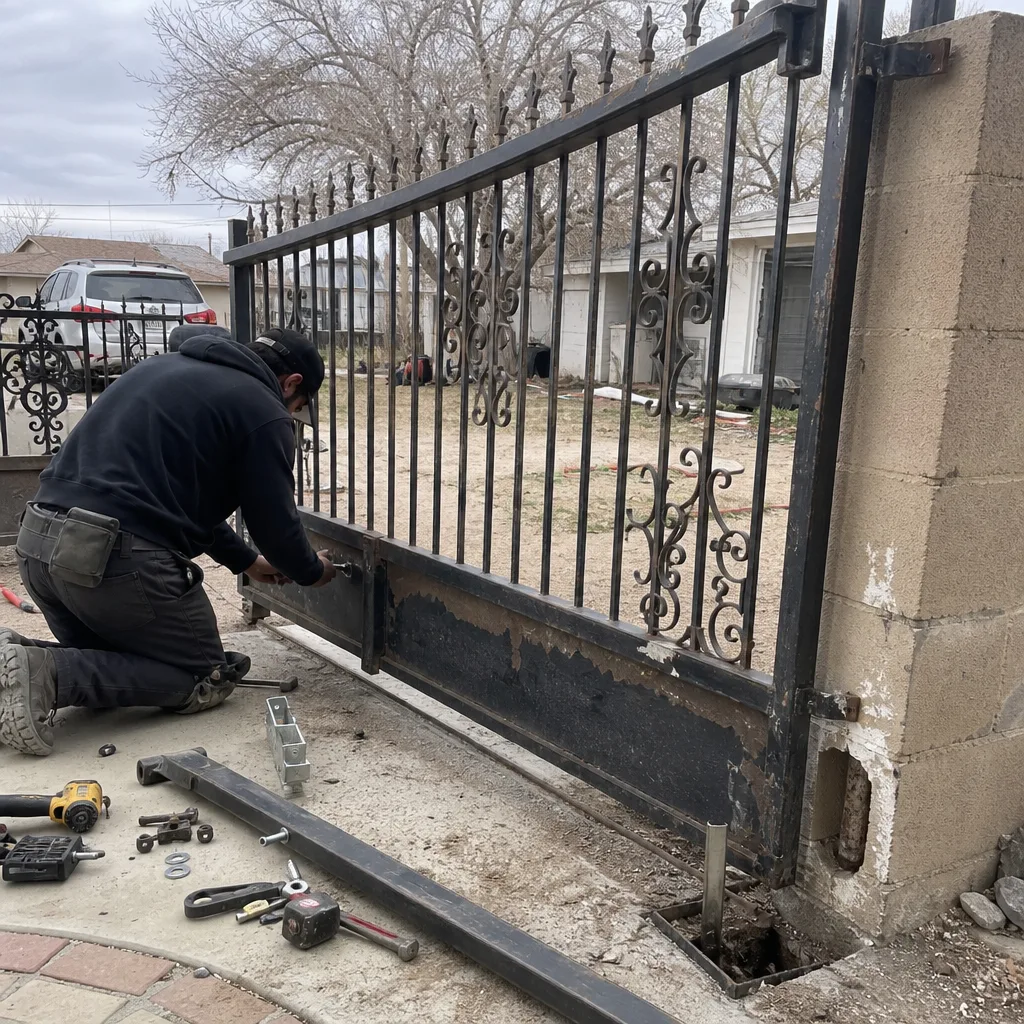 Before
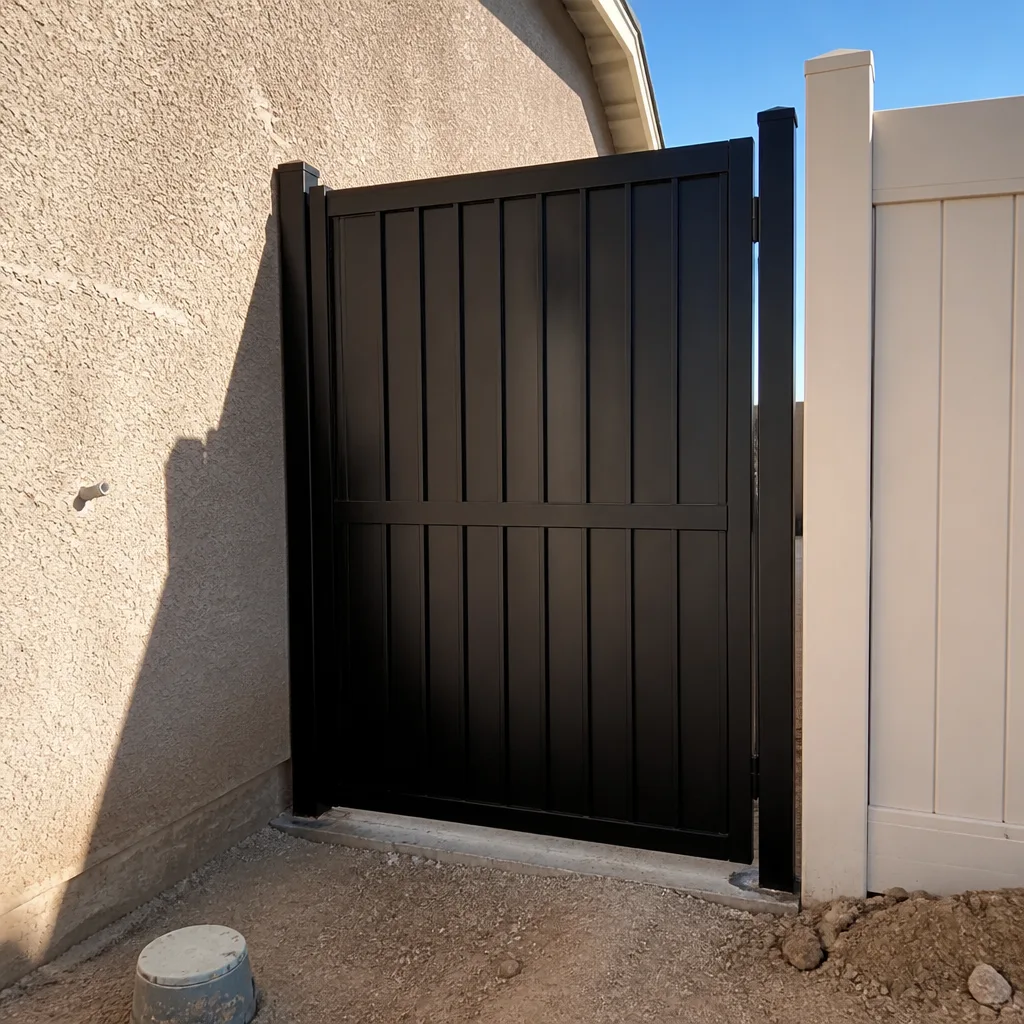 After
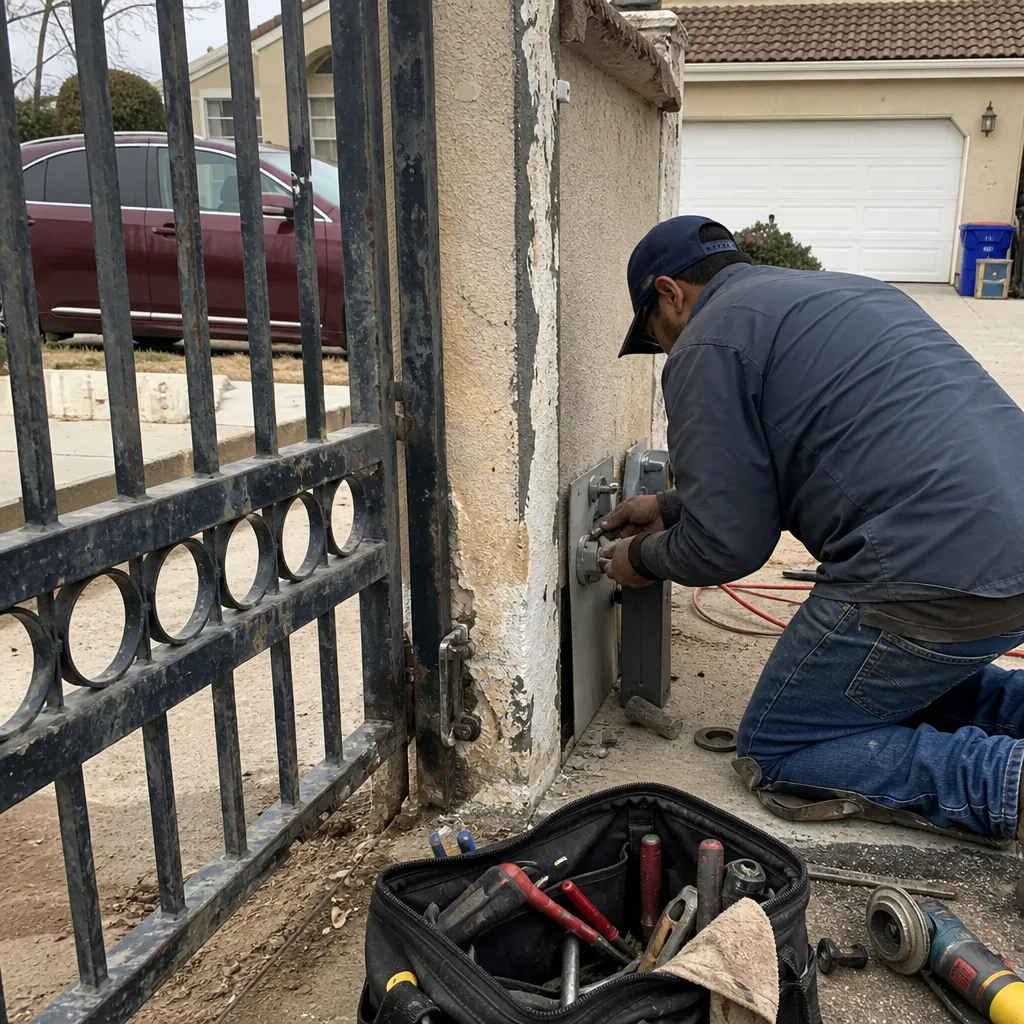 Before
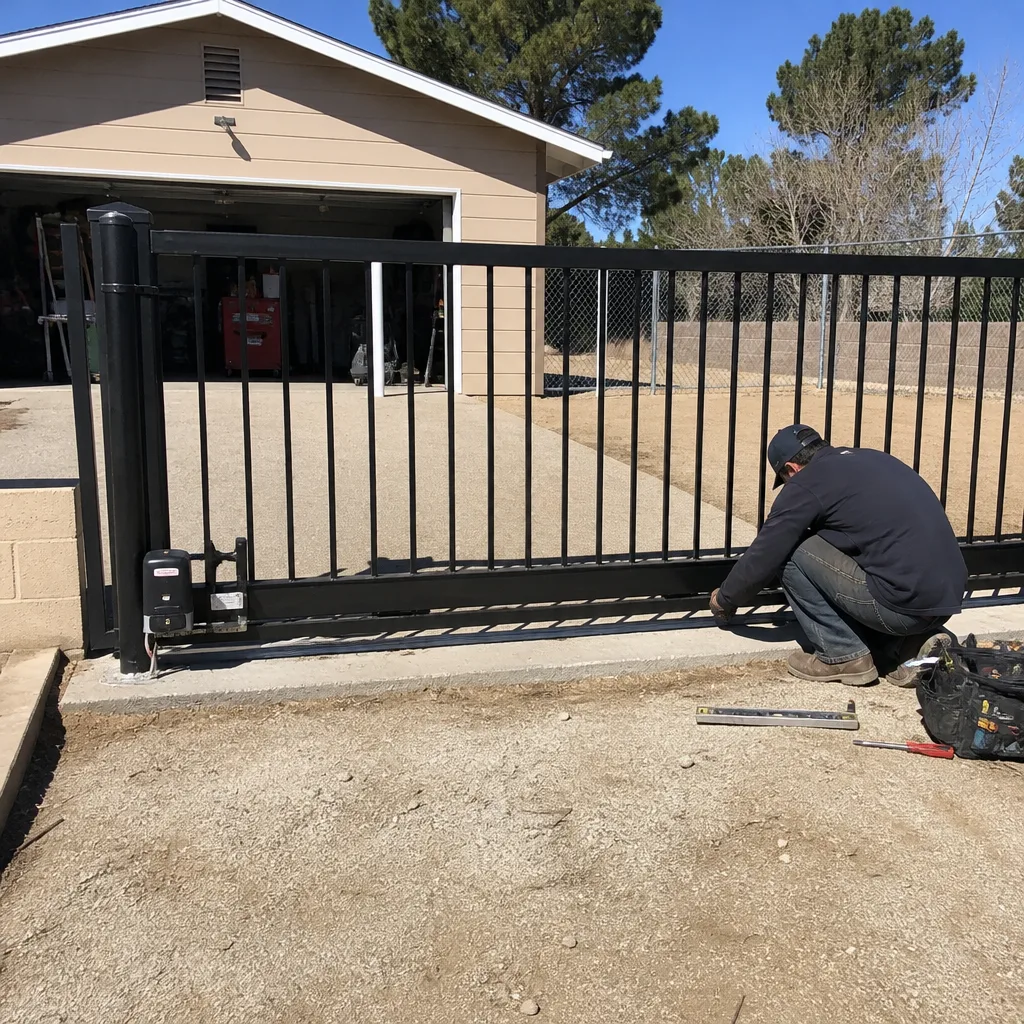 After
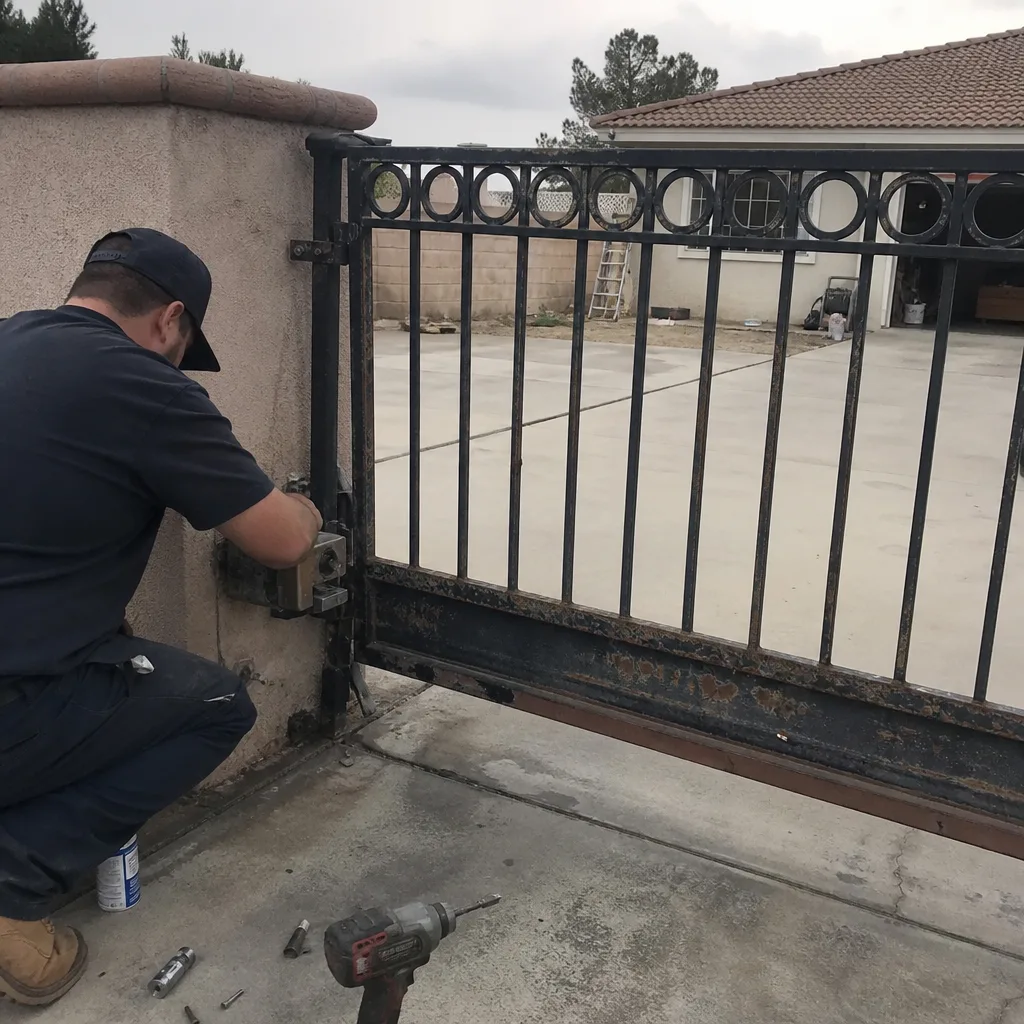 Before
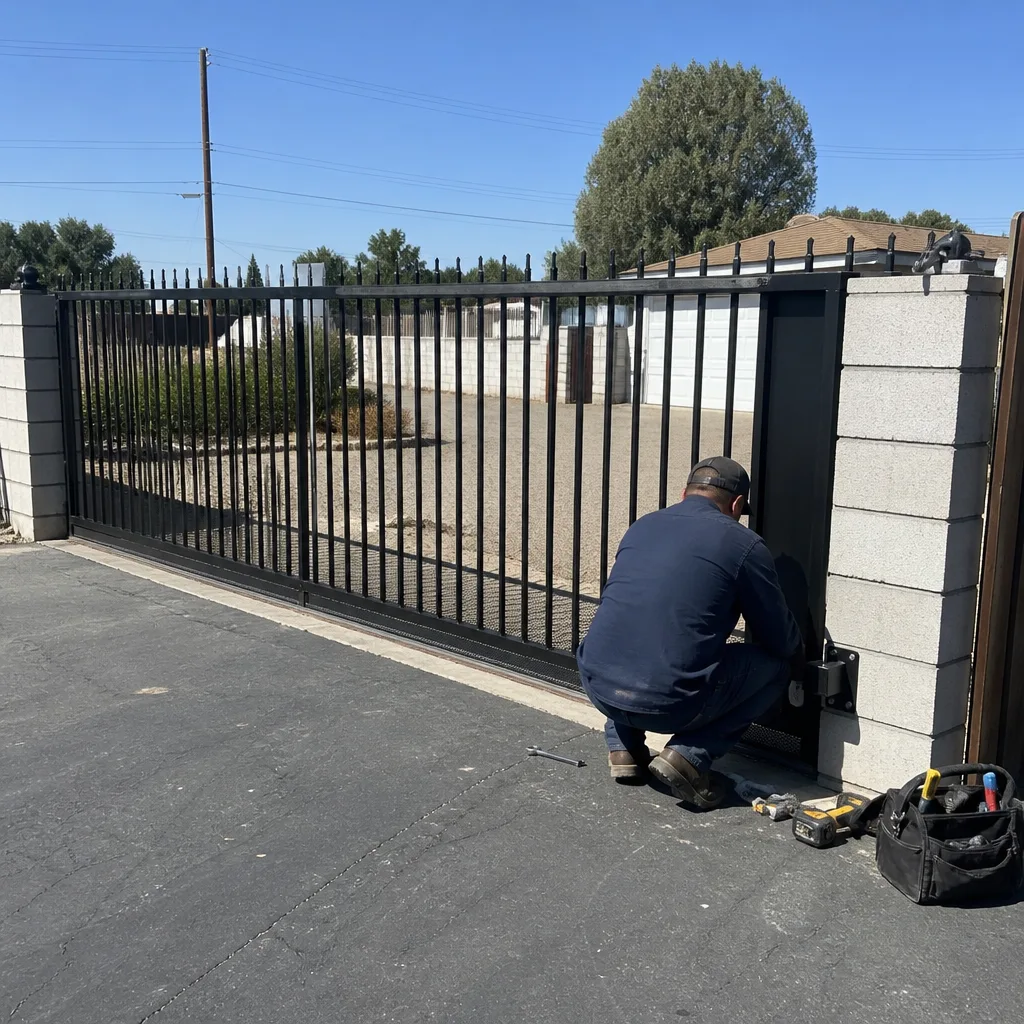 After