
Last updated November 2, 2026
 Wrought iron
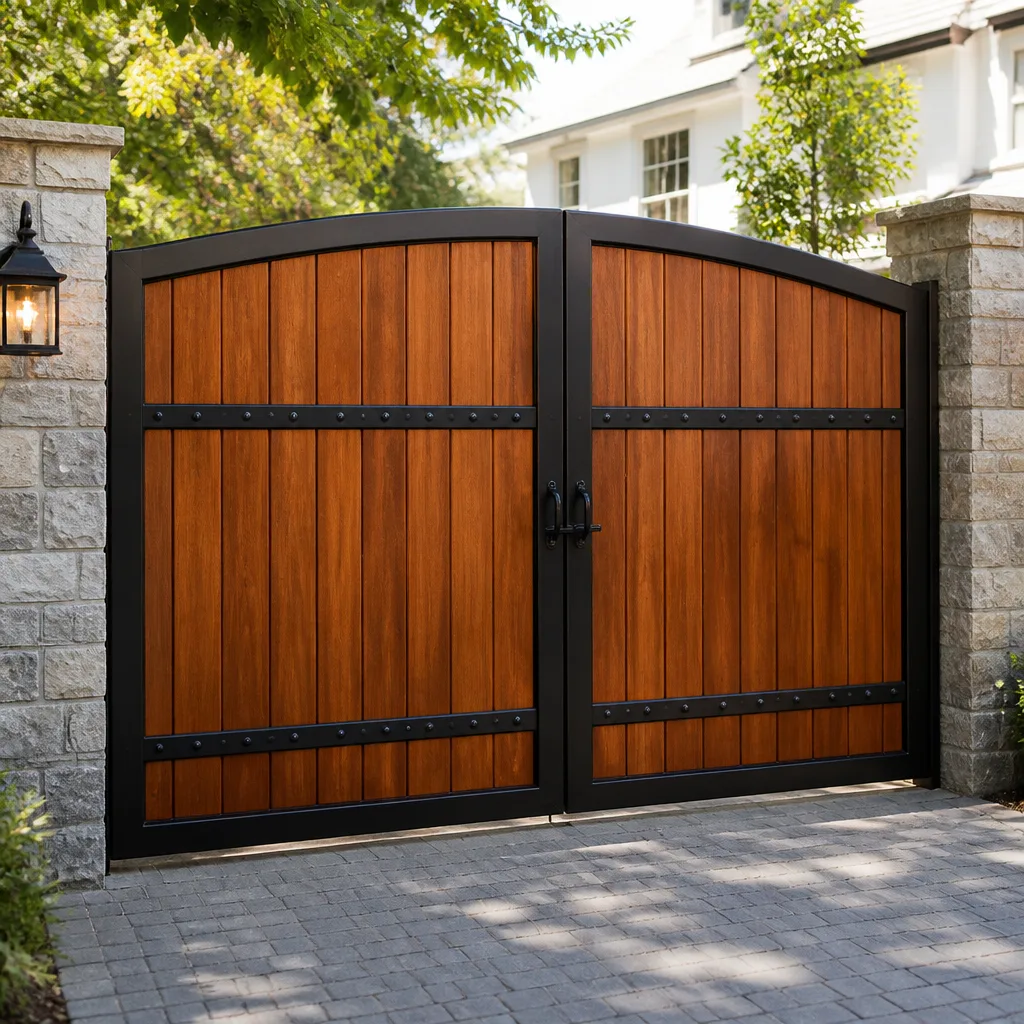 Wood & steel frame
 Farm & ranch
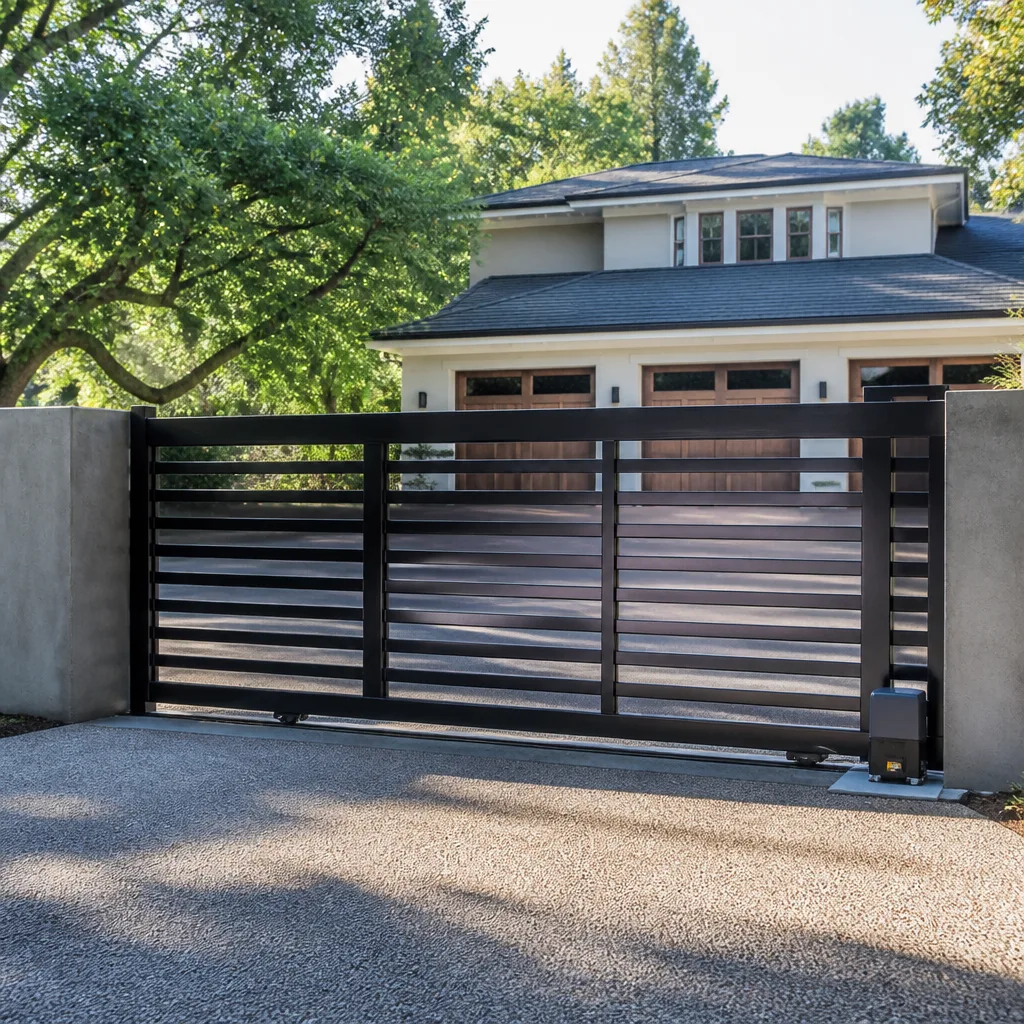 Sliding driveway gates
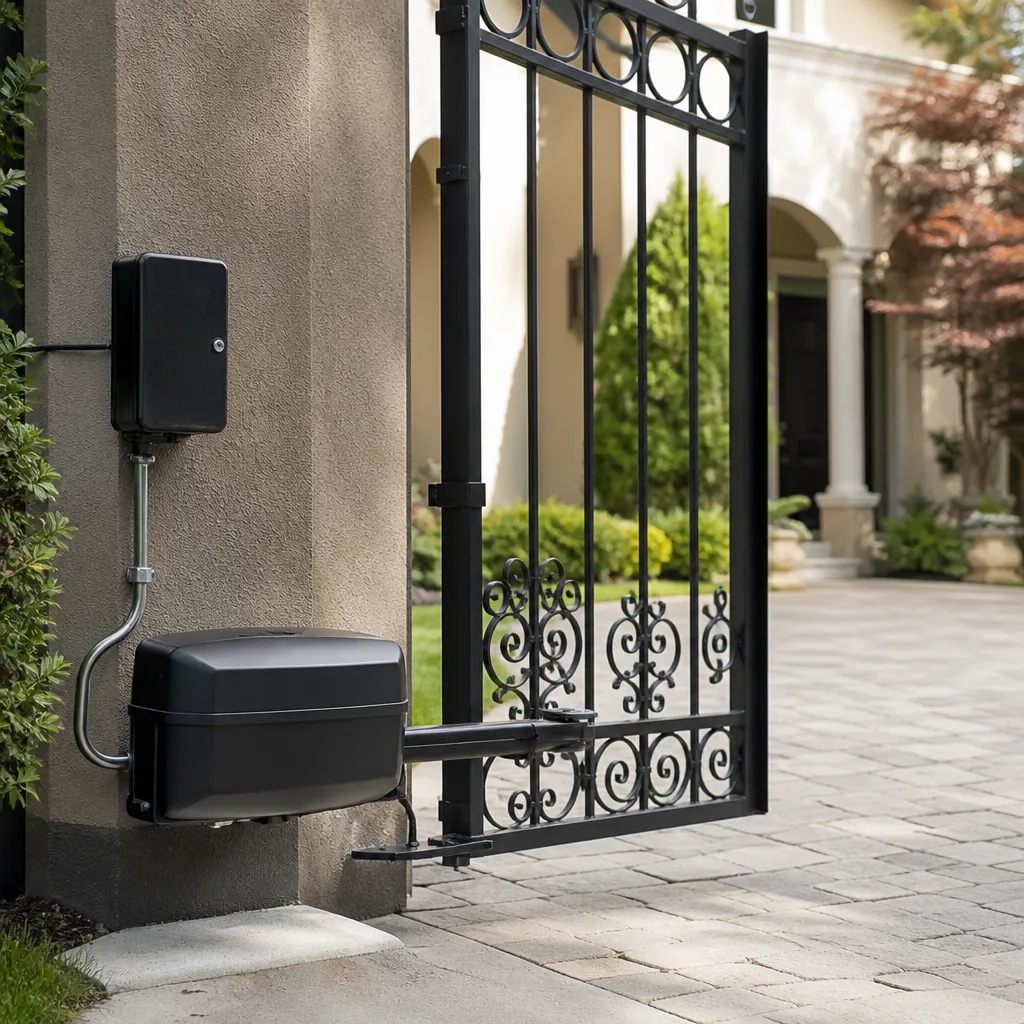 LiftMaster operators
Free on-site gate assessment - hinges, posts, and your LiftMaster or Nice gate operator checked before anything is quoted
The assessment is free and the quote is the invoice.
Get your free estimateSeasonal Gate Repair Care for Hesperia: Year-Round Homeowner’s Guide
Hesperia sees more thermal cycling, the daily temperature swing between overnight lows and afternoon highs, than most of coastal California sees in a week. That cycling is more damaging to gate hardware than any single extreme temperature event. Metal expands and contracts daily, solder joints fatigue, and motor capacitors wear out faster than manufacturer specs predict. This guide maps specific maintenance actions to Hesperia’s actual seasonal patterns: the spring wind season, the brutal summer heat, the late-summer monsoon shift, and winter nights that dip below freezing. You’ll learn what breaks, when it breaks, and what to do about it before you’re stuck at the driveway at 6 a.m. For more detail, see The Complete Gate Repair Guide for Hesperia Homeowners.
Quick Answer
Seasonal gate care in Hesperia means doing four things at four specific times: checking alignment and fasteners after spring windstorms, cleaning and shading the operator through summer heat, treating rust and lubricating pivot points during the humid monsoon transition, and testing backup batteries before winter cold snaps. A gate that gets these four seasonal checks will typically outlast a neglected gate by years. That’s the whole game.
Styles & brands we work with
- Wrought iron
- Wood & steel frame
- Farm & ranch
- Sliding driveway gates
- LiftMaster operators
Table of Contents
- Spring: Wind Season and Gate Alignment
- Summer: Thermal Expansion and Operator Overheating
- Fall and the Monsoon Transition: Corrosion Risk
- Winter: Battery Backup and Cold-Morning Failures
- Building a Hesperia-Specific Annual Service Schedule
- What You Can Check Yourself, Season by Season
- Common Mistakes to Avoid
- When to Call a Professional
- Frequently Asked Questions
Spring: Wind Season and Gate Alignment
Hesperia’s spring is defined by wind. Santa Ana events and the Mojave’s channeled gusts routinely hit 40 to 60 miles per hour, with higher peaks along the Cajon Pass corridor. For a gate, that’s not a one-time shock. It’s hours of sustained, repeated pressure against the gate leaf, the hinges, the track, and the operator’s limit switches.
The damage pattern we see most in Hesperia is what we call creep. A gate leaf takes hundreds of small wind hits over a six-week season. Each one shifts the hinge mounting by a fraction of a millimeter. The gate still opens and closes, so the owner doesn’t notice. But the operator now has to work harder on every cycle. That extra load shortens the life of the motor, the gearbox, and the clutch. By May, a gate that was fine in February is drawing 20 percent more current than it should.
Here’s what to check in spring:
- Hinge bolts and mounting plates. Take a socket wrench to every visible fastener on the gate frame and hinge post. If a bolt is looser than snug, it’s already moving. Don’t just tighten it, remove it and check the hole. In Hesperia’s dry soil, post anchors can also settle unevenly, which throws off hinge alignment.
- Gate leaf sag. Stand at the latch post and sight down the top rail of the gate. A healthy gate shows a straight line, parallel to the ground. A sag means hinge wear or post movement. Sagging gates drag on the latch and overload the operator’s open and close cycle.
- Track cleanliness on slide gates. Spring wind fills the track with grit, seed pods, and gravel. That debris acts as sandpaper on the track wheels and increases rolling resistance.
- Photocell and safety sensor alignment. Wind vibrates sensor brackets loose. If your gate intermittently refuses to close or reverses for no visible reason in spring, check sensor aim before you assume the control board failed.
- Limit switch behavior. Run the gate through a full cycle and listen. If it slams into the open or closed stop, the limit switch has drifted. That’s a five-minute adjustment for a technician, but left alone it bends gate frames and cracks welds.
Spring is also the right time to handle any repair that winter exposed, not just wind damage. If the gate was sluggish all through January and February, scheduling Gate Repair in Hesperia work in March or April gets it done before the heat adds another stress layer. When wind has already bent a hinge or cracked a weld, the fix is rarely a DIY job. Gate frames under tension need proper jigging and welding, and a misaligned operator can be dangerous to adjust under load.
Summer: Thermal Expansion and Operator Overheating
Summer in Hesperia is the season that separates well-built gates from cheap ones. Daytime highs regularly exceed 100 degrees, and dark metal surfaces in direct sun can reach 150 degrees or more. That’s not a comfortable operating temperature for any gate component. The metal expands, the electronics bake, and the operator’s motor runs hotter on every cycle.
Thermal expansion is the silent killer of summer. A 16-foot steel gate will grow measurably between the pre-dawn low of 65 degrees and the 3 p.m. high of 105. If the gate was installed with tight clearances in winter, that expansion binds the gate against the latch post or the track. The operator pushes harder, the current draw climbs, and the thermal overload protection eventually trips. We see a pattern every summer: a gate runs fine in the morning, then refuses to move in the late afternoon. The owner calls it an electrical problem. It’s usually mechanical binding from expansion.
Here’s the summer-specific checklist that actually matters in Hesperia:
- Clearance check at maximum heat. On a hot afternoon, with the gate closed, look at the gap between the gate leaf and the latch post. There should be visible daylight, typically a quarter inch or more depending on gate length. If the gap is gone or the gate touches the post, the clearance is too tight for Hesperia’s temperature range.
- Operator enclosure ventilation. Most residential swing and slide operators live in a metal or plastic housing. In full sun, that housing becomes an oven. Check that the enclosure’s ventilation slots are clean and unobstructed. Dust and cobwebs are the usual culprits.
- Capacitor inspection. Motor start capacitors are the most heat-fragile component in any operator. A capacitor that fails in Hesperia typically fails in July or August. If the gate hums but doesn’t move on a hot afternoon, the capacitor is the prime suspect.
- Control board temperature. LiftMaster, FAAC, and BFT boards all have specified operating temperature ranges. Many residential boards are rated to 158 degrees, but that rating assumes the enclosure is ventilated and mounted out of direct sun. A board in a sealed box on a west-facing wall is not operating at rated temperature.
- Shade the operator. This is the lowest-cost summer improvement most Hesperia homeowners never make. A simple shade panel or repositioning the operator enclosure to the shaded side of the gate post drops internal temperatures by 20 to 30 degrees. That’s years of extra component life.
Summer is also when we see the most battery-related calls for solar-powered gates. Hesperia’s summer sun is intense, but it’s also when the gate cycles the most, kids are in and out all day, pool service and landscape crews arrive daily. A battery that was marginal in May dies in August. If your gate runs on solar or has a battery backup for grid outages, test the battery run time in early June and replace anything that won’t hold a full charge through multiple cycles. Our team works on solar and battery systems for Linear, Ghost Controls, and LiftMaster operators across Hesperia regularly in this season.
When a gate operator overheats repeatedly, the fix is usually more than a reset. It’s a diagnosis of why the unit is running hot: binding from expansion, a failing capacitor, a worn motor, or an undersized operator. A technician who works only on gates will find it faster than a generalist who also handles fencing and garage doors. If your Electric Gate Repair in Hesperia needs a specialist, that’s what we do at Gate Repair Hesperia.
Fall and the Monsoon Transition: Corrosion Risk
Hesperia doesn’t get a true monsoon season like Tucson, but late summer and early fall bring a real pattern shift. Humidity spikes from single digits to 40 or 50 percent, afternoon thunderstorms drift in off the Mojave, and overnight dew collects on every metal surface. This is when the corrosion clock starts running faster.
The specific problem is that the gate’s painted and powder-coated surfaces have been UV-stressed all summer. The paint and coating develop micro-cracks, the sealant around mounting brackets dries out, and the metal underneath is exposed. Now you add moisture. Not a lot, but enough. Hesperia’s fall humidity also carries dust particles that settle into those micro-cracks and hold moisture against the metal. That’s where rust starts. It’s not dramatic. It’s just a slow, persistent attack on the gate’s steel.
What to do in the fall monsoon transition:
- Inspect every scratch, chip, and rub point. Anywhere two metal parts rub against each other, the paint wears off. That’s the first place rust appears in Hesperia’s damp fall air. Treat small scratches with touch-up paint or a rust converter before they turn into a repaint job.
- Clean and lubricate pivot points. Gate hinges, ball-bearing rollers on slide gates, and the operator’s drive rail all need lubrication. Use a dry lubricant designed for metal-on-metal contact, not WD-40. WD-40 is a solvent and will wash out the existing grease in days.
- Check the bottom rail and ground clearance. The bottom rail is the most corrosion-prone part of any Hesperia gate because it sits closest to the soil. Flush out accumulated dirt and check for soft spots. Tap the rail with a small hammer on a dry day. A solid ring means healthy steel. A dull thud means internal rust.
- Reseal mounting brackets. Wherever a bracket meets the gate frame or post, the sealant breaks down after a Hesperia summer. Gaps there let water run behind the bracket and sit against the frame. Fresh silicone sealant is cheap insurance.
- Inspect electrical connections. Moisture plus dust equals conductive sludge inside operator enclosures. Any connection that shows green or white corrosion should be cleaned and treated. This is the season when intermittent electrical gremlins start showing up on control boards.
Fall is also the season to fix rust properly. If you catch surface rust in October, a wire brush and touch-up paint solve it in an afternoon. If you wait until February, the same spot needs grinding, priming, and repainting, and might need steel patching. For rust that has compromised the structural integrity of the gate frame, repair is a job for a fabricator with gate-specific welding experience, not a handyman with a stick welder. If the damage is extensive, Gate Installation in Hesperia may be the more honest recommendation than another patch job.
Winter: Battery Backup and Cold-Morning Failures
Hesperia’s winter is not severe by national standards, but it has a specific set of conditions that trip up gate systems. Nighttime lows routinely drop into the high 20s in December and January. Midday highs climb back into the 50s and 60s. That’s a 30-to-40 degree daily swing, and it creates two problems: cold-start electrical stress and battery chemistry degradation.
Cold-morning gate failures follow a predictable script. The gate ran fine all through the fall. The first genuinely cold morning arrives, the homeowner presses the remote, and the gate either won’t move or moves very slowly. By noon it works again. People assume the gate is being temperamental. The real cause is almost always one of three things: a battery that can’t deliver cold current, a capacitor that’s lost its cold-cranking capacity, or thickened grease in the drive mechanism adding too much resistance at startup.
Here’s the winter-specific protocol:
- Test the battery backup in January, not in a blackout. Most residential gate operators have either a dedicated backup battery or rely on the same battery bank as solar charging. Cold temperatures reduce a battery’s effective capacity by 20 to 40 percent. A battery that tested fine in warm weather may be worthless at 28 degrees. Test it on a cold morning by cutting power and running the gate through three full cycles. If it won’t, replace the battery before the next Santa Ana wind event knocks out power.
- Check the operator’s cold-start performance. On a morning below 35 degrees, run the gate from a full stop and listen. A healthy operator should start the gate within a second or two of the command. If there’s a long delay, a hum, or a stall before movement, the capacitor or motor is struggling with the cold.
- Re-lubricate with cold-compatible grease. The grease you applied in September was rated for warm conditions. If the gate is sluggish on cold mornings, the grease has thickened. Switching to a low-temperature synthetic lubricant on the drive rail and pivot points often restores normal operation.
- Inspect battery terminals for corrosion. Cold weather makes weak connections worse. A battery terminal that was marginal in November will fail in January. Clean and tighten all battery and board connections before the coldest weeks arrive.
Winter is also the season when optical sensors get fooled by low sun angles. The photocells on many Hesperia gates face east or west, and in winter the sun sits low enough to shine directly into the receiver lens. The gate refuses to close because the sensor sees a bright obstruction. If your gate reverses for no reason in late afternoon during winter, check for sun glare on the sensors before you replace anything. A small shade hood over the receiver solves it in most cases.
For gates with older FAAC or BFT hydraulic operators, winter is the time to check hydraulic fluid levels and condition. Cold fluid thickens, and if the level is low, the operator will struggle or stall when the gate resists at the first movement. This is a repair most homeowners should not attempt themselves, hydraulic operators run at high pressure and the fluid is under load. Call a technician who knows the brand.
Building a Hesperia-Specific Annual Service Schedule
Most gate maintenance advice you’ll find online is written for a national audience and repeats the same generic quarterly checklist. Hesperia is not a generic market. The threats here are wind in spring, heat in summer, moisture in fall, and cold in winter. A maintenance calendar built around those four windows will outperform a generic quarterly plan because it addresses the actual stress each season creates.
Here’s the calendar we use at our Gate Repair services when we set up annual service plans for local homeowners:
- March through early April: Wind-season inspection. Check hinge mounts, fasteners, track cleanliness, sensor alignment, and limit switches. Tighten everything that wind loosened. This is the single highest-value service visit of the year for Hesperia gates.
- Early June: Pre-heat service. Check clearances, operator ventilation, capacitor health, and battery capacity. Confirm the gate doesn’t bind at full expansion. This service prevents the mid-July no-run call.
- Late September through October: Corrosion and lubrication service. Treat scratches and rust spots, clean and re-lubricate all pivot points, reseal brackets, and inspect all electrical connections. This is the visit that determines whether your gate will still look good in five years.
- January: Cold-weather performance check. Test the battery backup on a cold morning, verify cold-start operation, replace thickened grease if needed, and address any sun-glare sensor issues.
This schedule maps to the specific failure modes we see in Hesperia season after season. It doesn’t require you to do everything yourself. Some of these checks are fast and DIY-friendly. Others, like capacitor testing and control board diagnostics, need a multimeter, workshop knowledge, and safe handling practices. A gate operator holds enough stored energy in its capacitors to deliver a serious shock even when unplugged. That’s not a warning we take lightly, and you shouldn’t either.
The practical approach is to handle the visual and mechanical checks yourself and schedule one or two professional visits per year for the electrical and diagnostic work. A homeowner who does the March and September checks and schedules a professional inspection in June and January gets about 90 percent of the benefit of a full annual service plan.
What You Can Check Yourself, Season by Season
Not every seasonal gate check requires a technician. A capable Hesperia homeowner can handle about half the maintenance work with basic tools and a willingness to look closely.
For spring wind season, any homeowner can:
- Walk the full length of the gate and visually inspect every bolt and bracket
- Sight down the top rail to check for sag
- Clear debris from the track on a slide gate
- Run the gate and listen for slamming or grinding
- Check that photocells are securely mounted and pointing at each other
For summer heat, any homeowner can:
- Check the gap at the latch post on a hot afternoon
- Verify the operator enclosure is shaded or at least ventilated
- Clear dust and cobwebs from all enclosure vents
- Note whether the gate cycles normally at midday and at midnight
For fall moisture, any homeowner can:
- Inspect for scratches and rub points, and apply touch-up paint
- Apply dry lubricant to hinges and pivot points
- Check the bottom rail for rust and debris accumulation
- Look at electrical connections for visible corrosion
For winter cold, any homeowner can:
- Run the gate on a cold morning and note how it starts
- Check battery terminals for white or green corrosion
- Verify the gate operates normally when the sun is low
- Listen for unusual startup noise in below-freezing temperatures
The do-not-do-yourself list: opening the operator enclosure while power is connected, testing a capacitor, adjusting high-tension hardware, welding anything on the gate frame, or working on hydraulic operators. These jobs carry real risk of electric shock, mechanical injury, or structural failure. If you don’t know how to discharge a capacitor safely, don’t open the enclosure. That’s not a suggestion. That’s the line between maintenance and emergency room visits.
One more note on the DIY seasonal checks: the point is early detection, not heroic repair. A homeowner who catches hinge wear in March and calls for service before the gate binds is doing exactly the right thing. A homeowner who sees the wear and decides to tighten a stressed hinge under load is rolling the dice. We’d rather get the call early than the one where the gate is off its hinges on the ground.
Common Mistakes to Avoid
- Lubricating the gate operator’s internal mechanism with WD-40 or household oil. Household spray lubricants dissolve the factory grease and leave the gears running dry within weeks. Use only lubricants specified for gate operators.
- Ignoring a slow gate because it still opens. A gate that cycles slower than it used to is drawing more current than it used to. That excess current burns out motors and control boards. Hesperia’s summer heat accelerates this failure mode.
- Tightening hinge bolts without checking why they loosened. Loose bolts are a symptom. The cause is usually a worn hinge, a shifted post, or a misaligned gate. Tightening without fixing the cause sends the problem deeper into the frame.
- Pressure-washing the gate and operator. High-pressure water forces moisture past seals and into electrical enclosures. In Hesperia’s dusty climate, the water carries abrasive grit into bearings and seals.
- Leaving the gate operator enclosure in direct summer sun. A simple shade panel extends operator life more than any other single change a homeowner can make. The heat load in Hesperia is that significant.
- Waiting until the gate fails to replace a battery. Batteries fail slowly, then suddenly. The cold-morning failure in January was predictable in September. Test before the season that stresses the battery.
- Assuming sensor problems are always the sensors. In winter, Hesperia’s low sun angle causes false sensor triggers. In spring, wind shifts the sensor brackets. Before you replace a sensor, check for sun glare and physical misalignment.
When to Call a Professional
Some gate problems are safe to address yourself. These are not: any issue involving the operator’s internal electronics, high-tension springs or counterweights, hydraulic systems, structural welding, or a gate that has jumped its track or fallen out of alignment any situation where the gate is under load and could move unexpectedly.
You should call a gate specialist when the gate won’t move at all, when it moves erratically, when the operator hums without moving the gate, when the gate reverses mid-cycle, when you see visible sparks or smell burning from the operator, when the gate has been hit by a car, or when the gate is binding on the latch post and you can’t identify the cause. A gate that has gotten heavy to push manually usually has a hinge or wheel problem that will eventually damage the operator.
Gate Repair Hesperia offers free estimates in Hesperia, call (877) 693-9694. We work on LiftMaster, FAAC, BFT, and Linear systems regularly, and our technicians focus exclusively on gates, not a mix of trades. If the gate can be repaired, we’ll repair it. If it’s beyond economical repair, we’ll tell you that straight and quote a replacement when that’s the honest answer. For more guidance, check out Choosing the Right Gate Repair Brand: A Buyer’s Guide for Hesperia.
Frequently Asked Questions
Twice a year is the practical minimum in Hesperia: once before the summer heat in late May or early June, and once after the monsoon transition in October. Those two visits cover the highest-risk seasonal windows. Four visits per year, one per season, is the full-coverage schedule we recommend for gates that are more than ten years old or used heavily every day.
The most common cause is a backup battery or capacitor that can no longer deliver enough current when cold. Grease that thickens in low temperatures is another common culprit. If the gate works normally once the day warms up, schedule a cold-weather diagnostic before the problem becomes a permanent failure.
Yes, measurably. Operators exposed to full sun in Hesperia can reach internal temperatures far above their component ratings. The heat breaks down capacitors, dries out grease, and stresses solder connections on control boards. A shaded operator will outlast an unshaded one by years in this climate.
Wind causes more gate damage in Hesperia than any other weather. The spring wind season pushes gates out of alignment, loosens fasteners, fills tracks with debris, and shifts sensor brackets. The damage compounds silently, so a gate that survived March winds may fail in July from the accumulated stress.
You can handle the visual checks, track cleaning, touch-up painting, and basic lubrication yourself. What you should not do is open the operator enclosure, adjust high-tension hardware, test capacitors, or attempt structural welding. Use professionals for the electrical and structural work, and use your own eyes for early detection.
If the frame is straight, the hinges are tight, and the operator runs, repair is usually the right call. If the frame is rusted through, the hinges are worn beyond adjustment, or the operator is more than 15 years old and repeatedly failing, replacement often costs less over the next three years than repeated patch repairs. We’ll tell you which path makes sense when we look at the gate.
The Bottom Line
Hesperia’s weather punishes gates in a specific, predictable cycle: wind in spring, heat in summer, moisture in fall, cold in winter. Four seasons, four distinct failure modes. The homeowners who get the longest life from their gates are the ones who match their maintenance to that cycle. Check alignment in March, shade and cool the operator by June, treat rust and re-lubricate in October, and test the battery on a cold January morning. Do those four things, and most gate failures become predictable nuisances instead of emergencies. For anything beyond your scope, the Gate Repair Hesperia home team is one call away at (877) 693-9694.
Written by the team at Gate Repair Hesperia, serving Hesperia since 2013. Explore more guides & resources on our blog.
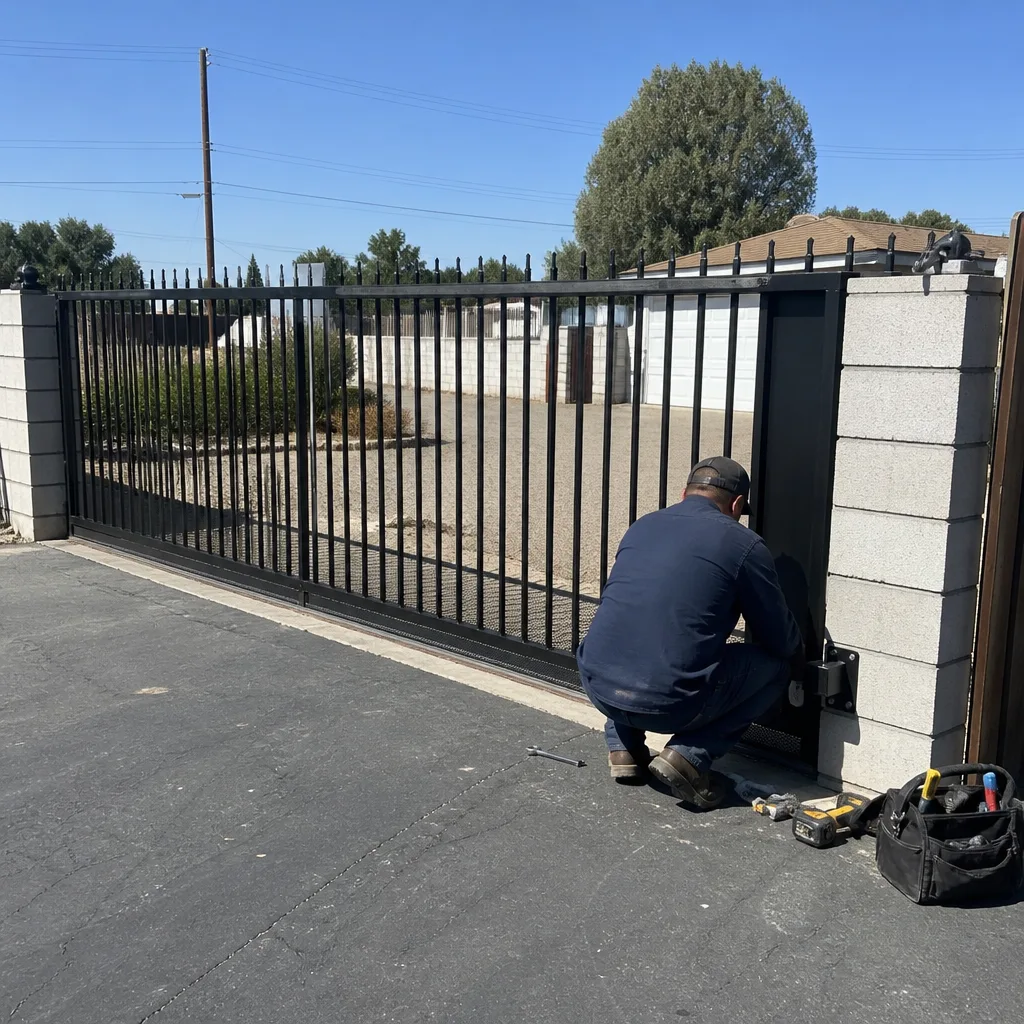
See the difference
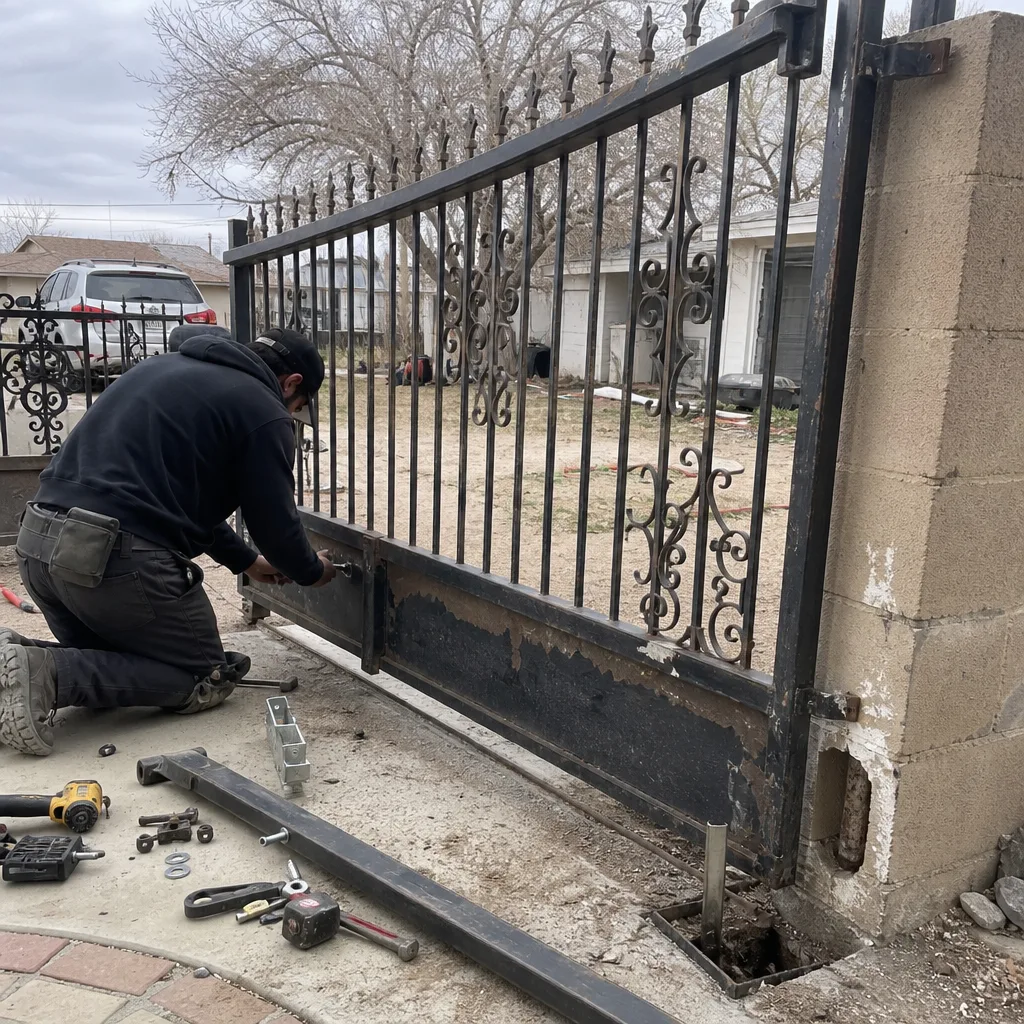 Before
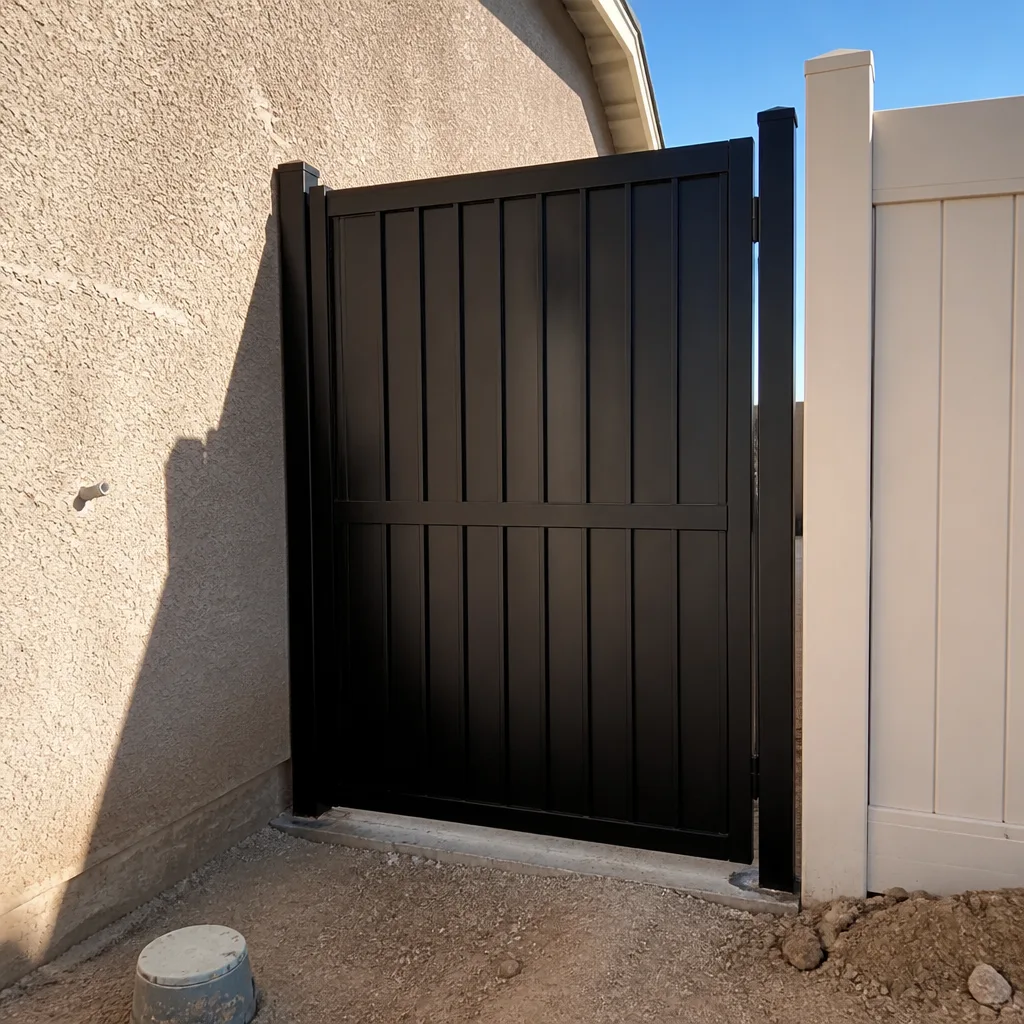 After
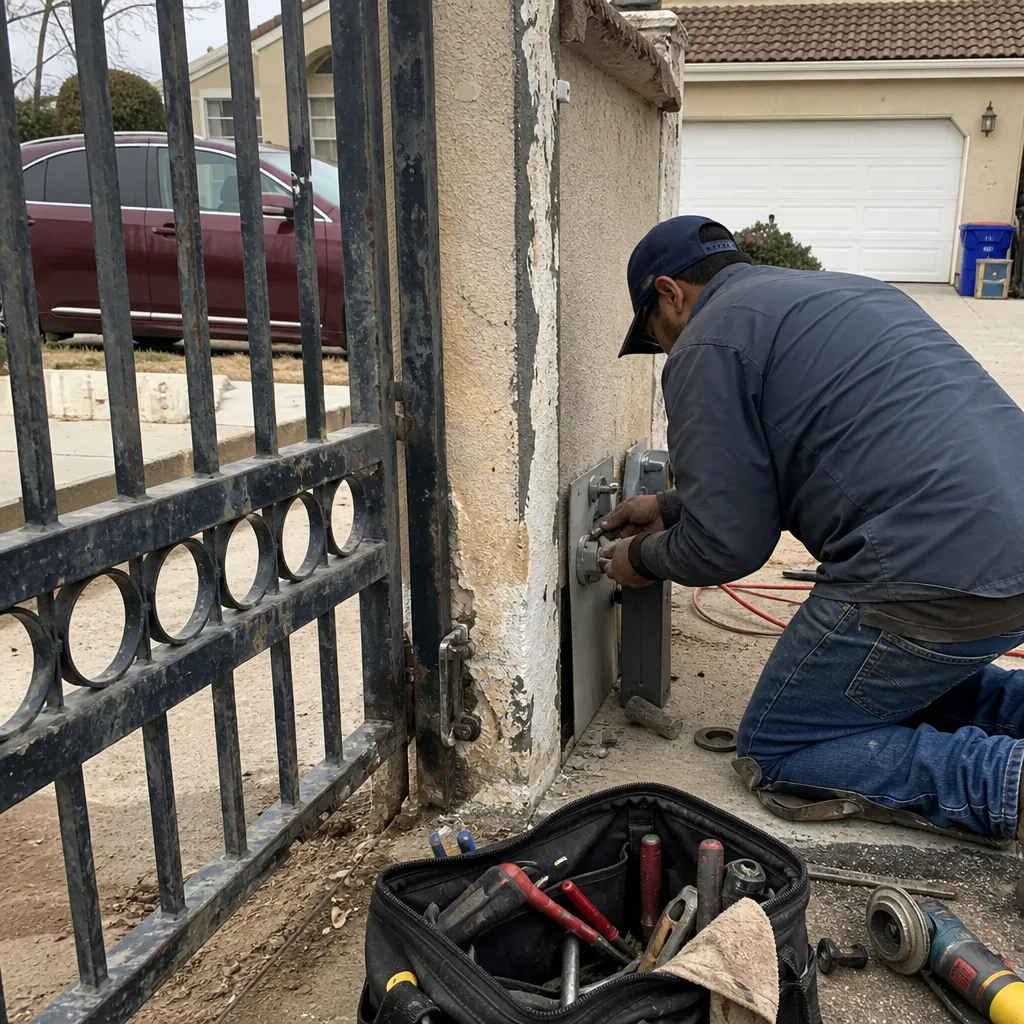 Before
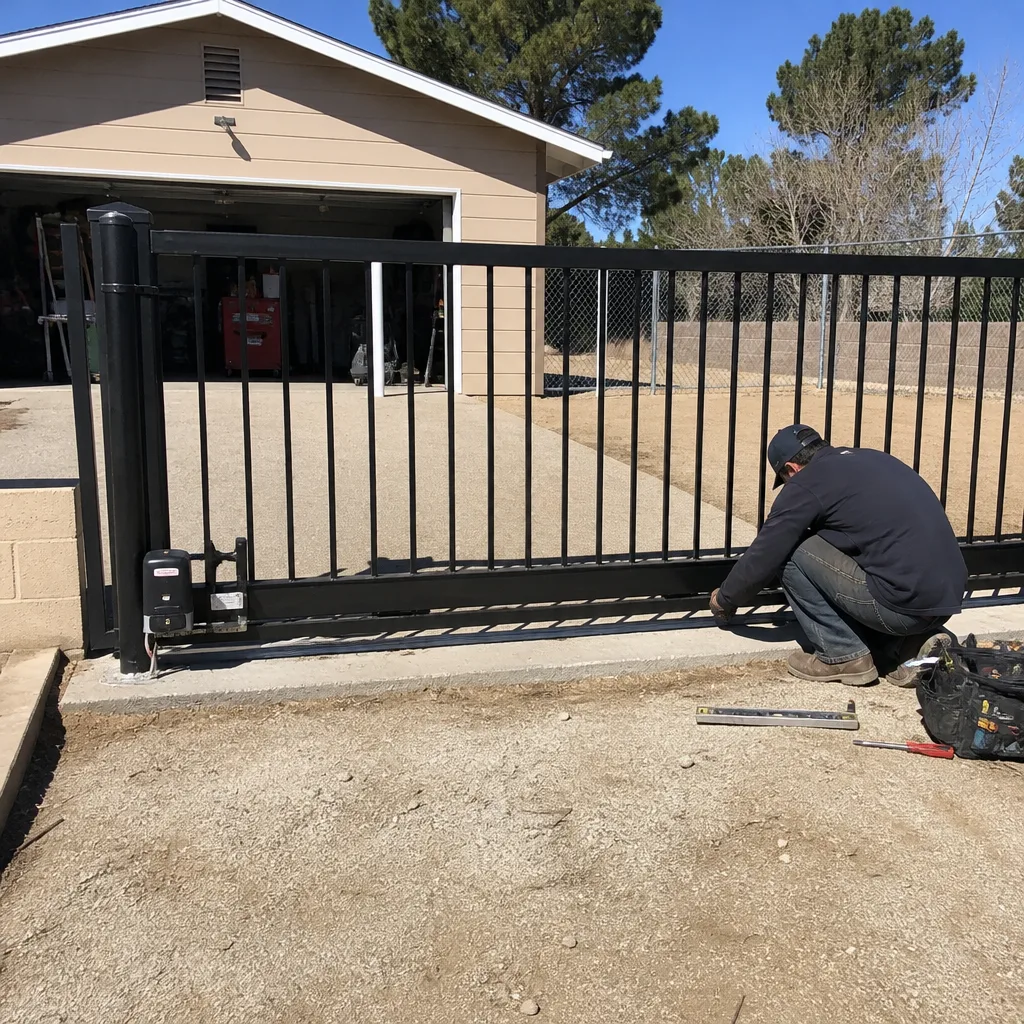 After
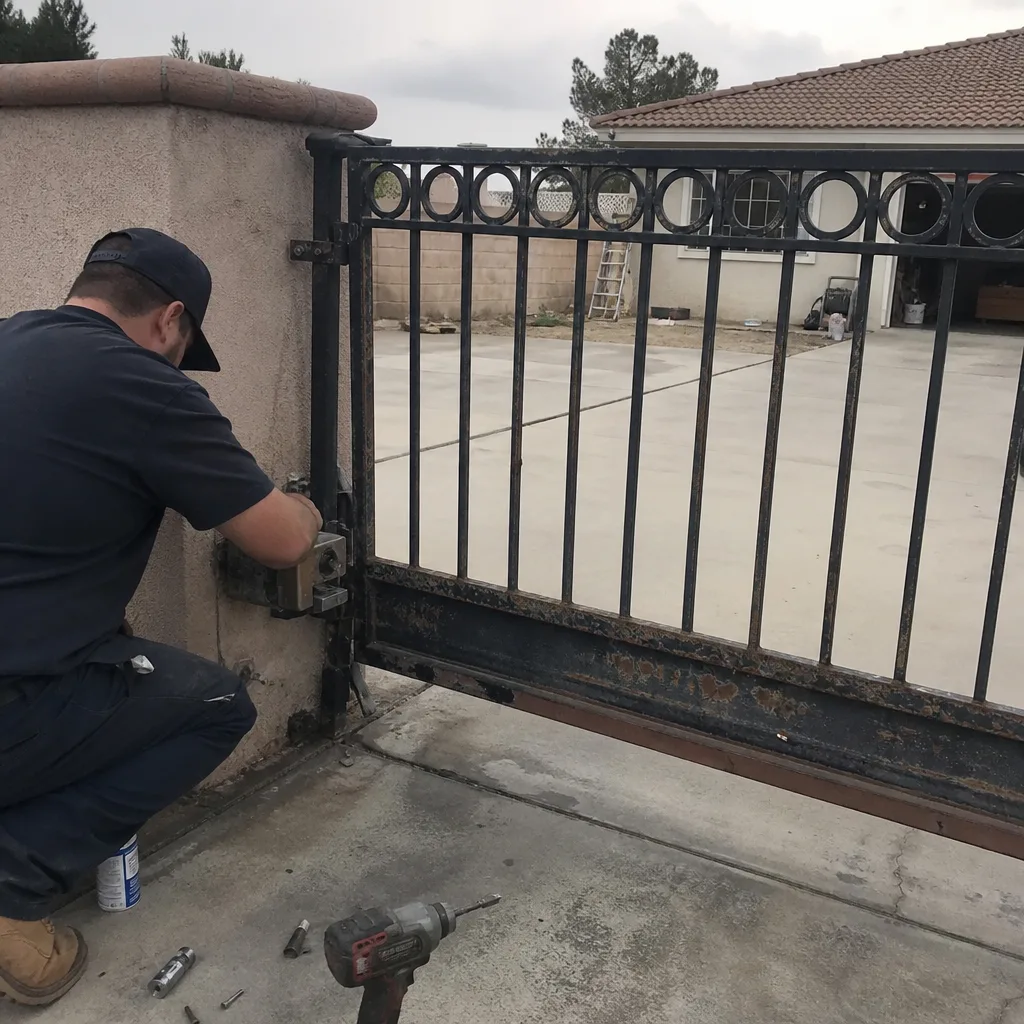 Before
 After